Editorial
Today, as we ‘celebrate’ Christmas, we must ask: what have we truly done to honour the birth of Christ? How has the Divine been reduced to a mere commodity, manipulated and distorted by those seeking power and profit? From the Vatican to the vendors exploiting His name, is this not a second crucifixion of God Himself? The sacred mystery of His incarnation has been hijacked, turned into a tool for consumption and control. Where is the reverence? Where is the truth? How can we call this a celebration of His coming when we have allowed His story to be co-opted by those who profit from our devotion? Is this truly the birth of the Saviour, or has it become nothing more than another opportunity for exploitation in the name of religion and commerce?
What once began as a humble remembrance of the divine entering the world as a vulnerable child has been hijacked, commodified, and transformed into a grotesque spectacle of consumerism and control. The sacred has been suffocated beneath the gilded veneer of profit margins and power games, leaving a hollow shell where spirituality once thrived. Nietzsche, in his The Gay Science, proclaimed, “God is dead,” and today, this proclamation feels chillingly prophetic. The God who inspired radical love, humility, and liberation has been buried beneath the weight of our glittering Christmas trees and the mechanised piety of institutional dogma.
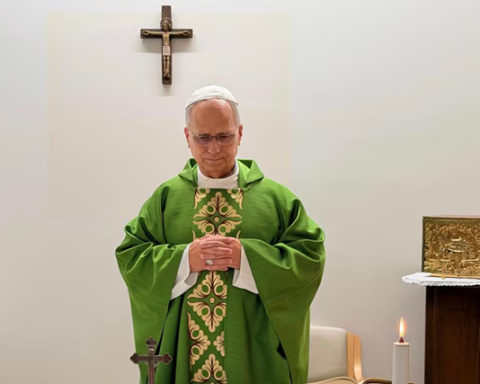
Jesus Christ was born in a stable, a stark emblem of poverty and humility. His birth was heralded not by kings but by shepherds, the outcasts of their time. “Blessed are the poor in spirit, for theirs is the kingdom of heaven,” He declared, championing the downtrodden and marginalised. Yet, the Vatican, self-proclaimed custodian of His teachings, sits atop unimaginable wealth, its coffers brimming with the riches of centuries. The opulence of St. Peter’s Basilica, the shimmering vestments of the clergy, and the priceless art adorning the Vatican walls stand in grotesque contrast to the manger of Bethlehem. Is this the kingdom of God, or the empire of mammon masquerading as divine stewardship?
In the name of Jesus, wars have been waged, inquisitions launched, and dissent silenced. The Crusades drenched the earth with blood under the banner of the cross, while the Spanish Inquisition twisted Christ’s message into an apparatus of terror. Today, the manipulation is subtler but no less insidious. The Vatican’s centralised authority crushes grassroots movements that dare to interpret Christ’s message through the lens of liberation. Liberation theology, born in the shantytowns of Latin America, sought to embody Christ’s preferential option for the poor. Yet it was met with suppression and scorn by the very institution that claims to represent Him. How far removed this is from the man who overturned the tables of the money changers and declared, “My house will be called a house of prayer for all nations. But you have made it a den of robbers” (Mark 11:17).
Beyond the Vatican’s gilded halls, the marketplace has claimed its share of Christ’s corpse. Christmas, ostensibly a celebration of the divine incarnate, has been reduced to an orgy of consumption. Retailers and advertisers exploit the season with unrelenting fervour, transforming the birth of Jesus into a marketing bonanza. The Christ child, whose swaddled form symbolised simplicity, is now a pawn in the machinations of capitalism. “Buy more, spend more, be more,” the world shouts, drowning out the angelic chorus of “Peace on earth, goodwill to all.”
Consider Charles Dickens’ A Christmas Carol, a text that ironically critiques the very spirit of avarice that dominates our modern celebrations. Ebenezer Scrooge, the embodiment of greed and selfishness, is redeemed not through accumulating wealth but by opening his heart to compassion and generosity. Yet, today’s Christmas is built upon the antithesis of this moral: the glorification of material excess. The Scrooge of today would not need redemption; he would be lauded as a savvy entrepreneur, a paragon of capitalist virtue.
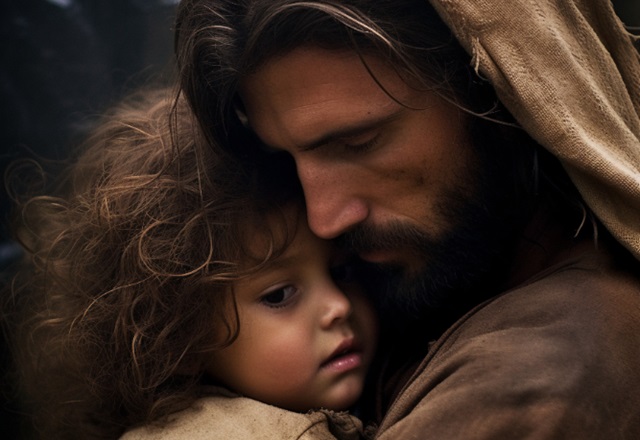
Even the imagery of Christ has not escaped the branding iron. The meek and mild Jesus has been replaced by sanitised, market-friendly caricatures that offend no one but inspire even less. He is sold to us as a soft, inoffensive figure who blesses our excesses rather than challenging them. The revolutionary Christ who dined with sinners, defended the oppressed, and condemned the hypocrisy of the religious elite has been airbrushed out of existence. “Beware of false prophets, who come to you in sheep’s clothing but inwardly are ravenous wolves” (Matthew 7:15). Could there be a more fitting description of the forces that have co-opted His name for profit?
It is not merely the Vatican or the marketplace that stands guilty of this crime. The broader Christian community, too, bears responsibility for acquiescing to this desecration. Churches have embraced the language of marketing, offering programmes and experiences designed to attract consumers rather than nurture disciples. Megachurches, with their concert-style worship and celebrity pastors, epitomise this trend. They promise entertainment wrapped in the guise of spiritual nourishment, reducing the profound mystery of faith to a product to be consumed. The Gospel of Christ is replaced with the Gospel of growth, numbers, and influence.
This betrayal extends to how we treat one another. Jesus’ message was one of radical inclusion and love: “Love your neighbour as yourself” (Mark 12:31). Yet, Christian institutions and believers alike have often weaponised faith to exclude and condemn. The LGBTQ+ community, women, and those who dare to question orthodoxy have often found themselves ostracised in the name of Christ. The very man who befriended tax collectors and prostitutes would scarcely recognise the gatekeeping practised in His name.
The death of God, as Nietzsche foresaw, is not the result of philosophical scepticism or scientific discovery; it is the result of betrayal by His own followers. The manipulators who claim His name have emptied it of its power, leaving behind a husk that serves their own ends. Dostoevsky’s Grand Inquisitor from The Brothers Karamazov captures this tragedy with haunting precision: “We have corrected Thy work and founded it on miracle, mystery, and authority. And men rejoiced that they were again led like sheep.” The Church, the marketplace, and society at large have taken the liberating message of Christ and turned it into chains.
Is there hope amidst this darkness? Perhaps. For all its flaws, Christmas still holds a flicker of the divine. Amidst the chaos of shopping malls and the pomp of ecclesiastical rituals, there are moments of genuine love, kindness, and generosity. Families come together, communities rally to support the less fortunate, and hearts are softened, if only for a season. These moments, fleeting as they may be, remind us of the true essence of Christmas.
Yet, this is not enough. If Christmas is to mean anything, we must reclaim the radical message of Christ from those who have distorted it. We must confront the Vatican, the vendors, and ourselves. We must reject the idolatry of wealth and power and rediscover the God who walks among the poor and the oppressed. We must demand that our institutions serve the Gospel rather than their own interests. And we must remember that faith is not a product to be sold, but a path to be walked—a path that often leads through discomfort, sacrifice, and transformation.
“The truth will set you free” (John 8:32). This truth is not found in the polished sermons of televangelists or the glossy advertisements of the holiday season. It is found in the rough-hewn manger, the dusty roads of Galilee, and the blood-stained cross. It is a truth that challenges us, unnerves us, and ultimately redeems us. Today, as we celebrate Christmas, let us honour this truth, not by succumbing to the forces that have murdered God, but by resurrecting Him in our lives, our communities, and our world.