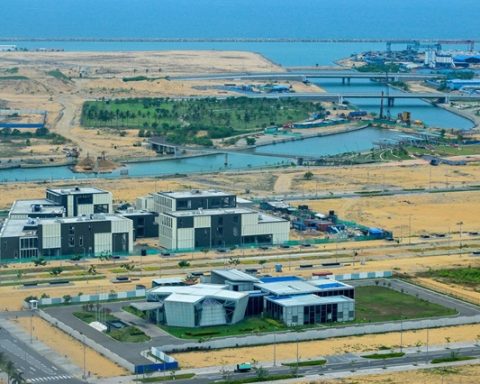
The Kankesanthurai Harbour (KKS Port), a strategic seaport on the northern coast of Sri Lanka, has long been a vital maritime gateway. Located approximately 20 kilometers north of Jaffna city, it has historically facilitated trade and connectivity between the Jaffna Peninsula and the rest of the country. During the civil war, KKS Port became the lifeline for the people of Jaffna, ensuring the continuous flow of essential goods and military supplies despite overwhelming threats.
When Sri Lanka Ports Authority (SLPA) personnel were unable to operate the port due to the prevailing conflict, the responsibility of running and safeguarding the harbour fell upon the Sri Lanka Navy (SLN). The Commander Northern Naval Area (CNNA) assumed the role of the competent authority, with naval personnel taking over key operational duties such as Harbour Master, Berthing, Piloting, Mooring, Tug handling, Ship repairs, and Bunkering. Additionally, ensuring the security of the harbour amidst persistent threats from the Liberation Tigers of Tamil Eelam (LTTE) was of paramount importance.
This scenario was not unique to Sri Lanka. Throughout history, naval forces have stepped in to operate ports in times of conflict, as seen in Yemen (Aden, Hodeidah, Mukalla), Lebanon (Beirut), Libya (Tripoli, Benghazi, Misrata), Somalia (Mogadishu), Iraq (Umm Qasr), and Cyprus (Famagusta). In such situations, naval personnel perform piloting duties without requiring civilian pilot licenses, leveraging their military training and operational expertise. The Sri Lanka Navy followed this global precedent, assigning highly trained officers as Command Operations Officers and Senior Staff Officers Operations under CNNA, ensuring seamless port operations.
Performing duties as Command Operations Officer during the most crucial period of the war was both an honor and a challenge. Piloting cargo ships into KKS harbour was a task that demanded precise knowledge of ship handling, tides, depth, and wind conditions. The harbour’s sole pier could only accommodate ships up to 100 meters in length, making docking operations particularly difficult, especially during the Northeast monsoon when strong winds pushed vessels towards shallow waters. The challenge was compounded by outdated tugs and the presence of two partially sunken shipwrecks, which restricted maneuvering space.
Despite these obstacles, SLN personnel successfully managed frequent cargo operations at KKS, earning the trust of Master Mariners who relied on their expertise. Tug operators and mooring crews exhibited exceptional professionalism, ensuring the safe berthing of vessels under perilous conditions. Without licensed civilian pilots, the risk of mishaps was ever-present, yet meticulous planning and disciplined execution enabled the Navy to bridge the gap in SLPA’s absence. The experience gained from handling Sri Lanka Navy’s Offshore Vessels, which were comparable in tonnage to civilian cargo ships, played a crucial role in ensuring successful operations.
Beyond berthing and piloting, cargo unloading was another complex operation. Two dedicated work gangs from Point Pedro and Karainagar carried out the heavy labour, closely monitored to maintain efficiency and minimize delays. For shipping agents transporting goods from Colombo to the north, time was of the essence, as the old adage states: “Shipping is time, and time is money.” Delays were not an option, and the SLN worked relentlessly to ensure timely turnover of cargo vessels.
In addition to commercial cargo operations, CNNA was responsible for handling military logistics. With no land connection between northern and southern Sri Lanka, the Army heavily depended on civilian vessels to transport armored vehicles and military supplies. Loading and unloading operations had to be meticulously planned, ensuring vessel stability and watertight integrity. Coordination with ship captains was crucial, particularly when utilizing onboard cranes while adhering to Safe Working Load standards.
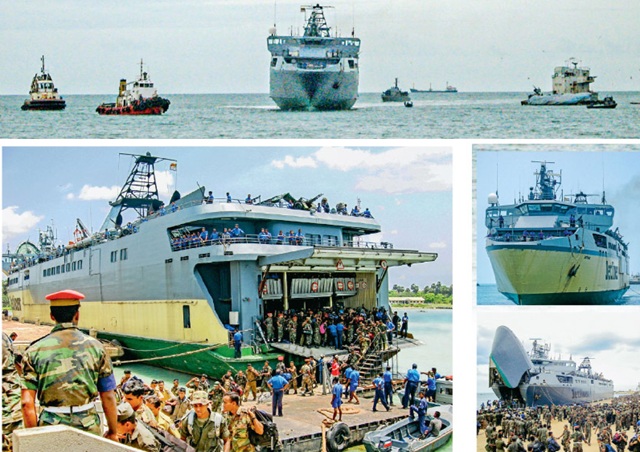
One of the most critical operations was the handling of Jetliner troop transport. This vessel facilitated the swift and secure movement of thousands of military personnel between the north and south. At the height of the war, security was at its peak, with the entire Navy Headquarters on high alert. Every aspect of three-dimensional threats—air, sea, and land—was accounted for. In an extraordinary feat of coordination, the Operations Staff successfully boarded and disembarked 3,000 troops in under 30 minutes—a remarkable achievement that remains largely unknown to the public.
The risks associated with these operations were not limited to natural elements and logistical challenges. On October 2008, the LTTE launched a coordinated suicide attack on merchant vessels anchored off KKS Harbour. Three suicide craft targeted ships carrying essential goods for the Deepavali festival in Jaffna. Mercs Nimalawa sustained heavy damage from a direct hit, while Mercs Ruhunupura narrowly avoided sinking after a close-range explosion. The third vessel, Mercs Bintan, escaped unharmed thanks to the vigilance and firepower of its onboard security team. In an extraordinary effort, the Sri Lanka Navy’s Engineering team managed to control flooding and prevent Mercs Nimalawa from sinking despite limited resources.
These incidents underscore the agility, resilience, and commitment of the Sri Lanka Navy in times of crisis. The Navy’s ability to take on the operational duties of the SLPA, ensure the continuous flow of civilian and military supplies, and defend against enemy threats highlights its indispensable role. The success of these missions was not accidental—it was the result of rigorous training, unwavering discipline, and a deep-rooted sense of duty.
Policy makers must recognize the crucial role the Navy plays beyond traditional defense operations. Investing in manpower, specialized training, and modern technology is essential to ensuring that the Navy remains prepared for any future contingencies. As the saying goes, “You can’t buy a navy; you have to build one.” The commitment and expertise of the Sri Lanka Navy in safeguarding KKS Harbour during the nation’s most trying times serve as a testament to the importance of sustaining and strengthening naval capabilities for the future.