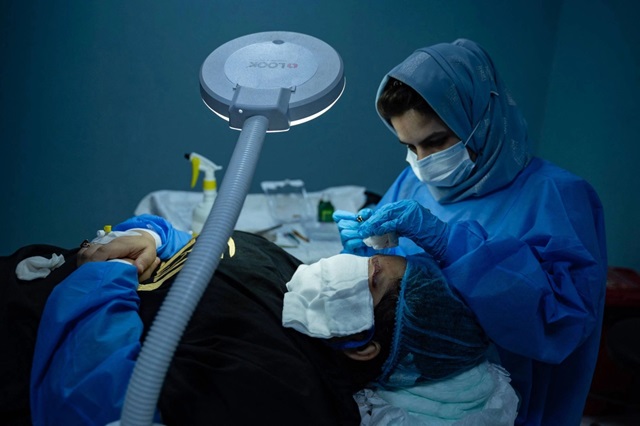
Cosmetic surgery clinics are thriving in Afghanistan’s capital, a striking contrast to the austere and restrictive Taliban rule, AFP reports. Velvet sofas, fake crystal chandeliers, and state-of-the-art equipment imported from Asia and Europe now decorate some 20 clinics across Kabul, offering Botox, lip fillers, facelifts, and hair transplants.
The industry has attracted foreign expertise, particularly from Turkey, with Afghan doctors also undertaking internships abroad. Clients range from well-off men seeking hair transplants to women, often fully covered, seeking facelifts or other procedures.
“Even if others can’t see us, we see ourselves. Looking beautiful in the mirror gives us energy,” said 25-year-old Silsila Hamidi before undergoing a facelift to counter the stress-induced effects on her skin.
Despite the Taliban’s strict rules limiting women’s work, travel, and access to universities, parks, and gyms, cosmetic surgery is allowed as it is considered a medical procedure. Clinic staff said authorities do not interfere with operations, although gender segregation is enforced by morality police.
Hair transplants have surged in popularity among men since the Taliban ordered them to grow beards to at least fist-length, with some borrowing money for procedures ahead of weddings. Prices for treatments range from $43–$87 for Botox and $260–$509 for hair implants, a fortune for many Afghans living in poverty.
Afghanistan’s burgeoning beauty industry is also heavily influenced by social media. Clinics advertise aggressively on Instagram, with clients drawn by cosmetic trends and the promise of youthful appearances. “Many patients come without real problems but want surgery because they have seen trends on Instagram,” said Lucky Khaan, co-director of Negin Asia clinic.
While cosmetic surgery flourishes for some, Afghanistan continues to face dire challenges: according to the United Nations, 10 million Afghans suffer from hunger and one in three lacks access to basic healthcare. Yet for many, investing in beauty remains a priority, reflecting both social pressures and the influence of modern aesthetics even amid severe economic hardship.