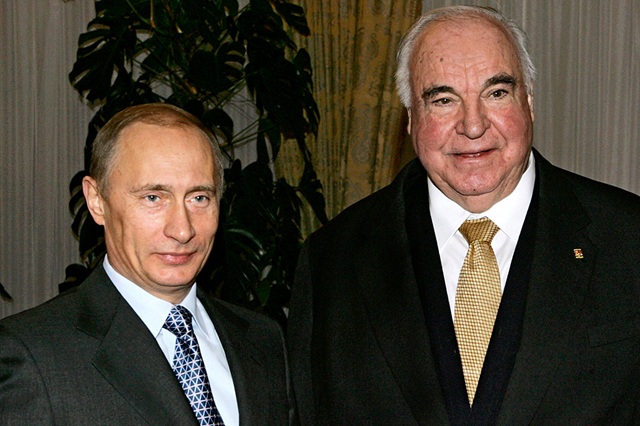
Newly declassified German government documents have shed fresh light on Western leaders’ private assessments during the final years of the Soviet Union, revealing that then-German Chancellor Helmut Kohl believed Ukraine would never be allowed to break free from Moscow’s control and was skeptical of NATO’s eastward expansion.
The revelations, published by Spiegel magazine and based on redacted notes from federal archives, provide a stark contrast to the course of history that followed. Kohl, in a February 1990 meeting, is recorded as saying he could “imagine a situation in which the Soviet Union would let the Baltic states go,” but believed Ukraine was too central to be relinquished. “This could not apply to Ukraine: it is a centrepiece of the country,” an aide noted at the time.
Despite Kohl’s misgivings, Ukraine declared independence on December 1, 1991—just weeks before the Soviet Union officially dissolved.
The documents also delve into long-standing controversies over NATO expansion. Russian President Vladimir Putin has frequently accused the West of breaking promises by expanding NATO to include former Soviet and Warsaw Pact countries. While some Western leaders, including then-British Prime Minister Sir John Major, offered verbal reassurances in the early 1990s, no written agreement ever codified a halt to NATO’s expansion.
In one discussion from 1990, French President François Mitterrand reportedly agreed with Kohl that NATO should not push eastward, stating it should be “solemnly declared.” Kohl is quoted as replying, “this is right.” Yet the momentum for NATO enlargement continued, and no binding declaration was ever issued.
The documents also capture tensions and candid opinions between Western leaders. Kohl is said to have dismissed Czechoslovakian President Václav Havel as lacking political expertise and suggested he should serve only temporarily—a prediction that proved inaccurate, as Havel went on to lead the Czech Republic for another decade.
Meanwhile, U.S. President George H. W. Bush reportedly downplayed the “special relationship” with Britain, saying it was “not as special as it used to be,” and mocked Soviet leader Mikhail Gorbachev for having “not the slightest idea about economic issues.”
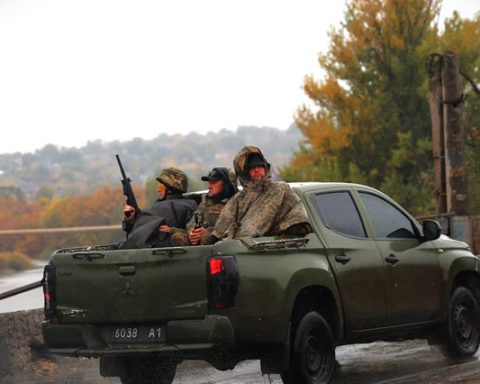
The release of these notes comes amid ongoing war in Ukraine, which Russia invaded in 2022. Putin has continued to justify the invasion by citing NATO’s expansion and framing the West’s influence as ideologically toxic, invoking claims of battling “Nazis,” “Satanists,” and Western liberal values.
Despite these justifications, the 1997 NATO-Russia Founding Act acknowledged that Moscow had no veto over NATO’s enlargement, a stance the alliance reaffirmed in rejecting Russia’s 2022 demands to withdraw troops and weapons from countries that joined after 1997.
The documents offer a rare, behind-the-scenes look at the strategic doubts, private disagreements, and geopolitical anxieties of a transformative period in European history—many of which still echo in today’s global conflicts.