


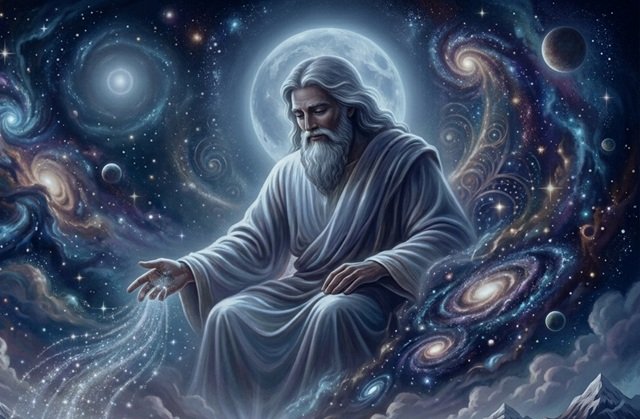
Most religions, other than Buddhism, aver that there is a Creator of the cosmos (universe) that includes the earth, sun, moon, stars, as well as water, fire, and so on, apart from humans, animals, and other creatures, trees, plants, etc. However, Buddhism does not accept a single, eternal creator that rules the universe. In the English language, the Creator is termed as God, and there are several other names in other languages.
In any case, most religions, other than Buddhism, insist that the ultimate objective of humans must be to attain the feet of God. Buddhism does not accept that humans should reach the feet of God, as it is fundamentally a non-theistic tradition that does not believe in a supreme creator God, nor does it view reaching such a Creator as the ultimate goal of human existence.
In any case, there is no difference among religions, including Buddhism, regarding the need to observe value systems in life by adhering to truth, compassion, goodwill towards all, and the avoidance of greed and violence. Buddhism focuses on personal responsibility, self-transformation, and inner awareness to end suffering.
Further, most religions, including Islam and Christianity, advocate the concepts of hell and heaven and insist that wrongdoers will be punished by being sent to hell, while those who observe truth will go to heaven. In Hinduism, it is said that rebirth takes place, and wrongdoers will be punished in subsequent births, while those who observe truth will be rewarded. Further, Hinduism stresses that those with uncompromising adherence to truth who lead a blemishless life will ultimately merge with God and have no rebirth. Probably, in the process, religions inject some sort of fear among wrongdoers.
Billions of people around the world owe allegiance to one religion or another and simply accept the call of their religions to surrender totally to God.
However, the question still remains as to whether God really punishes wrongdoers, as claimed by religions. No one knows whether Hitler, Mussolini, Stalin, and others who were ruthless dictators are now in hell. Similarly, no one knows whether Nelson Mandela, Martin Luther King Jr., Mother Teresa, and other good people are now in heaven. Again, no one knows whether Mahatma Gandhi, respected as an apostle of peace and a follower of Hinduism, has now become one with God without rebirth.
In any case, in day-to-day life, we often see good people adhering to truth and honesty suffering from physical ailments or mental distress for one reason or another, while those known to be corrupt or criminal enjoy the fruits of their dishonest actions, even occupying high positions in public life and enjoying esteem in society. What can one make of this situation?
While billions of people follow various religions, even among such people, dishonest practices sometimes prevail, even as they visit places of worship regularly.
We often hear that there are malpractices in places of worship too, by those who are responsible for administering them. Obviously, while these people may have faith in God, they seem to have no fear of being punished. Is it likely that they assume their wrongdoing will be condoned by God because they pray in places of worship? This may be so, particularly since religions say that God is merciful and stands by devotees.
All said and done, the moot question remains: Does God punish wrongdoers?










