Abu Dhabi-based developer Eagle Hills has signed an agreement with the Maldivian government for a proposed $20 billion waterfront and marina development at Ras Male, placing one of the Indian Ocean’s most ambitious urban and tourism projects at the centre of the Maldives’ drive to attract foreign investment.
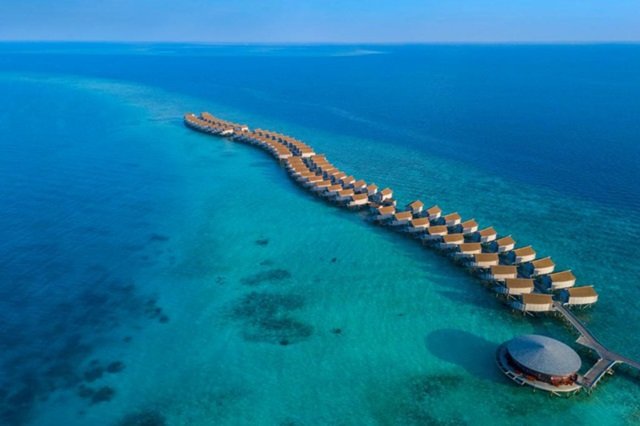
The Maldives Waterfront and Marina will form part of Ras Male, a new urban area being developed at Fushi Dhiggaru Lagoon near the capital, Male. The project is planned as an integrated tourism and residential destination, featuring international hotels and resorts, premium and branded residences, a marina, waterfront promenades, restaurants, retail outlets and leisure and wellness facilities. The site is expected to be around 17 minutes from Male by speedboat.
The agreement was signed in Dubai on Monday in the presence of Mohamed Alabbar, founder and chairman of Eagle Hills, and senior Maldivian government representatives. Eagle Hills said the development is expected to involve about $20 billion of investment across multiple phases, rather than an upfront capital commitment of that amount by the company.
That distinction is significant. The company has not yet disclosed how much capital Eagle Hills itself will commit, nor has it provided detailed financing arrangements or a construction timetable. The headline figure therefore represents the envisioned investment value of the project over its various phases, rather than a confirmed immediate injection of $20 billion into the Maldivian economy.
Preliminary estimates nevertheless point to potentially substantial economic effects. Eagle Hills expects the development to attract more than $30 billion in gross foreign investment over its lifetime, including approximately $18 billion in net foreign investment into the Maldives. The project is also projected to generate more than 54,000 direct and indirect jobs and, once fully mature, attract more than one million visitors annually and generate more than $2 billion in tourism revenue.
The development is closely linked to the Maldives’ wider effort to overcome the constraints of its existing urban geography. Male is among the world’s most densely populated urban areas, and the government has been pursuing large-scale land reclamation at Fushi Dhiggaru Lagoon to create additional residential, commercial and tourism space.
Ras Male is part of that expansion programme. More than 1,100 hectares are planned for reclamation, while the masterplan envisages approximately 65,000 housing units. The project is therefore intended not simply as a resort development, but as part of a much broader attempt to create a new urban centre capable of absorbing population growth and economic activity beyond the existing capital.
The Eagle Hills agreement also comes as the Maldives seeks to broaden its foreign-investment base while remaining heavily dependent on tourism. In May 2025, the government partnered with Dubai-based MBS Global Investments on a proposed $8.8 billion financial centre in Male. The initiative reflects a wider ambition to attract investment into sectors beyond conventional tourism and hospitality.
For Eagle Hills, meanwhile, the Maldives project adds another major waterfront development to an increasingly international portfolio. The company was founded by Alabbar, who also founded Emaar Properties, the developer associated with Dubai landmarks including the Burj Khalifa and Dubai Mall.
Eagle Hills has expanded its activities across several international markets, with waterfront and mixed-use developments forming a significant part of its portfolio. In August, the company announced plans to oversee the redevelopment of Lulu Island in Abu Dhabi, where a future community could accommodate up to 20,000 people.
Outside the UAE, Eagle Hills is developing the $2.5 billion Durres Yachts and Marina project in Albania, incorporating residential units, hotels, retail space and a superyacht marina. Its UAE portfolio also includes the $1.2 billion Maryam Island waterfront development in Sharjah.
The Maldives project consequently represents both an extension of Eagle Hills’ waterfront development strategy and a major test of the country’s ambitions for large-scale foreign investment. Its eventual significance will depend not only on the scale envisaged on paper, but on whether the financing, construction and investment commitments required to turn the $20 billion vision into a functioning urban and tourism destination can be secured and delivered.