Europe’s industrial strategy is entering a decisive phase as China’s rapidly expanding manufacturing capacity places mounting pressure on some of the continent’s most important industries. As explored in an in-depth analysis by Der Spiegel, policymakers, business leaders and economists are increasingly grappling with how Europe should respond to an unprecedented wave of competitively priced Chinese exports without undermining its own economic competitiveness or provoking wider trade conflicts.
The challenge is visible across sectors ranging from automotive manufacturing and renewable energy to chemicals, advanced machinery and robotics. While Chinese companies have become increasingly sophisticated producers of high-technology goods, European governments are debating whether stronger industrial protection, targeted subsidies or regulatory reform offers the most sustainable response.
Few industries illustrate the competitive challenge more clearly than automotive manufacturing. At Berlin’s trade fair grounds in June, Chinese electric vehicle giant BYD unveiled its new Dolphin G DM-i plug-in hybrid, positioning the model directly against vehicles such as the Volkswagen Polo and Golf that have long dominated Europe’s compact car market.
Presented by BYD Vice President Stella Li, the vehicle claims a range exceeding 1,000 kilometres before requiring either refuelling or recharging, a capability that, according to the source material, currently has no equivalent among European manufacturers. The company already dominates Europe’s plug-in hybrid segment, with a larger version of the Dolphin recently becoming the continent’s best-selling model in its category.
Yet virtually every BYD vehicle sold in Europe continues to be manufactured in China. At the same time, the company is expanding its European footprint through a new production facility under construction in Hungary.
The timing has intensified concerns within Germany’s automotive sector. China exported more than one million vehicles in June for the first time, while Volkswagen chief executive Oliver Blume warned employees that Europe’s largest carmaker could lose up to 50,000 jobs and close four German factories because it “cannot compete with the costs and prices of export models from China.”
The automotive industry is only one example of a broader structural shift. Supported by extensive state subsidies, China has transformed itself from a manufacturing hub for low-cost goods into a leading producer of electric vehicles, solar technology, industrial equipment and advanced robotics. As domestic economic growth slows, exports have become increasingly important, with Europe emerging as a major destination after the United States imposed restrictions on numerous Chinese high-technology products.
For European policymakers, the question is no longer whether Chinese competition is intensifying but how it should be addressed.
Previous efforts have produced mixed results. Tariffs introduced in 2024 on Chinese electric vehicles were designed to offset perceived cost advantages created by state support. However, Chinese manufacturers adapted by shifting greater emphasis towards plug-in hybrids, which remained outside the tariff regime. According to one senior European automotive executive, the industry “underestimated the danger just two years ago.”
German Chancellor Friedrich Merz has also begun advocating a tougher approach. While previous German governments, particularly under the Christian Democratic Union, were reluctant to adopt confrontational policies towards Beijing because of Germany’s export interests, Merz has criticised what he considers China’s undervalued currency, arguing that “If this isn’t corrected, we will always feel the disadvantages.”
Camille Boullenois of the Rhodium Group argues that Germany faces pressure on two fronts simultaneously. Beyond competition from imported consumer products such as electric vehicles, she warns that China’s technological progress increasingly threatens Germany’s traditional strength as a supplier of advanced industrial equipment.
“Germany’s position as a global supplier of factory equipment is in grave danger,” Boullenois says, noting that China is no longer simply producing finished products but increasingly developing the software and production systems behind modern manufacturing.
These concerns are shaping a broader reassessment within the European Union. Trade Commissioner Maroš Šefčovič has proposed measures requiring companies to diversify supply chains by sourcing components from multiple suppliers, thereby reducing dependence on Chinese manufacturers.
Industry Commissioner Stéphane Séjourné has advanced a more interventionist proposal through the Industrial Accelerator Act (IAA), under which publicly funded projects would require a minimum proportion of European-produced materials. According to Alfredo Altavilla, an adviser to BYD’s Stella Li, the proposal is already encouraging Chinese manufacturers to establish production facilities inside Europe rather than rely exclusively on imports.
Yet even supporters acknowledge unintended consequences. Rather than building entirely new factories, some Chinese manufacturers are reportedly exploring acquisitions of existing European facilities, potentially creating a different form of industrial dependence.
Der Spiegel identifies Germany’s solar industry as an early example of both the opportunities and dangers posed by China’s industrial rise. Germany once led the global photovoltaic sector, supported by generous subsidies under the Renewable Energy Sources Act of 2000. At its peak, domestic production supported approximately 150,000 jobs.
The industry’s collapse followed a combination of reduced German subsidies and massive Chinese investment in photovoltaic manufacturing. Although the European Union later introduced anti-dumping duties, those measures ultimately increased prices while failing to restore domestic competitiveness. Chinese manufacturers eventually secured dominance of the global market, even as cheaper solar panels benefited European consumers through lower electricity costs.
Today, policymakers are pursuing a more targeted strategy by concentrating on solar inverters—the critical electronic systems that control electricity flows. According to research cited in the source material, between 70 and 80 per cent of inverters installed across Europe originate from Chinese manufacturers, raising concerns over cybersecurity and energy infrastructure resilience. In April 2026, the European Commission halted funding for projects using Chinese-made inverters while encouraging European companies such as SMA Solar to expand production.
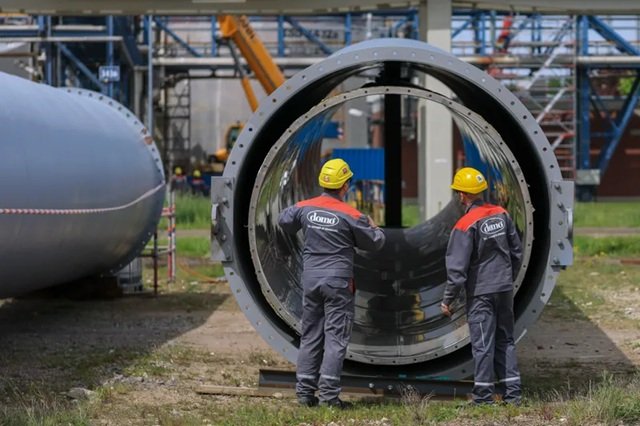
The chemical industry illustrates a different challenge. The insolvency of Domo Chemicals’ German operations highlighted how Chinese imports, combined with high European energy costs, can destabilise entire industrial ecosystems. Because chemical production relies upon tightly integrated supply chains, the failure of a single manufacturer can affect numerous interconnected facilities.
Although authorities in Saxony-Anhalt invested approximately €80 million to preserve operations following Domo’s collapse, subsequent geopolitical disruptions—including sulfur shortages linked to conflict affecting Gulf supplies—triggered a second insolvency. Magnolia Tovar of Future Cleantech Architects argues that governments cannot indefinitely preserve every industrial facility through subsidies because “the cost gap is structural.”
Instead, she advocates focusing public investment on emerging technologies such as electricity-based fertiliser production that could provide Europe with future competitive advantages.
Europe’s greatest opportunity may ultimately lie in technologies that remain at an earlier stage of global competition.
Humanoid robotics has become one such field. Chinese manufacturer Unitree dominated international robotics competitions last year, yet companies including Germany’s Schaeffler see opportunities to compete by supplying high-value components such as actuators, which account for as much as 60 per cent of a humanoid robot’s production cost.
According to McKinsey partner Christian Jansen, “A billion-dollar market is currently emerging for suppliers.” Schaeffler already collaborates with robotics manufacturers in Europe, the United States and China, including Unitree itself.
Chief executive Klaus Rosenfeld believes Europe still has “a real chance to play a leading role” because the sector remains in its infancy. Rather than restricting Chinese participation prematurely, he argues that Europe’s greater priority should be creating an environment where innovation can flourish.
That argument extends beyond industrial policy to regulation. Rosenfeld suggests the European Union should adopt a less restrictive approach towards artificial intelligence in industrial applications than in consumer markets. Current AI rules often require extensive documentation, risk management procedures and compliance processes before deployment, increasing costs and slowing innovation.
Europe’s response to China’s export surge may ultimately depend less on building higher trade barriers than on determining where it can remain globally competitive. Protecting strategic industries, encouraging technological innovation and reducing unnecessary regulatory burdens may together offer a more sustainable path than attempting to shield every sector from increasingly capable Chinese competition.