The officials at Frontex headquarters in Warsaw are accustomed to disturbing images. Their screens monitor one of the principal migration routes into Europe, the central Mediterranean, where drones and aircraft transmit images of boats in distress, fatal accidents and, at times, violence.
But what they saw on 12 October 2025 was extraordinary.
A fishing boat was heading north through the Mediterranean. On board were 140 people who had previously departed from the Libyan coast. Close behind them came a larger vessel. On its blue hull was the name of the unit: “Tareq Bin Zeyad”, or TBZ.
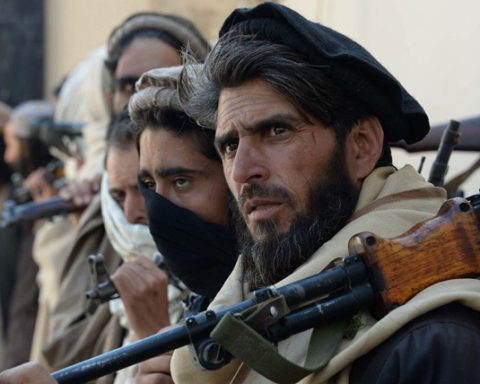
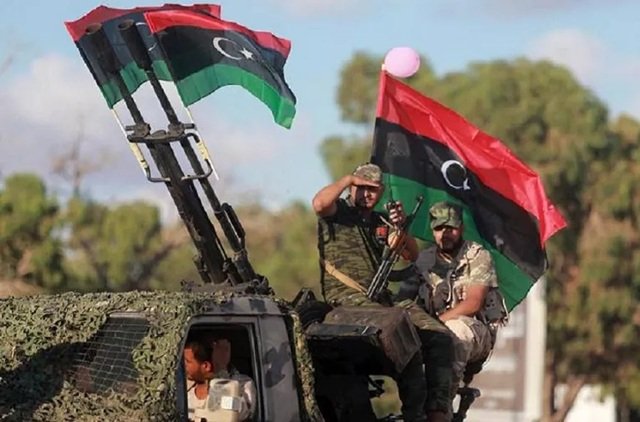
The eastern Libyan militia is notorious. Human rights organisations have accused it of war crimes and atrocities. In footage recorded during the incident, people aboard the fishing boat can be heard shouting in Arabic: “Turn around!”
The pursuing vessel rammed the fishing boat and appeared to attempt to board it, with men handling what seemed to be metal boat hooks. After hours of pursuit, according to the Frontex report, the pursuers opened fire.
The confrontation ended only after a Frontex aircraft intervened. The European border agency repeatedly warned the Libyans, communicating at five-minute intervals that the migrants must not be put in further danger. Eventually, the militia withdrew.
The following day, the Italian coastguard reached the boat, which had drifted to within 40 nautical miles of the Sicilian coast.
Among those brought ashore were several injured people, three with gunshot wounds. At a hospital in Catania, neurosurgeon Salvatore Cicero treated a 15-year-old Egyptian who had been struck by a blunt object. “The bones of the skull had entered his brain,” Cicero said. The boy’s language centre had been affected, leaving him unable to speak or read. Doctors operated immediately.
The incident has become emblematic of a much larger dilemma confronting Europe. Migration routes from Libya are no longer concentrated in the country’s west. Boats are increasingly leaving from the east, where the Haftar family exercises control. From that coast, Sicily and Crete are only a few hundred kilometres away.
For Greece, the change has been particularly significant. On the holiday island of Crete, where boat arrivals had previously been rare, concern has grown rapidly. Around 5,000 asylum seekers arrived in 2024. Last year, the figure was already close to 20,000.
The Haftar family has consequently become a potential partner for European governments seeking to prevent migrants from reaching European territory.
Saddam Haftar controls the TBZ militia. Together with his father Khalifa, a former general from the era of Libyan dictator Muammar Al-Gaddafi, and his brother Khaled, he dominates eastern Libya. The family has established what the source describes as a surveillance state, while critics are silenced and migrants are held in detention camps.
The EU formally recognises the government in western Libya rather than the Haftars and has traditionally worked with that government on migration control. Khalifa Haftar, meanwhile, long kept Europe at a distance and maintained close relations with Russia. In 2020, he unsuccessfully attempted to capture Tripoli.
That distance is now narrowing.
Research by SPIEGEL and Report Mainz, based on numerous internal documents, shows European states planning to finance and equip forces in eastern Libya. Brussels has developed detailed training programmes for eastern Libyan coastguards intended to intercept migrants before they reach Europe.
The proposed relationship carries an inherent contradiction. The TBZ has been accused of a long list of abuses. Amnesty International researchers wrote in 2022 of a “catalogue of horrors”, alleging that TBZ members had for years carried out arbitrary killings, torture and rape, with many victims disappearing without trace.
Migrants have also described torture and abuse in Libyan detention centres, where some have reportedly been required to pay ransoms before being released. Such camps exist in both western and eastern Libya.
Wolfram Lacher of the Stiftung Wissenschaft und Politik argues that the Haftar family benefits from migration in two ways, both from departures and from efforts to stop them. He says the family can open or close the route to Crete at will and that its primary objective is political recognition rather than equipment.
The EU appears to understand the risks. In early July, EU Ambassador to Libya Nicola Orlando reportedly told colleagues behind closed doors that the Haftars used migrants as a “means to an end and business model”. Departures towards Crete had risen sharply. Yet, according to the protocol of the meeting, the EU had so far been unable to offer eastern Libya anything and hoped that this would change.
One of the principal mechanisms for that change is the EU naval mission Irini, created in 2020 after Haftar’s unsuccessful assault on Tripoli. Its original purpose included enforcing the United Nations arms embargo on Libya.
Now, after the UN mandate for the mission has officially expired, the EU is reshaping Irini around its own priorities. Internal documents indicate plans to equip Haftar’s men and train them, including joint exercises at sea. In Benghazi, the unofficial capital of Haftar’s sphere of influence, the EU plans to establish a maritime rescue coordination centre and install a new radar station to detect and intercept more migrant boats.
The documents do not address the possibility that greater interception could result in more migrants being returned to detention camps where they may face torture and be forced to pay for their release. Instead, the Italian Irini commander Marco Casapieri wrote in his training plan that the EU could afford “no hesitation”, warning that otherwise “migration pressure” would increase.
The stakes extend beyond migration. The internationally recognised western Libyan government reportedly asked Irini to strengthen controls on oil smuggling, from which Haftar’s militias benefit. The EU rejected the request. Internal discussions identified possible retaliation by the Haftars, including a “massively increased influx of migrants from Libya”.
Meanwhile, eastern Libyan personnel have already begun training in Europe. In September 2025, the first course was held in Taranto, Italy. Further courses are planned, with participants expected to spend ten days aboard Irini ships. The programme is expected to cost at least three million euros, while gender issues and “respect for human rights” are included in the curriculum.
The European Commission denies having worked with TBZ, saying it has dealt only with the official coastguard in eastern and western Libya and has repeatedly urged those forces to comply with international standards.
But the distinction is increasingly contested. Eastern Libyan coastguards are already being trained in Thessaloniki. At least two participants have been identified by insiders as members of the TBZ. One posted a photograph with the words “TBZ, the family”; another used “TBZ” alongside two flame emojis.
Jalel Harchaoui of the Royal United Services Institute argues that Saddam Haftar has formally placed his militia within the so-called coast security apparatus, while its members continue to regard themselves as part of TBZ. Lacher likewise rejects the idea that eastern Libya contains regular units operating independently of the Haftar family. “Everyone knows that the real power in eastern Libya is in the hands of the Haftar sons,” he says. “And that means units such as TBZ.”
For Europe, the contradiction is becoming increasingly difficult to separate from its migration policy. The same forces accused of serious abuses are becoming increasingly connected to European efforts to control the route by which migrants reach Europe.
For Salvatore Cicero, the consequences are not abstract. The 15-year-old Egyptian he treated spent four months recovering in hospital. Cicero feared that the boy might harm himself if sent to a refugee camp. “You only had to look into his eyes to understand what a traumatic experience he had been through,” he said.
Whether those accused of responsibility for the violence will ever face accountability remains uncertain. A prosecutor in Sicily could theoretically investigate, but the responsible individuals would have to be in Italy and the Justice Ministry would have to approve such action.
Instead, Europe continues to deepen its engagement with the people who control eastern Libya’s migration routes. Only weeks ago, an adviser to Italian Prime Minister Giorgia Meloni met a Libyan delegation that included Saddam Haftar, the man to whom the TBZ is subordinate.