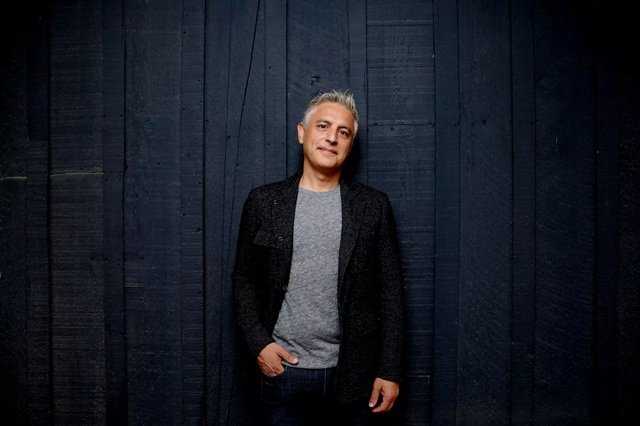
How does a state come to justify the movement of warplanes over civilian cities as a matter of necessity rather than catastrophe? At what point does strategic language begin to absorb human cost until the latter becomes an abstraction rather than an outcome? And perhaps most sharply, how do political systems that claim rational calculation persist in decisions that appear to generate instability as much as they claim to resolve it? He is, undoubtedly, one of the most outspoken voices asking these questions.
Reza Aslan is an Iranian-American scholar of religion, author, and public commentator whose work sits at the intersection of religious history, politics, and cultural interpretation. Born in Tehran in 1972 and raised in the United States after his family left Iran following the 1979 Revolution, he grew up navigating multiple cultural and religious contexts that would later shape his intellectual outlook. His early education in the United States led him into the academic study of religion, where he pursued degrees in theology and the sociology of religion, ultimately earning a PhD focused on the historical study of religious traditions and identity formation. This academic foundation underpins much of his later writing, which consistently attempts to translate complex scholarly debates into accessible public discourse.
Aslan first gained international attention with his book No God but God, a widely read account of the origins and development of Islam that sought to present the tradition not as a static belief system but as a historically evolving religious and political phenomenon. The book positioned him as a writer interested in challenging simplified or monolithic portrayals of Islamic history, emphasising instead the diversity of interpretation within the tradition. He later extended this approach in Zealot: The Life and Times of Jesus of Nazareth, in which he examined the historical Jesus within the political and social conditions of Roman-occupied Judea. The book sparked significant public debate, in part because it distinguished between the historical figure of Jesus and later theological constructions within Christianity.
Beyond these works, Aslan has written essays and commentaries on religion, identity, and global politics, often focusing on how religious language intersects with political power. His work is marked by a consistent interest in the ways religious narratives are shaped by historical forces and how they are used to justify or resist political authority. This thematic focus extends into his media presence, particularly through the CNN series Believer with Reza Aslan, where he participated in religious rituals across different communities in order to explore lived expressions of faith. Through both academic writing and public-facing media, he has positioned himself as a mediator between scholarly religious studies and broader public understanding, often emphasising interpretation, historical context, and the political dimensions of belief systems.
Recently, I sat down with him to discuss the war in Iran and how it can be understood through his work. The following are excerpts:
Question: So, how do you see the present situation in Iran and US policy towards Iran?
Answer: I think it is an unmitigated disaster in every sense of the word. In fact, one would be hard-pressed to think of a single positive outcome that has arisen from this conflict, either for America, Iran, Israel, the region, or the world. Literally not one positive thing can be said about this impulsive, destructive decision to launch a bombing campaign on Iran. I want to make that as clear as possible. Yes, it is extremely serious.
Question: If I go back to your childhood and your life in Iran and then the US—you were born into a Sufi Muslim family, then converted to Christianity, and later returned to Sufi Islam—how did this transformation happen, and what were the reasons behind it?
Answer: I have had a long and interesting spiritual life. I grew up in a fairly cultural Muslim family in Iran. Then in America, I was introduced to the Gospel and found it very compelling. Later, when I went to university to study religion, I developed a much more expansive understanding of what religion actually is, as well as a more grounded understanding of Christianity, especially the historical Jesus. With that expanded knowledge came a different understanding of spirituality, and I wanted to align my intellectual life with my spiritual pursuits. That is how I came to Sufi Islam as my preferred mode of spiritual expression.
Question: In light of your claim that conflicts like the current war on Iran are rooted in history and identity rather than just politics or nuclear issues, how should policymakers rethink their strategies when dealing with Iran?
Answer: I think they should stop pretending that Iran is an irrational actor. Much of American policy is shaped by the fraught history between the United States and Iran, including the CIA-backed coup and the 444-day hostage crisis during which Americans were held captive. The animosity between the two countries is deep-seated, and both often use each other as a mirror to define themselves.
But that is not a viable basis for international relations. It is certainly not how the US deals with other adversaries. For instance, it treats North Korea—arguably a far more unpredictable actor—as a rational one. Despite being at opposite ends of the spectrum in terms of national security and economic interests, the US still negotiates with it.
It does not occur to policymakers to apply the same logic to Iran. This is not because Iran is uniquely irrational or because it supports hostile groups—North Korea does those things too. Yet we still engage with it diplomatically. The inconsistency towards Iran stems from historical fear, anger, and entrenched psychological hostility.
Question: Why and when did Iran adopt slogans like “Death to Israel”, and when did it begin funding proxies? Is this ideological, strategic, or simply hostility towards Jews?
Answer: No, I do not think it has anything to do with anti-Jewish sentiment. Iran actually has the largest Jewish population in the Middle East outside Israel, and until 1979, Iran and Israel had very warm relations.
The current Iranian regime uses Israel and anti-Zionist sentiment—which is widespread in the Middle East—to position itself as a leader of the Muslim world. Now that countries like Saudi Arabia and others have normalised relations with Israel, Iran portrays itself as the sole “protector” of Palestinian rights.
In reality, Iran does very little materially for Palestinians—economically, politically, or militarily. It is largely rhetoric and propaganda. Nevertheless, this narrative is useful internally and regionally, as it positions Iran as a remaining opponent of Israeli influence while most other regional powers have shifted alliances.
Question: Are there any other countries besides Iran that still take a strong stance on the Palestinian issue?
Answer: No, not a single one in the Middle East, and certainly no other Muslim-majority country in a meaningful sense. Israel now has peaceful and even warm relations with Lebanon, Syria, Jordan, Egypt, and the UAE—countries that were historically its adversaries.
Iran remains the only outlier, and it uses that position to sustain a propaganda narrative both domestically and across the region.
Question: You have said that military intervention creates an illusion of quick change. What alternative approaches could realistically influence Iran without strengthening its fundamentalism or theocratic rule?
Answer: It is not rocket science that indiscriminate bombing of cities and schools does not turn populations against their governments. In fact, it produces the opposite effect. Dissent is suppressed, protests are silenced, and even those who oppose the regime often rally around it for survival and national security.
The fantasy that bombing alone would lead to regime change has been completely discredited. It was never realistic, and events have proven that.
The real issue is that Iran has been isolated for four and a half decades through sanctions and containment. That strategy has failed. The regime has not changed, its behaviour has not changed, and it has become more entrenched.
A tyrant maintains power by isolating the population, and the US has effectively contributed to that. If change is the goal, the Iranian people must be given access to the world—economically and informationally. Engagement, not isolation, is key. There must be both incentives and penalties: a carrot and a stick.
At present, there is no carrot left and very little stick. When a government commits abuses, there is little left to withdraw. That reflects a failure of strategy.
Question: So did this happen because of Israel? Are third parties influencing US policy?
Answer: There is no question that the US went to war with Iran because of Israel. That is not rhetoric—it is based on credible reporting.
Benjamin Netanyahu had long pushed US presidents to take military action against Iran. He ultimately convinced Donald Trump by presenting a highly unrealistic scenario: a short bombing campaign that would trigger regime collapse and generate public support for Trump in Iran.
US intelligence agencies, including the CIA, warned that this was unrealistic. However, those warnings were ignored, and the consequences followed.
Question: Drawing from your argument in No God but God, how do you see Islam in Iran adapting during war and external pressure?
Answer: This is another major disruption. Religiosity in Iran had been declining, especially among younger generations. That is not surprising—when religion is imposed by an authoritarian regime, people tend to reject it.
However, in times of trauma, fear, and existential crisis, people often return to religion. That is exactly what is happening now. When death is literally in the air, even the least religious individuals may turn to faith.

Question: In your work, you describe religion as tied to political resistance. Do you see a similar dynamic in Iran and Israel today?
Answer: Absolutely. Religion is a language for expressing deep existential meaning. It becomes especially powerful in resistance movements because it binds people together and provides hope.
We see religion and militarisation merging in Iran, Israel, and even the United States. When the Secretary of Defence describes a conflict as a holy war, that shows how central religious framing becomes in times of crisis.
Question: Your idea suggests humans project their identity onto God. How does this influence war justification?
Answer: When political or military leaders claim their actions are divine or blessed by God, they are projecting human traits onto the divine. God becomes a reflection of themselves. This is especially evident during war, where human conflicts are framed as divine struggles.
Question: Do you think the Iran conflict is being dangerously simplified into a good versus evil narrative?
Answer: Yes, on all sides. It is being turned into a cosmic war. The problem is that cosmic wars cannot be negotiated or compromised. If a conflict is framed as good versus evil, then compromise becomes impossible.
That is why such framing makes conflicts endless. We are seeing this in Iran, Israel, and the United States. The religious rhetoric must be reduced, or there will be no resolution.
Question: How do you respond to critics who say your views downplay real security threats from states like Iran?
Answer: That is the opposite of my argument. If Iran is a security threat, then it should be treated as one. That means negotiation, compromise, incentives, and deterrence—just as we do with every other state.
The problem is not acknowledging the threat; the problem is moralising it into a good-versus-evil framework, which prevents rational policymaking.
Question: What lessons from past interventions in Iran and elsewhere are being ignored today?
Answer: All of them. Aerial bombing campaigns do not collapse entrenched regimes. If regime change is the goal, it requires large-scale ground forces, as seen in Iraq. If the goal is nuclear limitation, that was already achieved through the JCPOA under President Obama. That agreement was later abandoned for political reasons, and the situation deteriorated as a result.
Question: What is the secret behind Iranian resilience, both inside the country and abroad?
Answer: Iranians have a strong sense of civilisational identity going back thousands of years. They see themselves as part of a long historical tradition.
Even when they oppose their government, that does not erase their sense of national identity. When they feel that identity is under threat, they tend to rally around the state regardless of political disagreement.
Question: What is the biggest misconception about Iran that policymakers should correct immediately?
Answer: Iran is not a theocracy; it is a mafiaocracy. It is ruled by a criminal network that permeates the police force, military, intelligence apparatus, and economy. The Revolutionary Guard has infiltrated every level of the state and effectively runs the system.
Netanyahu told Trump that all he needed to do was eliminate the Supreme Leader and the government would collapse. No serious student of Iran would believe that. Even Netanyahu likely does not believe it.
It was a claim used to persuade Trump to act. The true power in Iran does not lie with the clerical figurehead, but with the shadowy military and intelligence structures behind him, which prefer to remain out of public view while exercising real control.
This is crucial to understand—not only for the public, but especially during a war. If one believes that removing clerics will fundamentally change Iran, then one fundamentally misunderstands how power operates there.
Question: If you were advising Iran’s leadership directly, what would you tell them?
Answer: If I were to step foot in Iran, I would likely be executed because of two decades of writing and speaking against this regime. I would not waste my time offering advice to figures like Mojtaba Khamenei. He does not warrant it.
Question: Certainly, but hypothetically?
Answer: Hypothetically, I would address the real decision-makers in Iran—the Revolutionary Guard. If their goal is national success, then it is time to come out of the shadows and remove the clerical facade altogether.
They already hold power. They could present themselves as responding to public demands by taking control openly. Examples exist in countries such as Pakistan, Egypt, and Myanmar.
Would that create a freer country? No. However, there is a key distinction: military regimes are often more susceptible to transition towards popular sovereignty than ideologically rigid systems.
If I had to offer any advice, it would be this: acknowledge where power truly lies and restructure the system accordingly.
Question: This has been a very meaningful conversation—thank you for your time, Prof. Reza.
Answer: The pleasure is mine.