
Does witnessing suffering make you more moral? Can a life surrounded by brilliance teach you justice, or does real understanding only come from seeing the world at its worst? For Tom Gross, these were questions he learned to answer early—and not in the library.
The intellectual and cultural environment of his family helped shape him, but it did not influence his later interest in politics and human rights. “My parents and many of their friends were, are, highbrow literary figures, and I was very fortunate to be exposed to a lot of culture. But I developed my specific interest in politics and human rights on my own.”
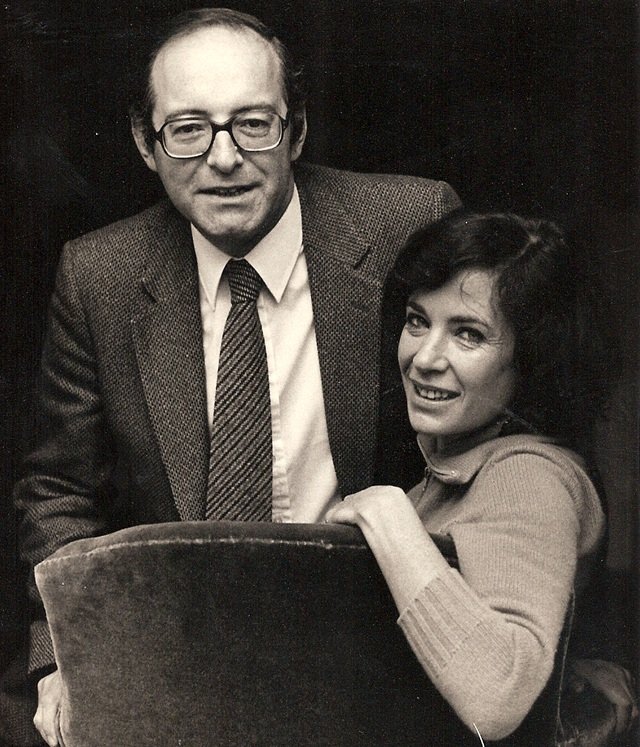
His father, John Gross FRSL, was one of the most erudite figures in British literary circles—a man The Guardian once called “one good argument for the survival of the species,” though he would have cringed at the praise. A child prodigy from London’s East End, the son of a Polish-Jewish immigrant, he became editor of The Times Literary Supplement, senior book editor at The New York Times, and a critic of astonishing reach. He created a home where curiosity was expected, and debate was constant.
Tom’s mother, Miriam Gross (now Owen), brought a cosmopolitan edge. Born in Jerusalem to German-Jewish exiles and educated across Europe and England, she built a formidable career in journalism and literary editing, interviewing luminaries such as Philip Larkin, Isaiah Berlin, Joseph Brodsky, and Francis Bacon, and shaping literary discourse at The Observer and The Sunday Telegraph. Tom and his sister were taught to value clarity, narrative, and the power of words to influence minds and societies.
From this mix of intellect and culture, Tom Gross inherited curiosity and sophistication. But the conscience that would define his career—his focus on human rights, the Middle East, and the ethics of journalism—was forged outside his parents’ libraries, in direct encounters with suffering, injustice, and the raw realities of the world.
Today, Tom is a journalist, international affairs commentator, and human rights advocate. He has written for leading publications including the London Sunday Telegraph, New York Daily News, The Wall Street Journal, The Guardian, and Haaretz, and contributed to television and radio programmes worldwide, from the BBC to CNN, and from NPR to Al Hurra.
He has given lectures at institutions including Harvard and Yale, and spoken at conferences on geopolitics, media ethics, and counter-terrorism, while serving on advisory boards promoting human rights, cultural diplomacy, and advocacy for marginalised communities. Educated in Politics, Philosophy, and Economics at Oxford, he combines analytical rigour with ethical engagement, producing work that emphasises both factual accuracy and moral responsibility.
I sat down with him for an in-depth discussion, exploring his perspectives on contemporary Middle Eastern conflicts, international relations, and the vital role of journalism in shaping public understanding.
Where did it all begin, I ask. One factor, he tells me, was a formative trip with his grandmother to Communist Czechoslovakia when he was just thirteen and another with her a couple of years later in the dying years of communism to East Berlin, as well as a high school trip to the Soviet Union.
“Although this wasn’t the aim of the trips – I went to Russia out of curiosity and on the other trips because my grandmother wanted to show me places she had lived or visited before the Nazi era – the result was that these trips made sure I would never sympathise with totalitarian or repressive systems, as unfortunately too many other young people in the west did then and still do.
“When you saw how terrible life was under communism, both in terms or repression and in economic terms, this led me to become concerned with human rights—genuine human rights, not the often phony kind promoted by quasi-Marxist ‘peace’ movements in the west.”
Witnessing the conditions of everyday life under totalitarian rule offered him a visceral understanding of inequality, scarcity, and state control. These experiences were more impactful than literary or academic instruction, embedding a sense of moral urgency and curiosity about governance, justice, and individual freedom.
Beyond political exposure, Tom’s intellectual development was nurtured by personal connections. For example, his godmother was Sonia Orwell, widow of George Orwell. “Many young people read ‘1984’ and ‘Animal Farm’ but I guess it makes you feel more personally connected if Orwell’s widow gives you your first copies.”
The environment and social circles of his parents played a role in shaping his perspective. I asked him how it felt to be surrounded by so many accomplished literary and cultural figures. “It didn’t feel particularly special at the time because if you’re a child, it’s all you know. But as I grew older I realised just how distinguished many of their close friends were including authors and playwrights such as Tom Stoppard and Nobel Prize winners such as Harold Pinter and V.S. Naipaul.”
The exposure to high-achieving thinkers instilled an early sense of the standards of intellectual rigour and achievement. It fostered a habit of careful observation, critical reflection, and the ability to situate oneself in broader debates about culture, society, and politics.
Tom grew up in a secular, cultural, intellectual Jewish environment. He is not religious, but he does tell me he finds it rather depressing how materialistic much of the world seems to have become. “Unfortunately for many people, at least in the West, their life seems to be overly consumed by trips to shopping malls, or endlessly scrolling through social media feeds, rather then visiting museums and reading books.”
Given that Tom has spent much of his career as a journalist, first as a foreign correspondent and then as a commentator and analyst, I ask his how he views the contemporary news media.
“We’re living in a world in which—at least in the democratic countries—there appears to be increasing polarisation and a reluctance to listen to opposing views. Voices in the centre are getting squeezed out.
“And many news reporters today can barely conceal their prejudices, especially when it comes to covering topics such as America or the Middle East. Even supposedly impartial reporters make their often one-sided views public on X or elsewhere. All this is not conducive to fostering an environment where the public will trust the media to be fair and balanced.”
Tom Gross’s early experiences appear to have equipped him with the critical faculties necessary to grasp this complexity, distinguishing between evidence, interpretation, and propaganda.
His started his career by first covering post-communist central and eastern Europe and then focused on the Middle East, assessing complex international and political issues with both moral clarity and analytical precision.
Years of on-the-ground reporting has resulted in Tom becoming close with many key players, and he has become a globally-recognised expert on the Middle East and on international affairs. His advice is often sought by various western governments as well as non-governmental organisations.
What does he think about the reporting of the Middle East?
“It could be so much better. In fact sometimes it actually exacerbates problems and makes it harder to find diplomatic solutions.
“It is unhelpful, to say the least, for respected reporters simply to repeat falsities or misinformation given to them by totalitarian organizations like Hamas. The BBC don’t automatically believe everything that, for example, Vladimir Putin says, and they shouldn’t do so with the Iranian regime or with Hamas or Hezbollah either. But they do. It is not only many people in Britain that are exasperated with the BBC’s Mideast coverage and its constant covering up for the crimes of Hamas. Many pro-democracy Iranians too now refer to the BBC as the “Ayatollah BBC’.”
What does Tom think about political situations where both sides are very flawed, Syria for example.
“The new government in Syria has some serious flaws, and it is not yet clear whether it will become more moderate and properly respect minority rights, or the rights of women.
“But it would have to become a great deal worse than it is before it became as bad as the Assad government that came before it. The Assad regime was horrendous, even by the standards of other dictatorships. It used chemical weapons to murder and deform its own children. It even used chemical weapons in the suburbs of its own capital, Damascus. At least half a million Syrian civilians were killed by Assad and his Iranian and Hezbollah allies, and another 100,000 were chained up underground, and tortured in prisons for years. And about 25–30% of the population was driven out of the country. 6 to 7 million Syrians became refugees abroad out of a prewar population of 22-23 million.”
What does Tom think about western and European diplomats often calling for non-intervention when it comes to dictatorships and terror groups?
“Obviously war is terrible and we should do all we can to avoid it. But there are occasions when pacifism can do more harm than good. Usually force needs to be used to stop evil regimes. Would the world really have been better if we had not fought the Nazis, as millions of people in Britain would have preferred in the early 1940s? Would Germany be the prosperous and peaceful country it is today if Nazism hadn’t been defeated? Would Japan?”
Tom’s perspective on conflict is pragmatic rather than doctrinaire. He frames military action as sometimes unavoidable, stressing proportionality and strategic aim: “War is a terrible, horrible thing that should be avoided whenever possible. But sometimes there needs to be military action, as horrible as it is, to make a better situation. I have friends who say, no, no, no, war is never justified. But there have been terrible wars, for example, Britain and other countries killed a great many German civilians and America dropped two nuclear bombs on Japan. It is hard to justify dropping a nuclear bomb because it’s just too horrible. But on the other hand it has led to Germany and Japan being free, democratic and prosperous countries for the last 80 years.”
What does Tom think about Iran? As we speak we are near the start of a two-week ceasefire between the US and the Iranian government.
“The Iranian regime, as we saw, fired rockets and missiles in the last month at about 12 different countries. Not just at Israel, not just at Arab countries, but also at Turkey and Cyprus and Azerbaijan.
“This is a regime that didn’t blink as it shot dead as many as 40,000 of its own brightest and best young people in just a two day period this past January. It is too dangerous to be left alone in the way that many west European leaders have been doing. Even Putin hasn’t murdered 40,000 of his own Russian citizens in his own capital Moscow in two days.”
“This is a regime that has spent billions and billions concealing its nuclear weapons program and building facilities deep underground beneath mountains to try and avoid detection.”
“For Iran to gain a nuclear arsenal is far more than dangerous than North Korea having done so. North Korea has a vile, horrendous regime. But it is a hermit kingdom. They don’t really threaten anybody apart from South Korea, whereas the Iranian government is a revolutionary government. And they want to export their extremist ideology globally, just like the Russian Bolsheviks wanted to do.”
“Do we really want this messianic regime in Tehran to get nuclear weapons?” Tom asks. “After decades of failed diplomacy, was there any realistic way of stopping them without employing force? Now there is a return to talks, but it has been backed up by the use of force by the US and Israel. Following this, the Islamic regime might – just might – give up its nuclear weapons program without the need for further force. But perhaps more force will be needed.”
I ask Tom why he thinks the Israeli-Palestinian conflict has proved so difficult to solve.
“There are several reasons, but one of the key reasons this conflict continues, which is sometimes not stated strongly enough, is that on the one side, there is a democracy and on other side there isn’t. Of course, democracies are not perfect and sometimes make mistakes and do wrong things. But in general, democracies like Israel are fair. They are accountable, hold elections, have changes of government. On the other side is a dictatorship called the Palestinian Authority.”
“Since the Palestinian independence movement was founded in 1964, it has only ever had two leaders, Yasser Arafat and Mahmoud Abbas. Both are dictators who never consulted their people and instead locked up and tortured and killed their Palestinian political opponents. Who knows, if Arafat or Abbas had put Israel’s repeated offers of an independent Palestinian state, to a free and fair vote, maybe Palestinians would have accepted the two state solution.”
Tom’s perspective is underpinned by rigorous legal reasoning, particularly regarding the conduct of conflicts and war. Addressing accusations levelled against Israel by international bodies, he asserts, “The Israeli army has lawyers, and they’re very, very careful not to breach the rule of law. Often when anti-Israel journalists claim that some laws have been breached, they’re not actually accurate and they refuse to listen to leading experts on the laws of war such as John Spencer of West Point.”
“For western journalists to make up the laws of war in their reports doesn’t help Israelis, doesn’t help Palestinians, and doesn’t help the cause of peace.”
Tom Gross elaborates with specific scenarios illustrating the complexity of modern urban warfare: “If Palestinian terrorists set up rocket launchers on the roof of a school, as they have done on many occasions, and fire rockets to kill civilians and children in Israel, then under the rules of war, Israel is allowed, even obligated, to stop those people trying to kill Israelis from the roof of the school. It’s not a war crime to target terrorists in the act of committing terror and it’s not honest journalism for international media to refer to those terrorists as civilians. Obviously Israel needs to take every care not to harm innocent bystanders but the reality of war is that sometimes civilians do get harmed.”
What about Hezbollah’s influence in Lebanon?
“Hezbollah are not really a Lebanese organisation. They are like a subsidiary or proxy of the Iranian Revolutionary Guards. And Hezbollah don’t only threaten Israel, they threaten the Lebanese state itself. They are holding not just Israel, but Lebanon hostage. They received so much money from the Iranian regime, billions in cash as well guns and weapons and tens of thousands of rockets, smuggled over the years from Iran, that they are now more powerful than the Lebanese army itself.
“You can’t have a country where you have a private militia that answers to a foreign dictatorship in Iran, and becomes more powerful and better financed than your own army. Defeating Hezbollah and other Iranians regime proxies such as the Houthis and Hamas, will help the cause of peace in Israel, Lebanon and elsewhere.”
What does Tom think of Donald Trump’s foreign policy?
Tom says he prefers to emphasise results over what he calls “Trump’s sometimes ugly rhetoric”.
“Trump thinks outside the box and as a result has achieved foreign policy successes that have eluded professional diplomats. He can be very rude. He can be a bully. But he also gets results, which make the world a better place.
“For example, in his first term his team – comprising of his personal friends and former colleagues and his son-in-law, rather than of professional diplomats – negotiated the Abraham peace accords. Since Israel became independent in 1948, there were only two peace treaties with Arab countries, Egypt and Jordan. Under Trump, in his first four years, he achieved four peace treaties and in the case of Israel’s peace agreements with the UAE and with Morocco they are particularly robust and warm peace deals, more so than the ones with Egypt and Jordan. So obviously Trump is doing something right.”
“Barack Obama was awarded the Nobel Peace Prize and countless other accolades even though he didn’t actually achieve any peace deals at all. Trump was shunned by the Nobel committee even though he actually created real lasting peace deals.
“Would I prefer Trump to speak in a more polished, sophisticated pleasant way? Yes I would. But in the end I am more interested in a political leader getting results that bring peace and a better situation.”