


by Our Foreign Affairs Editor
“War with Iran is inevitable and it is a matter of time, and the precise moment,” a top Israeli defence expert told the Sri Lanka Guardian, recalling his recent meeting with Reza Pahlavi in Washington DC, whom he described as “a pragmatic leader with the vision for democratisation of Iran.” “He has a very detailed plan on how to move to democracy, and the people trust him. They trust him and they want to see him replacing this regime and building a new reality.”
Amir Avivi, the retired Brigadier General of the Israeli Defence Forces and founder of the Israel Defense and Security Forum, is regarded as one of the fifty most influential Jews in the world. With operational experience and strategic insight, Avivi has long linked military realities with diplomatic matters, stating clearly that Israel’s survival requires both a strong defence and careful engagement with international partners.
“Well, you know, my childhood, I spent mostly outside of Israel. My father was a diplomat. And we moved around, you know, from country to country. I lived in Italy and the Ivory Coast as a young child. Then we arrived at the age of seven in Chile. At the time, it was a Pinochet military government.”
Recalling his time in authoritarian states, he said, “Every morning, we would wait in the lobby of the building. There would be armed guards who would escort us from the lobby to a fortified bus. From the bus, we would go to a school that was also very fortified. At school, we had many drills, hiding under tables, practising for terror attacks. In Argentina, it was more visible, and I was a bit older. That is when I really felt what it means to live in a totalitarian country.”
Even in that environment, Avivi remembers happiness. “But at the same time, I had a very happy childhood with lots of trips and time in nature. We went camping a lot.”
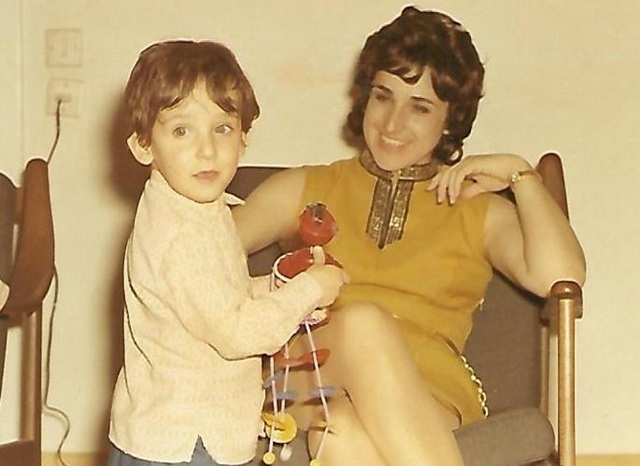
These experiences shaped his view of leadership and security. “I think the main thing I got from my childhood was moving from place to place, different cultures, different languages, adapting to big changes. It gave me a broad experience. On one hand, it strengthened my patriotism and connection to Israel and Zionism. On the other hand, I got to learn and connect to many cultures, became international, and learned multiple languages. It built my character and my connection to Israel as the son of a diplomat, hearing my father speak at events and lecture in different countries.”
His father left a lasting influence. “My father, for 51 years, devoted himself to international relations. I learned the importance of the work diplomats do, the impact they have on governments, and how they can improve Israel’s relations. One thing he stressed is building relations based on real interests and values and seeing how Israel can help other countries. Usually, we are busy with our own issues, the Israeli-Palestinian conflict, and so on. But when you go to South America or Africa, they are interested in very different things. Agriculture, water solutions, cyber technology—areas where Israel has an advantage. Also, you learn to listen and understand each country’s unique needs. Often we are too eager to explain about ourselves and don’t listen enough.”
Avivi links this adaptability to resilience. “When I was deputy division commander of the Gaza Strip, many groups came to see what was happening. Usually, we would stand overlooking Gaza, and they would ask me, I was a colonel at the time, ‘Colonel, what’s going on in Gaza?’ I would say, basically, since the day of the judges in the Bible, nothing has changed. Gazans attack us, we fight back again and again. Looking at the Bible, the time of the judges, including Samson, and today, what changed? Exactly the same dynamics, endless wars. But at the end of the book of Judges, it says the land was quiet for 40 years. People ask why that is important. Forty years of peace in Israel is rare, almost unheard of in 4,000 years. Israel is unique, linking Africa, Asia, and Europe. It is, I would say, probably the most important place religiously in the world, and there will always be interest in controlling it.”
This experience informs his view of Israeli society. “You need to build a resilient society, patriotic, strong, willing to live in peace but also ready to fight and defend itself. Israel is unique: a strong society not afraid to defend itself, but also happy and creative. I have been a soldier for 30 years, but I also play piano and clarinet, like classical music, travel, and good food. We combine these with patriotism and a connection to our history as the Jewish people.”
Avivi emphasises that Israel’s military operates with ethical standards. “Jewish values come from the Bible. When I see Israeli soldiers fight, their motivation is love for Israel and its people, not hate. Even after the 7th of October, during atrocities unlike anything since the Holocaust, when I visited units, I saw determination, not hate. Soldiers wanted to defend their homes and succeed. That is why people connect to our values: defending the country, protecting soldiers, and minimising civilian casualties while targeting terrorists.”
He explained Israel’s approach to urban warfare. “Israel fights an organisation that has no uniform, operates from hospitals, schools, tunnels, all over Gaza. Every place Israel operates in, we first announce to civilians where we will fight. It is dangerous for our soldiers but allows civilians to move to safety. Then operations happen in areas cleared of civilians. Usually, in urban war, for every terrorist killed, there might be five civilian casualties. That would be normal. In Israel’s case, it is one to 1.5, or one to two, which is unprecedented. I do not know any army that achieves that in such a fight. Even amid accusations, Israeli soldiers fight morally.”
On Israel’s preparedness before October 7th, he said, “My organisation, with thousands of officers, foresaw the war two years before it happened. We published a national security assessment saying war is imminent. We predicted a multi-front war. We warned the leadership, including the previous government, Netanyahu, the head of Mossad, and the president. They were caught in a mindset thinking that pushing away war would make our enemies collapse. They saw the Arab Spring, the collapse of Middle Eastern countries, what happened in Iraq, Yemen, Syria, Egypt. They thought containment would work. We said it would not. They would attack us.”
He wrote a book to outline the threat. “I published a book six months before the war, describing the coming war and what Israel needed to do. Its Hebrew title translates as We Cannot Go Back. We cannot be expelled from our land again. On the cover, a strong soldier’s shadow falls on a Holocaust-era boy with hands raised, yellow Star of David. On one hand, we are strong. On the other, the threat is serious. After the war began, it became a bestseller.”
Looking back, he said, “Three years since October 7th, the crisis gave us an opportunity. We are moving towards a decisive win, changing Israel and the region. We are close to seeing the fall of Iran’s regime and its proxies. We are approaching a point where Gaza can be cleared of Hamas. This will happen in the coming months. Israel and the US are renewing operations. We are reaching the moment to win fully, bring down Iran’s regime and its proxies, and destroy Hamas. I think it is achievable.”
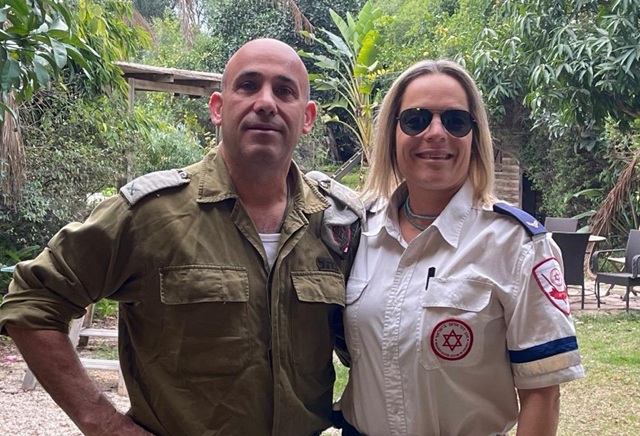
On Gaza, he was clear: “The first stage is Hamas laying down weapons and Gaza being demilitarised. This will take two to three years. Hamas will not give up voluntarily. They control 47% of Gaza until the IDF removes them. Only after Hamas is destroyed and Gaza is cleared can rebuilding begin.”
Regarding other Palestinian groups: “Israel has said clearly, no Hamas, no Palestinian Islamic Jihad, and not the Palestinian Authority. The only option is working with local clans, which Israel is doing. The future in Gaza and Judea and Samaria will rely on self-governance through local clans, not terror groups.”
On Iran, he said: “Iran is unafraid and using nuclear capability. This is dangerous globally. They cannot have nuclear weapons. They arm proxies across the Middle East, attack many countries, and try to control key straits. They also act in South America and Venezuela. This regime has no problem killing tens of thousands of its own civilians. It cannot remain. If it stays, it will continue to destabilise the region.”
He predicted confrontation: “Once the attack starts, the Iranian people will rise. A decisive American and possibly Israeli strike, combined with uprisings inside Iran, will bring down the regime. It is weak. The US is amassing forces to make the attack decisive. The president is ensuring the strike will achieve its purpose. Will there be an attack? Yes, I am certain. The regime will fall.”
Looking twenty years from now, he concluded: “Israel will have nearly 20 million people. If we continue to pursue peace through strength, alongside proactive economic and technological development and a strong army, long-term peace is possible. After this war, Israel could enter a period of growth in immigration, the economy, and peace agreements. Challenges will remain with Turkey and potential instability in Egypt. After 7 October, society and government are more aware of the threats.”










