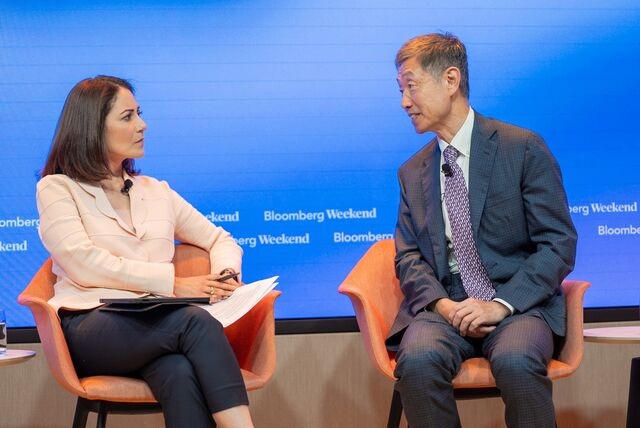
Weijian Shan’s journey from a teenager exiled to the Gobi Desert during China’s Cultural Revolution to one of Hong Kong’s most prominent financiers is a story of extraordinary contrasts. In an in-depth interview with Bloomberg in Hong Kong, Shan spoke candidly about his life, his views on China-U.S. relations, and the lessons he carries from one of the most turbulent chapters in modern history.
Born in Beijing in 1954, Shan was just four years old when Mao Zedong’s Great Leap Forward triggered a famine that left his family malnourished and millions dead. At 12, his education was cut short by the Cultural Revolution, and by 15, he was among the millions of urban youths sent to rural areas as part of Mao’s mass de-urbanization campaign. Shan was dispatched to the Gobi Desert, where he endured years of hard labor, hunger, and harsh conditions. “Nothing is tougher than those years,” Shan recalled, explaining how the experience gave him resilience that has carried through his later life.
By a stroke of fortune, Shan returned to Beijing in the mid-1970s and was eventually able to resume his education. He went on to study in the United States, where one of his professors was Janet Yellen, who now serves as U.S. Treasury Secretary. His academic success laid the foundation for a career in global finance. Shan later co-founded PAG, one of Asia’s largest private equity firms, and became a bridge between China and the United States during a period of closer engagement between the two countries.
That relationship, however, has deteriorated in recent years. Shan told Bloomberg that U.S.-China ties are at their lowest point since before Richard Nixon’s 1972 visit to Beijing. “The two countries are engaged in economic war — including trade war, including technology war — which is much more intensified than in 2018, when the first trade war started,” he said. While he acknowledged that Washington is determined to contain China’s rise, Shan argued that only China’s own policy missteps could truly derail its progress. “The only country that can contain China is China itself, by making policy blunders,” he said, referencing his 2019 Foreign Affairs article, The Unwinnable Trade War.
He believes China needs to rebalance its growth model, moving away from an overreliance on exports and toward private consumption, which accounts for less than 40% of GDP compared with 68% in the United States. Shan noted that younger Chinese are already shifting toward spending more on services and experiences, suggesting a pathway for future growth.
In his memoir Out of the Gobi: My Story of China and America, Shan described the violence and deprivation he witnessed as a teenager, including the horrific beating of a school vice principal by Red Guards. He told Bloomberg that he wrote the book to ensure that the Cultural Revolution is not forgotten, even as it remains absent from school curricula in China. “That period, horrific as it was, should be remembered — or else we forget and repeat that history,” he said.
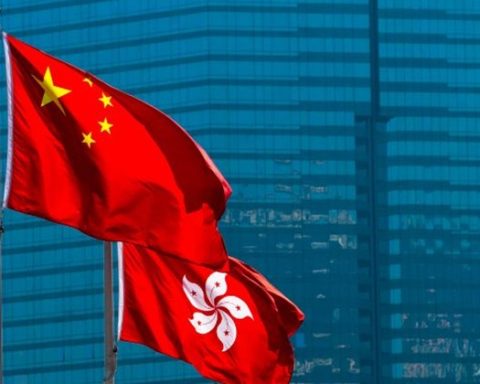
Shan also reflected on Hong Kong, where he has built his career. While he said the National Security Law imposed by Beijing in 2020 restored order after the turmoil of the 2019 protests, he acknowledged its profound impact on civic life and individuals such as Jimmy Lai, the jailed pro-democracy media tycoon and longtime acquaintance. Still, Shan insisted that the rule of law in the city remains intact and vital to the “One Country, Two Systems” framework.
Despite his global success, Shan maintains close bonds with those who shared his hardships in the Gobi. Many of his friends, he said, were left behind by history, their lives constrained by the loss of education during the Cultural Revolution. “My best friends are from the Gobi Desert. We suffered together, we survived together. We took care of each other,” he reflected. Even today, he admits to recurring dreams of being sent back. “For many years, even decades, after I came back from the Gobi, I would have a dream that letting me out was a mistake, a bureaucratic error, and I had to go back. I would wake up frightened, very fearful.”
For Shan, the distance from those days to his office towers in Hong Kong and New York is vast, but the lessons remain immediate. “Everything else I do, any difficulties that I encounter don’t seem so hard,” he told Bloomberg. His life, shaped by deprivation and opportunity alike, stands as both a personal testament and a reflection of the shifting tides between China and the world.