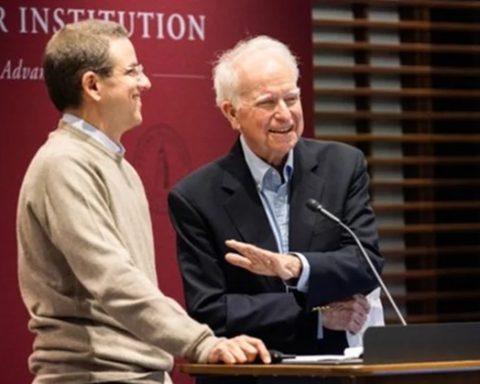
At 2,930 metres above sea level, with Mount Teide rising above him and a sea of clouds below, Garik Israelian moves through the facilities of the Canary Islands Institute of Astrophysics in Tenerife as the sun sets over La Palma and the observatory’s telescopes begin their work. The 63-year-old Armenian astrophysicist has spent much of his career studying the origins of planetary systems, but his interests extend well beyond the instruments of astronomy. For Israelian, curiosity is not merely a scientific impulse. It is one of the fundamental forces behind human development.
His career began in circumstances far removed from the international world of astronomy in which he now works. Born in Yerevan, Armenia, Israelian initially wanted to become a rock star. At university, he played in a band called 4G, named because all its members’ names began with G. He even built his first electric guitar himself, adapting components and adding transistors for effects by following schematics published in a ham radio magazine. Vinyl records were prohibitively expensive on the black market, costing the equivalent of a month’s salary, so musicians and enthusiasts traded records among themselves.
Science fiction provided the bridge between music and astrophysics. The novels of Isaac Asimov and Stanisław Lem encouraged Israelian to think about the reasons behind phenomena. He began reading popular physics books and gradually developed an interest in finding answers independently. That experience shaped his view of education: curiosity, he argues, must come before learning if knowledge is to endure.
He began his doctoral thesis in 1987, during the final years of the Soviet Union. When he eventually submitted it, the Soviet system was collapsing, while Armenia was also dealing with the consequences of the 1988 earthquake. Israelian recalls writing his thesis on a typewriter by candlelight. Despite the hardships, he remembers the Soviet university system as academically demanding and capable of providing excellent professors, books, scholarships and opportunities to those who wanted to study.
The collapse brought profound personal and social upheaval. Israelian had travelled to England as a PhD student and purchased a Yamaha keyboard, only to sell it, crying, simply to afford food. He eventually secured a scholarship to study in the Netherlands, beginning a career that took him to Utrecht, Brussels and Sydney before he settled in Tenerife in 1997.
His assessment of the Soviet collapse is also shaped by the contrasting experiences of generations. Young Armenians had grown increasingly detached from the communist regime, while his parents’ generation had believed sincerely in communism. His father had fought in World War II against the Nazis in Germany. For his parents, the discovery of widespread corruption was devastating because they had believed they were working towards a more just society.
Israelian argues that Armenia’s political independence did not automatically produce economic independence and maintains that the influence of the Muscovite empire persists. His broader reflections on Russia, Georgia and Belarus are inseparable from his memories of the Soviet system and from his belief that political structures can profoundly shape scientific and social development.
Science itself, however, has provided Israelian with an international community extending far beyond national borders. In 2010, he shared the prestigious Viktor Ambartsumian Award with Michel Mayor and Nuno Santos for their contributions to understanding the formation of planetary systems. He invested part of the prize money in Starmus, the science and music festival he founded with Brian May, guitarist of Queen.
Starmus became an unusual meeting point between scientific discovery and popular culture. Its first editions brought together Neil Armstrong and Buzz Aldrin, the first two humans to walk on the Moon, with Alexei Leonov, who performed the first spacewalk in history. Over eight editions held throughout Europe, the festival has featured figures including Jane Goodall, Kathryn Thornton, Donna Strickland, Kip Thorne, Larry King, Hans Zimmer and Brian Eno. Stephen Hawking participated twice, while the festival’s 10th anniversary of the Stephen Hawking Medal for scientific outreach is due to be celebrated next October in Tenerife and La Palma.
Israelian also played a role in bringing Brian May back towards science. May had already visited the Teide Observatory in 1971 and had left a thesis on zodiacal light unfinished while pursuing his musical career. Israelian encouraged him to complete it.
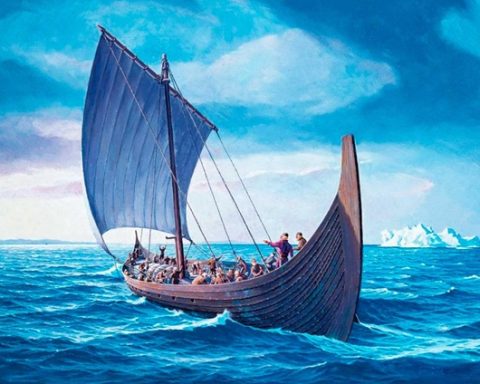
For Israelian, the fascination with astronomy begins with the simplest human experience: looking upwards. The sky, he says, is a vast, free laboratory and a source of curiosity. Historically, it was the one realm humans could not touch. Where explanations were absent, people created gods, demons and ideas of eternity. The desire to cross an ocean and discover what lies beyond, he argues, is fundamentally the same impulse that drives humanity to explore the heavens.
That curiosity also explains his impatience with flat-Earth beliefs. “Flat-Earth theory is a problem that should be addressed by psychology, not astronomy,” he says. He links its modern resurgence to the internet and social media, where attention and prominence can be gained by contradicting ideas established by science. If almost any extraordinary claim can attract an audience, he argues, scientific research must be accompanied by effective communication.
Eclipses remain an important part of that communication, but they are also scientifically valuable. Israelian explains that eclipses have been crucial to understanding the solar corona, whose temperature is around one million degrees Celsius compared with approximately 6,000 degrees at the Sun’s surface. Because the corona has such low density, it can only be seen naturally during an eclipse. The Canary Islands will be outside the path of totality for the eclipse on August 12, so Israelian plans to observe it from the Javalambre Observatory in Teruel.
His interest in space extends to the future of exploration. He sees the original space race as inseparable from Cold War competition but questions whether humanity can develop rapidly without rivalry. China, he argues, possesses enormous capacity but also faces bureaucracy and political control, while its private sector is becoming increasingly powerful. He sees a similar transformation in space exploration, where private companies have interests different from those of publicly funded science.
Public funding, he argues, allows scientists to pursue research without immediate commercial returns, while private companies are more likely to pursue profitable objectives such as searching for minerals on asteroids. He regards Elon Musk’s vision of Mars as a powerful example of the role of narrative in mobilising public attention. Whatever the destination, Israelian believes, the important thing is that questions about space remain part of public debate because debate itself creates momentum.
He takes a similarly optimistic view of technology. Artemis, he argues, demonstrates how technological advances have reduced the risks of spaceflight, while technologies developed for Mars could eventually prove useful on Earth. He also believes artificial intelligence will ultimately be more beneficial than harmful, despite producing some unemployment. Proper regulation, he says, should be the responsibility of democratic governments, while AI could even help combat corruption by monitoring financial flows at high speed.
The astrophysicist’s curiosity extends to planets beyond our own. He believes technology already exists to identify planets with the same mass as Earth and to investigate whether their atmospheres contain signs associated with life. Spectroscopy could, for example, detect changes corresponding to the presence of vegetation by examining reflected light. Whether humanity could ever reach such worlds is another question. A journey lasting 1,000 years could mean arriving in a radically different planetary environment, though, in the evolution of a planet, Israelian observes, 1,000 years is almost nothing.
Ultimately, it is not the beginning of the universe that most perplexes him, but its end. He imagines a distant future in which the visible universe ends in massive, supergiant black holes colliding, with no interstellar medium and everything reduced to emptiness and darkness.
The discovery he most wants to witness is closer to the boundary between astrophysics, biology and philosophy: whether human consciousness could ever be copied onto a computer. For Israelian, such an achievement would represent another phase of evolution rather than something to fear. Combining the power of many brains, he suggests, could allow intelligence to develop beyond the limits of the individual human brain.
Even here, he returns to his scientific instinct for definitions. Ethics, he argues, must first be defined before it can be debated. Physics has the advantage that scientists must agree on what they mean when they discuss an electron. The same precision, he suggests, is often absent from political and social debates.
It is this insistence on curiosity, questioning and definition that connects the unlikely stages of Israelian’s life: the Armenian student building an electric guitar, the young scientist writing a thesis by candlelight during the collapse of the Soviet Union, the astrophysicist studying planetary systems and the festival organiser bringing astronauts, Nobel laureates and musicians together. As reported by El Pais, his career ultimately illustrates a conviction that runs through his thinking: humanity advances because it keeps asking what lies beyond the limits of what it already knows.