Despite the ongoing devastation of Gaza, many of the region’s dedicated scientists continue to push forward with their research, showing an unwavering commitment to education and knowledge. The scientists spoke to Nature about their resilience during the prolonged war and the critical role their work plays in the recovery process.
The 42-day ceasefire between Hamas and Israel, which began on January 19, has provided a brief window of opportunity for researchers in Gaza to document the ongoing impact of the conflict. Scientists in the region emphasize the importance of publishing research and data that will guide recovery and rebuilding efforts. Khamis Elessi, a neuroscientist and head of the Evidence-Based Medicine Unit at the Islamic University of Gaza, explained the necessity of documenting these events for the future. “Research is critical [at this stage],” said Samer Abuzerr, a researcher at the University College of Science and Technology in Gaza, highlighting the importance of ongoing studies, especially in water-borne diseases.
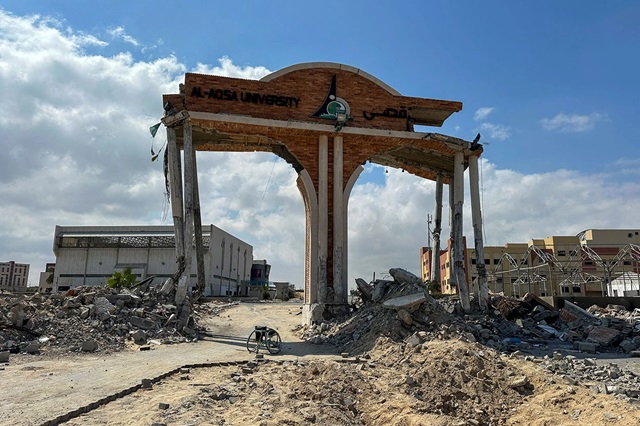
Despite facing immense challenges—including destruction of infrastructure, displacement, and lack of basic necessities—many researchers are persevering. The Palestinian academic community has shown remarkable resilience, even as many universities have been severely damaged or destroyed. As reported by UNESCO, 15 out of Gaza’s 21 universities have been affected, with some completely obliterated by bombings.
Aya ElMashharawi, an online-learning researcher at the University College of Applied Sciences, reflected on the harsh realities of continuing research under such conditions. While her own university campus has been destroyed, she remains committed to her academic journey, despite the difficulty of finding power sources to charge her laptop. “I remain committed to my academic journey,” she told Nature. ElMashharawi often relies on solar-powered shops to continue her work, a testament to the determination of researchers to keep learning alive, even in the face of overwhelming adversity.
The ceasefire has allowed researchers to focus on more pressing needs, such as assessing Gaza’s dire water, food, and healthcare shortages. The region’s infrastructure, including hospitals and sanitation systems, has been critically damaged, requiring urgent attention. For example, less than 4% of Gaza’s population currently has access to safe water, and 30% have access to a sewage network, down from 70% before the war. These conditions have led to an increase in water-borne diseases, underscoring the importance of ongoing research in public health.
With much of the territory in ruins, the future of Gaza’s academic institutions remains uncertain. Nonetheless, as researchers like Elessi and Abuzerr continue their work despite the destruction around them, they remain focused on the hope that the ceasefire may bring lasting peace and a chance to rebuild. “The most urgent thing now is to convert the ceasefire into a permanent one,” Elessi said, reflecting the collective hope of Gaza’s academic community for both survival and progress in the future.