


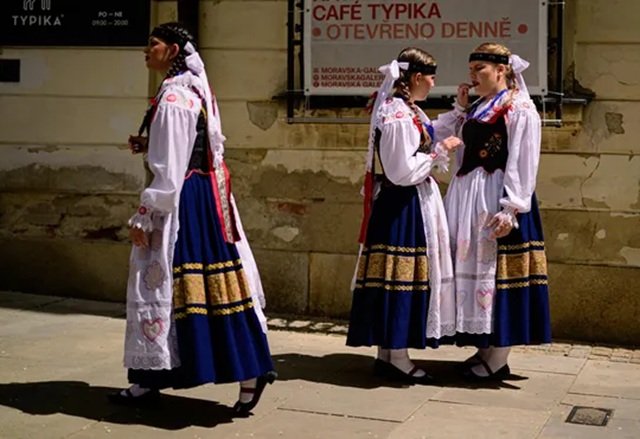
The warnings had been dramatic. Weeks before thousands gathered in the Czech city of Brno for the annual Sudeten German Day, politicians and activists predicted chaos, rebellion and even flames in the streets. Czech Foreign Minister Petr Macinka publicly suggested the city would erupt in anger during the Pentecost weekend, while nationalist groups online promised mass demonstrations against what they considered a dangerous provocation.
But when the weekend finally arrived, Brno did not burn.
Instead, the city became the stage for a tense and emotional confrontation with history itself — a struggle over memory, guilt, nationalism and reconciliation that revealed how unresolved Europe’s past remains, even eight decades after the end of World War II.
According to reporting and analysis published by the German newspaper Die Zeit, the gathering marked the first time the annual Sudeten German Day was held on Czech soil. For supporters, the event represented a historic act of reconciliation between Germans and Czechs. For critics, it reopened wounds tied to Nazi occupation, collaboration and the postwar expulsion of millions of ethnic Germans from Czechoslovakia.
The conflict centered around the memory of one of the darkest episodes of the postwar period: the Brno Death March of 1945. Shortly after Soviet forces liberated Brno from Nazi control, around 27,000 ethnic German residents were forced out of the city by the new Czechoslovak authorities and marched south toward the Austrian border. Thousands died from exhaustion, disease, hunger and violence.
The expulsions took place after six years of Nazi occupation that devastated Czechoslovakia. More than 300,000 people, including Jews and Czech civilians, died under Nazi terror. Many Sudeten Germans — the German-speaking minority living in border regions — had openly supported Adolf Hitler and collaborated with the occupation regime. After the war, collective guilt was imposed upon the community, leading to the expulsion of roughly three million Germans from the country.
That history still divides Czech society.
On the outskirts of Pohořelice, a village south of Brno where many victims of the death march are buried, around 2,000 people gathered for a memorial “reconciliation march.” German and Czech participants walked together along part of the same route the expelled Germans had taken 80 years earlier.
Yet only meters away, protesters waved signs listing Nazi crimes and accused organizers of minimizing the suffering inflicted by Germany during the occupation. Some demonstrators argued that modern reconciliation efforts ignored the historical reality of Czech victimhood.
One protester, identified by Die Zeit as Bretfeld, expressed anger that the atrocities committed by Nazi Germany were, in his view, being overshadowed by discussions of German suffering. “Every German is a Nazi,” another man shouted during an argument along the route, invoking his father’s torture under occupation as proof that the trauma had never disappeared.
The atmosphere oscillated between hostility and cautious understanding. At one point, a Czech demonstrator discussing military rearmament with a 78-year-old Sudeten German from Germany reportedly remarked in fluent German: “With Germans like you, it’s easy to talk.”
The reconciliation march itself remained largely peaceful despite scattered confrontations. Participants carried European Union, Ukrainian and Sudeten German flags as they walked toward Brno. Passing motorists honked horns, while nationalist counterprotesters shouted accusations and waved banners demanding apologies, reparations and even the dissolution of the Sudeten German association.
The political symbolism of the event quickly expanded beyond historical memory. Czech nationalist and far-right groups portrayed the gathering as evidence of renewed German influence in Central Europe. Critics accused organizers of opening the door to old territorial disputes and foreign pressure, despite repeated assurances that no property claims were being pursued.
The issue has become entangled with broader political tensions across Europe, including debates about nationalism, the European Union, Russia and democratic backsliding.
Die Zeit reported that Czech right-wing and communist groups heavily mobilized against the event, while a parliamentary resolution condemning the Sudeten German Day was passed shortly before the gathering. The vote was backed primarily by nationalist coalition parties, though several opposition politicians boycotted the session.
At the same time, Czech President Petr Pavel publicly supported the event and served as its patron, underlining the country’s growing divide between liberal and nationalist political forces.
For organizers like Jaroslav Ostrčilík, founder of the reconciliation march two decades ago, the controversy reflected a deeper political strategy. He argued that nationalist politicians were deliberately reviving fears surrounding the Sudeten Germans to distract from contemporary domestic issues, including concerns about media freedom and democratic institutions.
“Flood the zone with chaos,” Ostrčilík reportedly said, borrowing a phrase often associated with modern populist politics.
Inside the Brno exhibition halls where the Sudeten German Day officially took place, the atmosphere contrasted sharply with the demonstrations outside. Elderly expellees sat alongside younger generations speaking German, Czech and English. Folk groups performed traditional dances, cross-border cultural projects were showcased and politicians praised European reconciliation.
Markus Söder, the Bavarian state premier and longtime patron of the Sudeten Germans, described the reception in Brno as warm and historic. Bernd Posselt, leader of the Sudeten German association, said the event exceeded all expectations and argued that younger Czechs were becoming more open to dialogue and shared remembrance.
Still, skepticism remained widespread. Outside the venue, thousands of demonstrators gathered in central Brno chanting “Shame!” beneath Czech national flags. Former Czech President Miloš Zeman addressed the rally, while activists denounced the Sudeten German organization as a symbol of historical revisionism and German power.
Yet despite the rhetoric, the feared explosion never came. Cafés around the city center remained full. Most residents continued with their weekend largely indifferent to the demonstrations unfolding nearby.
In one of the most striking moments described by Die Zeit, Bretfeld — the nationalist protester who spent the weekend denouncing Sudeten Germans and the European Union — suddenly broke down in tears during a discussion about Gaza and civilian suffering. The emotional collapse revealed the complexity beneath the anger: historical trauma, political frustration and fear colliding in unpredictable ways.
By nightfall, Brno remained calm.
But the weekend demonstrated that Europe’s unresolved past still shapes its present. Eighty years after the war, reconciliation remains fragile, vulnerable to political manipulation and constantly tested by the rise of nationalism across the continent. In Brno, memory proved neither dead nor settled. It marched through the streets alongside the living.









