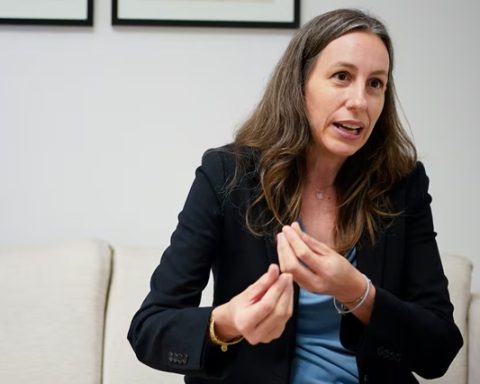
As Sri Lanka’s High Commissioner to India, Mahishini Colonne addressed the National Convention on Women in India at O.P. Jindal Global University on International Women’s Day with a theme that resonated far beyond ceremonial rhetoric: “Give to Gain.” Reflecting on her country’s experience, she told the audience, “I was struck by the theme ‘Give to Gain’… it has a great deal of relevance to my own country, Sri Lanka, not as a slogan, but as a structural truth.”
Colonne recounted Sri Lanka’s historic breakthroughs in women’s political leadership. “In 1960, sixty-six years ago, a woman stood before the people of Sri Lanka, elected as the first female Prime Minister in the history of the world: Sirimavo Bandaranaike. Interestingly, she served for more than eighteen years across three terms,” she said, highlighting the extraordinary longevity and impact of Bandaranaike’s leadership.
She continued, noting the achievements of Bandaranaike’s daughter: “In 1994, the people of Sri Lanka elected her daughter, Chandrika Kumaratunga, first as Prime Minister and then as Executive President – Sri Lanka’s first and, to date, only female Executive President. She received one of the largest percentage mandates in presidential elections in my country – over sixty-two percent of the vote.” Colonne observed that, for a period, mother and daughter simultaneously held the two highest offices in the country: “Both women.”
Turning to contemporary politics, Colonne introduced Sri Lanka’s newest female leader: “In November 2024, the people of Sri Lanka voted for Dr. Harini Amarasuriya. She received the highest preferential votes ever recorded in the Colombo District. An interesting fact about her is that she is not from a dynasty. Not from a political family. She is an academic. A sociologist. A trade unionist. A woman who spent her career fighting for the rights of the marginalised.”
Colonne reflected on the paradox facing Sri Lanka today: “By any measure, Sri Lanka should be a model for women’s political leadership. However, we rank 122nd out of 146 countries on the World Economic Forum’s Global Gender Gap Report. Women outperform men in many areas of education. Yet barely 31 percent are in the labour force.” She emphasized the stakes involved, arguing that “bridging this gap is not only a question of equality. It is also a question of unlocking the full economic potential of our societies.”
The High Commissioner drew on cultural context to explain this contradiction. “Across South Asia… we have always known how to honour the feminine. In the divine. We pray to Durga, the warrior goddess – fierce and invincible. We invoke Saraswati for wisdom, Lakshmi for prosperity. In Sri Lanka, the goddess Pattini – the embodiment of chastity, healing and justice – has been venerated for more than two thousand years.” Yet she cautioned that such reverence does not automatically translate into respect for real women: “We do not always treat real women with the same reverence. This is not a comfortable observation. But it is an honest one.”
Colonne explained the pitfalls of idealization: “There is a critique, articulated powerfully by feminist thinkers in this country and mine, that deification itself can be a trap. That placing women on a divine pedestal – as goddess, as mother, as the embodiment of honour and purity – is not the same as granting them dignity. It can, in fact, be used to control them.” She argued that “the moment a woman steps outside the role assigned to her, the reverence can curdle into something else entirely.”
The High Commissioner illustrated this point with Bandaranaike’s experience: “Sirimavo Bandaranaike was called a ‘weeping widow’ by her opponents – as though grief were her only credential. The moment a woman is powerful, the culture reaches for ways to diminish her: attributing her success to dynasty, to sympathy, or to the men behind her.” She emphasized that these critiques obscure the reality of leadership: “Whatever one thinks of her policies, and politics, no honest reading of the record can say she lacked the capacity to govern.”
Colonne noted the enduring impact of Bandaranaike’s vision: “During her first visit to India as Prime Minister in 1960, she laid the foundation stone for the premises we still use today in New Delhi… More than six decades later, we continue to benefit from the facilities she created – spaces that remain functional, beautiful and dignified, enabling us to carry out our diplomatic work.”
Reflecting on recent achievements, she highlighted Amarasuriya’s unprecedented success: “She did not get there through preferential treatment. She got there because she earned the trust – of a president, and of the public. In November 2024, Sri Lanka elected 21 women directly to parliament, the highest number in our history – more than double the previous figure. Not because of a quota. Because voters, faced with a broken system, chose differently.”
Colonne made a clear argument for structural change over charity: “What Sri Lanka’s women have asked for – and what I believe women everywhere are asking for – is not preferential treatment. It is the removal of the barriers that make the playing field unequal in the first place. Equal access to education. Safety in public spaces. Affordable childcare. Labour laws that do not exclude women under the guise of protecting them. The freedom to compete on merit without a handicap imposed by circumstance of birth. Opportunity. Not charity. Not a lower bar. A level playing field.”
She returned to the convention’s central theme: “‘Give to Gain.’ When societies invest in women’s education, safety and agency, they gain. Sri Lanka cannot service its debt, rebuild its public services, or honour its social contract without the full economic participation of its women. When more than sixty percent of our university graduates are women and fewer than a third are in the formal economy, that is not a social problem. It is an economic emergency.”
Colonne called on the next generation to act decisively: “Worship goddesses. But do not do so while neglecting real women, while ignoring the women standing beside you. Start trusting the women who are right in front of you.” Her message was unmistakable: when the door is genuinely open, women lead, rebuild, and transform societies. “The goddess Pattini… does not ask permission to heal. She does not wait to be invited. She simply does what she came to do. I suspect this is not unique to Sri Lanka. Across South Asia – including here in India – women have carried economies, communities and families through moments of crisis.”