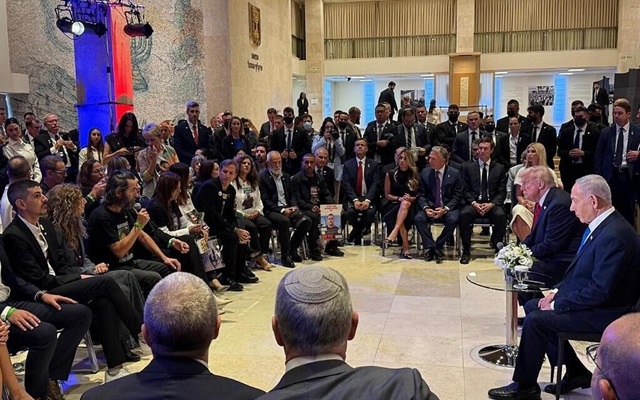
Hamas has released all 20 of the remaining Israeli hostages held in Gaza, bringing an emotional end to a two-year ordeal and triggering jubilant celebrations across Israel. The announcement came only hours after U.S. President Donald Trump landed in Tel Aviv to a hero’s welcome, declaring that “the war is over” and that “every country is dancing in the streets.” Thousands gathered in Tel Aviv’s Hostages Square to watch the live footage of the releases, waving flags and singing as the names of the freed hostages appeared on massive screens. Eyewitnesses described an atmosphere of overwhelming relief, with chants of “everyone now” and “bring them home” echoing through the crowds.
According to Israeli officials, the first group of seven hostages was released early in the morning, crossing into Israel where they were reunited with their families and taken for medical examinations. Hours later, the remaining thirteen were handed over to the International Committee of the Red Cross before being transferred to Israeli military custody and escorted out of Gaza. All twenty are now confirmed to be in Israeli hands. Authorities say the bodies of twenty-eight deceased hostages will also be returned as part of the ongoing ceasefire agreement, though the exact timing of those transfers remains unclear.
As part of the same deal, Israel is preparing to release more than 1,700 Palestinian prisoners and detainees, including hundreds held without charge or conviction. Rights group HaMoked has reported that most Palestinians in Israeli detention have never been formally tried. Outside the Ofer military prison near Ramallah, anxious families waited for news of their relatives. The scene was tense after Israeli drones dropped leaflets warning against public celebrations, reading, “We are watching you everywhere. If you express any support for or affiliation with a terrorist organization, you will expose yourself to arrest and severe penalties.” Palestinian residents told reporters that Israeli forces raided homes the night before the release, cautioning families not to hold public gatherings.
While many Palestinians welcomed the news, confusion and fear surrounded the process. Reports in Israeli media suggested that some of those serving life sentences would not be allowed to return to their families but would instead be deported. Al Jazeera also reported that Israel imposed travel bans on roughly one hundred relatives of the released prisoners, preventing them from reuniting. The Israeli Prison Service has confirmed that over 11,000 Palestinians remain in custody, many under administrative detention orders that allow imprisonment without trial.
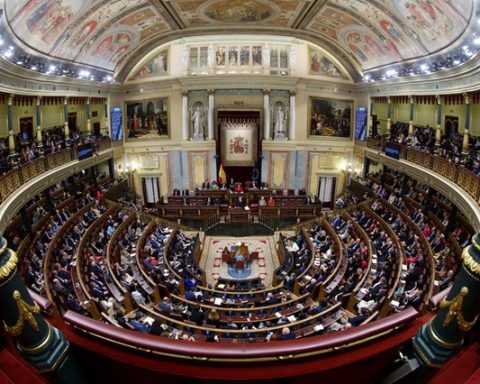
President Trump’s surprise visit added another dramatic layer to an already historic day. Arriving in Tel Aviv before heading to Jerusalem, he was greeted by cheering crowds waving American and Israeli flags. In the Knesset, members of parliament donned red “Trump The Peace President” caps ahead of his speech. Signing the visitors’ book, Trump wrote, “A great and beautiful day. A new beginning.” He is expected to meet with the families of the freed hostages before traveling to Egypt’s Sharm el-Sheikh for a peace summit, where the U.S.-brokered agreement between Israel and Hamas will be formally signed.
The ceasefire and mass prisoner exchange mark a significant step toward ending years of violence, though both sides remain cautious. Israeli officials have warned that the truce could collapse if Hamas or other militant factions fail to uphold their commitments. In Palestinian towns and cities, residents remain under tight restrictions as the releases unfold under heavy military presence. Despite the joy and relief seen in Tel Aviv, deep mistrust and grief linger on both sides. For many, the day’s events symbolize not only the end of captivity for a few but the beginning of a long and uncertain process of reconciliation in a region scarred by decades of conflict.