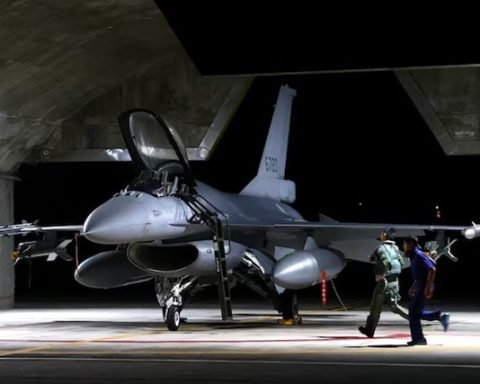
The United States is undertaking a massive military buildup in the Caribbean, focused on reactivating the long-abandoned Roosevelt Roads naval base in Puerto Rico and upgrading regional airports, according to a Reuters visual investigation. Crews have been clearing and repaving taxiways, erecting tents, installing portable air-traffic control systems, and positioning helicopters, Ospreys, and F-35 fighter jets at the Ceiba site. Once one of the Navy’s largest stations, Roosevelt Roads is now being transformed into a strategic hub capable of supporting rapid deployments and sustained operations.
Parallel upgrades have been observed at Rafael Hernández Airport in Aguadilla and Henry E. Rohlsen Airport in St. Croix. Mobile air-traffic-control towers, communications equipment, new apron areas, and a radar system have been installed, increasing the capacity for high-tempo aircraft operations, refueling, and pre-positioning of equipment and munitions. Military analysts suggest these improvements are consistent with preparations for potential operations against Venezuela, while also enhancing broader Caribbean surveillance and logistics capabilities.
The naval component of the buildup is substantial. Since August, the U.S. has deployed dozens of ships to the region, including the Gerald R. Ford aircraft carrier strike group, multiple guided-missile destroyers, and support vessels. The Ford strike group alone brings thousands of personnel and dozens of aircraft, dramatically expanding U.S. strike capabilities in the Caribbean and placing powerful assets within range of Venezuela.
Air power has also been scaled up. Flight tracking and on-the-ground reporting document B-1 and B-52 long-range bombers conducting patrols off Venezuela, F-35 aircraft arriving in Puerto Rico, and reconnaissance flights by Poseidon P-8A spy planes. Dozens of C-17 cargo flights have delivered equipment, weapons systems, and supplies to the Caribbean bases, suggesting pre-positioning for sustained operations. Experts say this air and logistical buildup is consistent with both counter-narcotics missions and contingency plans for potential military action in Venezuela.
Special operations capability is signaled by the repeated presence of the MV Ocean Trader, a former commercial vessel widely believed to be linked to U.S. Special Forces. The ship has been tracked moving between Ponce, St. Croix, and waters near Venezuela, capable of deploying helicopters and supporting covert insertions of special operations teams.
The U.S. military buildup in the Caribbean is the largest in decades unrelated to disaster relief, and it mirrors the scale and speed of historical deployments such as Operation Uphold Democracy in Haiti in 1994. Analysts told Reuters that the infrastructure improvements, aircraft deployments, and naval positioning appear designed to give the United States a flexible, powerful presence in the region, capable of projecting force, conducting intelligence operations, and responding to a variety of contingencies.
While the White House frames these deployments as part of an anti-drug campaign, Venezuelan President Nicolás Maduro has repeatedly accused the U.S. of seeking to remove him from power. President Donald Trump himself suggested potential operations against Venezuela, saying, “The land is going to be next.” The Reuters investigation shows that the U.S. has positioned the assets, personnel, and logistics to make such operations feasible, creating a network that dominates key Caribbean air and naval infrastructure while keeping Venezuela within reach.