For much of his childhood, photographer Olgaç Bozalp wanted only to leave the Turkish city where he grew up. At 12, he was already writing in his diary that he hated Konya and would escape as soon as he was old enough. He had no particular destination in mind. He simply knew that he did not belong there.
Today, after travelling through 63 countries, Bozalp has built a photographic career shaped by encounters with unfamiliar places, people and cultures. His work has been exhibited at institutions including London’s National Portrait Gallery, while the British Journal of Photography named him a “One to Watch” in 2019. Yet his journey from a small Anatolian city to the international art world was neither straightforward nor the product of an early, carefully defined ambition.
In an interview with ZEITmagazin, Bozalp recalled growing up in Konya, a city he described as religiously conservative, although his own family was secular. His grandfather’s military background had helped shape the family’s outlook. The religious residents looked down on them for preferring cinemas to mosques, while Bozalp’s family viewed the religious community with similar disdain. He remembers the city as lacking diversity and says he often felt alienated and misunderstood.
His early exposure to people from outside Turkey was limited. Konya attracted some spiritual travellers visiting the Mevlana Mausoleum, the resting place of the Sufi poet Rumi, as well as Turkish workers returning from Germany. The latter made an impression through their expensive jewellery, branded clothing and German cars, symbols of the prosperity they wanted to display after working abroad. But this conspicuous consumption irritated both religious and secular residents rather than inspiring admiration.
At 19, Bozalp left for an acting school in northern Cyprus. Although the territory remained culturally close to Turkey, the move marked his first attempt to build a life beyond the familiar surroundings of Konya. It was there that he encountered photography almost by accident. A fellow student from Istanbul owned a camera and allowed him to experiment with it. He began taking self-portraits before turning the camera towards classmates dressed in different costumes and performing different roles.
He did not initially imagine photography as a profession. He wanted a camera of his own, however, and financed its purchase through an unusual business: buying cheap liqueur and vodka in Cyprus and reselling them at higher prices in Turkey. His acting studies, meanwhile, were going badly. After he failed most of his courses, his father stopped sending him money, leaving him uncertain about what to do next.
London became his next destination, partly because he had heard that he could enrol in fashion photography courses there. On arrival, he discovered that the opportunity he had anticipated did not exist. He survived through temporary jobs, selling sandwiches while accepting almost any photographic assignment available, from portraits of babies and dogs to product photographs for online sellers. The work brought in just enough to keep him going.
Bozalp describes his motivation during those years less as confidence than as a refusal to fail again. He felt that people in London regarded him as an uneducated foreigner with little prospect of success. His family, too, appeared convinced that he would eventually return to Konya as a failure. Determined to avoid that outcome, he opened a small photography studio with a friend from acting school in an old factory in Hackney. They lived there illegally for six months, without a bathroom or kitchen.
Fashion photography offered a more reliable source of income, so he pursued commercial assignments even though his work was becoming increasingly distant from the kind of photography he would later develop. A turning point came through an unexpected invitation from his father, who proposed a trip to Japan and offered to pay for the flights. Bozalp contacted Turkish fashion magazines, promising photographs from the journey. One agreed to provide a modest budget, enabling father and son to travel together to a country neither had previously experienced.
For Bozalp, the experience was a revelation. He described the cultural shock of arriving in Japan as one of the healthiest experiences a person could have: the liberating sensation of seeing a world that seemed to have little in common with one’s own. He subsequently began proposing destinations to magazines before he had even arranged to visit them. After Japan, he offered to photograph in Russia, then Morocco. The strategy worked, and within a year he had travelled to 14 countries.
The freedom of travel, however, did not immediately translate into artistic independence. He continued accepting commercial fashion assignments, photographing products in countries such as Cambodia because the work paid for his journeys. He remained anxious about producing photographs without a client or a guaranteed income. Eventually, he reached a point of dissatisfaction with almost everything he had produced during the previous seven years. He deleted his photographs and began questioning what his work should represent, what his own perspective on the world was and what kind of connection he wanted to establish with viewers.
Around that time, his father invited him to travel through Jordan. During the journey, Bozalp began photographing his father, without a commercial commission or a predetermined purpose. The decision marked a shift towards a more personal form of photography. He later discovered that his father had also taken portraits of fellow soldiers during his military service in Turkey, earning some additional money from the work.
Photographing his father was partly an attempt to return something to a man who had photographed him and his sister throughout their childhood. It was also connected to their difficult relationship during his adolescence and, perhaps, to a desire for greater recognition. His father initially resisted becoming the subject of the photographs, but soon became equally enthusiastic about posing in front of the camera.
The Jordanian photographs unexpectedly opened professional opportunities. A French magazine offered him more lucrative documentary assignments, providing the resources to travel through Lebanon, Indonesia and South Africa while developing his own approach. He describes his work as neither conventional documentary photography nor entirely staged imagery. Instead, he seeks to capture something real through improvised arrangements and interactions with the people he photographs.
In Turkey, for example, he approached passers-by and asked where they would hide if disaster struck the following day, whether through a military coup or an earthquake. He then photographed them at the places they had selected. The process, he explained, allowed him to learn something genuine about his subjects while also creating an exchange between photographer and participant.
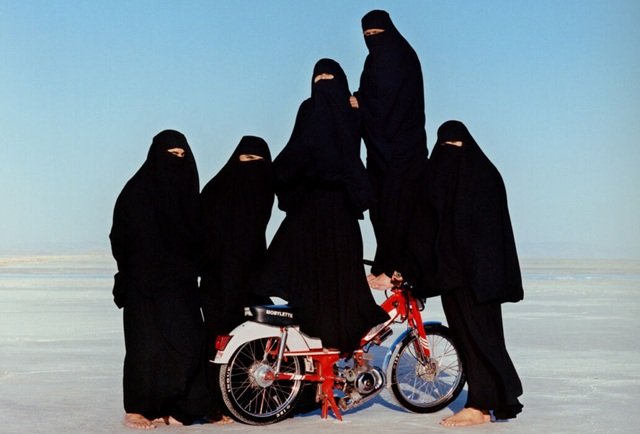
A recurring concern in his work is the way Western ideas of beauty and representation shape international visual culture. Bozalp points to the luxury fashion industry, which sells large quantities of expensive products in Dubai and Saudi Arabia but rarely features models from those societies in its advertising campaigns. The contradiction, he argues, is that consumers are important enough to buy the products but are seldom represented in the imagery used to sell them.
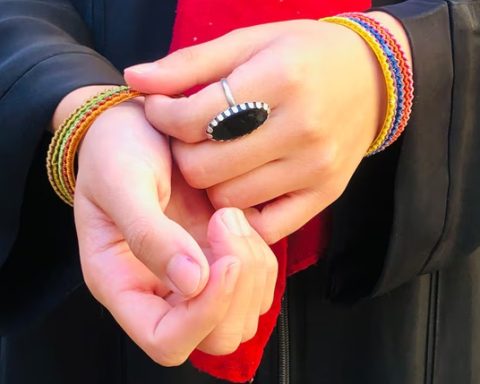
That concern also influenced his decision to photograph women in Iran. The project appeared difficult to arrange, and he was close to abandoning it before meeting an English teacher from near Tehran. She encouraged him to visit, organised the necessary arrangements and helped contact the women he would photograph. For security reasons, the portraits were taken inside their homes. The teacher was not involved in photography, Bozalp said, but wanted to challenge the Western assumptions she believed were widely held about Iranian people.
His experiences have strengthened his belief that travellers should form their own impressions rather than rely on inherited narratives. After visiting 63 countries, he says he has become more trusting of strangers, having found people remarkably similar across different societies. He singles out Indonesia for affordable accommodation and social warmth, India for its cuisine, and Mongolia for its vast, largely empty steppe, which he imagines as a glimpse of the Earth in its original state.
Yet international recognition has not resolved his relationship with the country he once wanted to escape. Although his photographs have been exhibited in major Western cities, including Amsterdam, Paris, New York and London, he remains troubled by the limited recognition his work has received in Turkey. One exhibition in Istanbul attracted mainly Western expatriates, an experience he remembers as deeply disappointing.
The longer he has travelled, Bozalp says, the more clearly he has understood how profoundly his perspective was shaped by growing up in Konya. The desire to leave home that defined his childhood has not erased his attachment to it. His travels have widened his view of the world, but they have also sharpened his longing for recognition in the place from which he once wanted to escape.
When the interviewer suggests the familiar expression, “No place like home”, Bozalp agrees. After 63 countries, the photographer who spent his childhood dreaming of departure has arrived at a more complicated understanding of belonging: the world may offer freedom, but the need to be recognised at home remains.