The Drake Framework
The grounding of aircraft across the United States on 13 November 2026 provides an important occasion to examine the vulnerability of international civil aviation through an application of Frank Drake’s seven-variable equation. Although originally conceived as a scientific framework for estimating the possibility of intelligent life beyond Earth, Drake’s proposition offers an interesting philosophical analogy for understanding complex systems whose continued existence depends upon the simultaneous satisfaction of several conditions. Its relevance to aviation lies in the recognition that an air transport system cannot function through the independent efficiency of its constituent institutions. Airlines, airports, air traffic services, regulatory authorities, technological infrastructure and the economic environment within which they operate must function in concert.
The significance of a nationwide aviation disruption is therefore not confined to the immediate inconvenience experienced by passengers or the financial losses incurred by airlines. It raises a more fundamental question concerning the resilience of an interconnected global transportation system: how can a disruption originating within one national aviation system affect the operational integrity of international air transport? The answer lies in understanding that modern aviation is not a collection of nationally contained transportation activities. It is a network of interdependent operations in which the failure or temporary incapacitation of one important component can generate consequences far beyond its geographical boundaries.
The events of 13 November deserve particular attention because the disruption was not caused by a failure of an individual airline or airport. It arose from a communications failure affecting the Federal Aviation Administration’s (FAA) air traffic control network. The FAA consequently imposed a nationwide ground stop, preventing departures across the United States for more than four hours. The restriction was lifted that evening, but the operational consequences continued well beyond the period during which aircraft were prohibited from departing. Reports attributed the disruption to overloaded switches and routers in an ageing telecommunications infrastructure, which produced inconsistencies in radar and communications data. The problem affected all 22 Air Route Traffic Control Centers responsible for managing aircraft movements across the country’s en-route airspace.
It is important, at the outset, to distinguish between grounding aircraft and closing an entire national airspace. The FAA’s action principally stopped departures; it did not order every aircraft already airborne to land immediately. Aircraft in flight were managed under the procedures available to controllers, and the immediate priority was to preserve safety where communications and surveillance capabilities had become unreliable. This distinction is important both operationally and legally. A ground stop is a traffic-management and safety measure, not necessarily a declaration that the airspace itself has been closed to all aviation activity.
The scale of the consequences was nevertheless extraordinary. Contemporary reports indicated that approximately 4,000 flights were airborne when the disruption occurred, while thousands of subsequent flights were cancelled and more than 10,000 delayed. Approximately 1.5 million passengers were reportedly affected. The lifting of the restriction did not restore the system instantaneously. Aircraft, crews, passengers and baggage had become displaced from their intended schedules, creating a secondary disruption which extended into the following days.
The incident is particularly revealing because it demonstrates that technological modernization and operational resilience are not interchangeable concepts. A system may possess sophisticated aircraft, advanced airport infrastructure and highly trained controllers, yet remain vulnerable if the communications architecture upon which those capabilities depend is obsolete or insufficiently resilient. The immediate failure may have been technological, but its consequences were systemic.
Drake’s Seven Variables and the Aviation Ecosystem
The application of Drake’s thinking requires a brief explanation for the lay reader. Frank Drake, an American astronomer, devised his famous equation in 1961 to estimate the possibility of intelligent civilizations existing elsewhere in the universe. He did not attempt to answer the question through one speculative assumption. Instead, he divided it into seven conditions, each of which contributed to the possibility that such a civilization might emerge and survive.
The significance of the equation is less its mathematical form than its underlying philosophy: a complex system cannot exist merely because one of its constituent elements is successful. Several conditions must be present, and their interaction determines the prospects of the whole.
Applied to aviation, the seven considerations may be understood as the emergence of viable markets, the existence of enabling economic and regulatory conditions, the availability of commercially sustainable routes, the capability of airlines, the adequacy of airports, the effectiveness of air traffic services, and the sustainability of the entire system over time.
The events of 13 November provide a practical illustration of what happens when one of these conditions, namely the effectiveness and reliability of air traffic services, is seriously compromised.
Airlines had aircraft available. Airports had runways, terminals and ground facilities. Passengers had purchased tickets and were ready to travel. Commercial demand had not disappeared. Yet the system could not function normally because an indispensable component of its operational architecture had become unreliable. The failure of one variable consequently diminished the productive capacity of all the others.
This is the essential lesson of Drake’s approach when transposed to aviation: the strength of an ecosystem cannot be judged by the individual excellence of its components, but by their ability to function together.
The First Variable: The Emergence of Air Transport Markets
The first consideration in Drake’s reasoning concerns the conditions which permit a system to emerge. In aviation, this translates into the existence of markets, commercial demand and the economic circumstances which sustain air transport.
The American disruption illustrates that the existence of a substantial and economically mature aviation market does not necessarily guarantee operational continuity. The United States possesses one of the world’s most extensive domestic and international aviation networks. It has major airline operators, sophisticated airports, substantial passenger demand and an extensive air navigation infrastructure. Yet these advantages could not prevent a nationwide interruption when the communications network upon which aircraft movements depended became unreliable.
The lesson is that market maturity must be accompanied by infrastructural resilience. A large aviation market is not necessarily a resilient aviation market. Indeed, the greater the volume of traffic, the more extensive may be the consequences of a failure affecting its common operational infrastructure.
The Second Variable: Enabling Institutional and Regulatory Conditions
Drake’s second consideration concerns the conditions which permit potentially viable systems to develop. In aviation, these conditions include sound regulation, institutional competence, adequate investment and effective governmental oversight.
The American incident raises questions about the adequacy of investment in critical aviation infrastructure. Reports indicated that the FAA’s telecommunications network continued to depend upon ageing equipment and legacy copper-based systems. The Government Accountability Office had previously identified significant sustainability concerns affecting numerous FAA air traffic control systems. The incident therefore cannot be examined exclusively as an unforeseen technical malfunction. It must also be considered against the background of infrastructure modernization, investment priorities and institutional preparedness.
There is an important distinction between having a modernization programme and having a modernized system. The former represents governmental intention; the latter represents operational reality. A government may announce substantial expenditure, commission technological improvements and establish ambitious implementation schedules, but until the new infrastructure is fully integrated, tested and operationally dependable, the vulnerabilities of the existing system remain.
This raises a question of regulatory accountability. The FAA has a statutory responsibility to maintain and administer a safe and efficient national airspace system. That responsibility cannot be discharged merely by ensuring that aircraft comply with applicable safety requirements. It must extend to the reliability of the infrastructure through which air traffic is managed.
The issue is not necessarily whether the FAA was legally justified in ordering the ground stop. Given the reported inconsistencies in communications and surveillance data, the precautionary decision to restrict departures appears understandable from a safety perspective. The more fundamental question is whether the infrastructure was sufficiently resilient to prevent such a widespread failure and whether adequate contingency arrangements existed.
The Third Variable: Connectivity and the Network Effect
Drake’s third consideration concerns the number of potentially habitable planets within a planetary system. In aviation, the corresponding consideration is the availability of viable routes and the connectivity which makes an air transport network economically and socially valuable.
Connectivity is the lifeblood of international civil aviation. An airline does not operate in isolation between two geographical points. Its commercial viability frequently depends upon its ability to connect passengers and cargo through intermediate hubs, coordinated schedules and interline or code-sharing arrangements.
The United States is particularly important in this respect. Its major airports serve as international gateways and connecting centres linking North America with Europe, Asia, Latin America and the Caribbean. When departures from these airports are interrupted, the consequences extend beyond passengers whose journeys originate in the United States.
An international passenger departing from London, Frankfurt, Tokyo or Singapore may be travelling to a destination beyond the United States but relying upon a connection through an American hub. A disruption at that hub can interrupt the entire journey. Similarly, passengers arriving in the United States from abroad may be unable to continue their domestic connections.
The network effect also extends to cargo. Air freight frequently operates according to carefully coordinated schedules involving aircraft rotations, warehouse handling, customs clearance and onward transportation. A disruption in one important hub can delay time-sensitive consignments, including pharmaceuticals, electronic components and perishable commodities.
The essential point is that international air transport is a network of connected markets. Its efficiency depends upon the reliability of the connections between them. A disruption in one major national system may therefore diminish connectivity across several other systems.
The Fourth Variable: Airlines and Operational Capability
The fourth consideration in Drake’s equation concerns the development of life. Its aviation equivalent is the emergence and operational capability of airlines.
The American grounding exposed a distinction between an airline’s commercial capacity and its ability to maintain operational continuity in the face of external disruption.
Airlines may possess sufficient aircraft, qualified pilots, cabin crew, maintenance personnel and financial resources to operate their published schedules. However, their ability to do so remains dependent upon the availability of the airports and air traffic services within which they operate.
When the ground stop was imposed, airlines were required to suspend departures notwithstanding their own operational readiness. Once the restriction was lifted, they faced the additional difficulty of restoring aircraft and crew rotations. An aircraft scheduled to operate several sectors during a day could no longer necessarily perform those sectors in their intended sequence. Crew members might have reached their maximum permitted duty periods, while aircraft and passengers were stranded at locations different from those anticipated in the original schedule.
This is particularly significant in international aviation because aircraft rotations frequently cross national boundaries. An American carrier’s aircraft delayed at an overseas airport may subsequently be unavailable for its next scheduled departure. Equally, a foreign airline whose aircraft is delayed in the United States may be unable to maintain its subsequent international schedule.
The disruption therefore demonstrates that airlines cannot achieve resilience independently of the infrastructure upon which they rely. Their contingency planning must encompass not merely mechanical failures, adverse weather and industrial action, but also failures of national air traffic management systems.
The Fifth Variable: Airports As Indispensable Infrastructure
The fifth consideration in Drake’s intellectual framework concerns the conditions necessary for intelligent life to emerge. In aviation, it may be understood as the adequacy of airport infrastructure.
The American incident demonstrates that an airport’s operational capability is not determined exclusively by the condition of its runways, terminals and ground-handling facilities.
Airports continued to possess their physical infrastructure during the disruption. Nevertheless, their ability to process departures was substantially impaired because the wider air traffic management system could not reliably support normal operations.
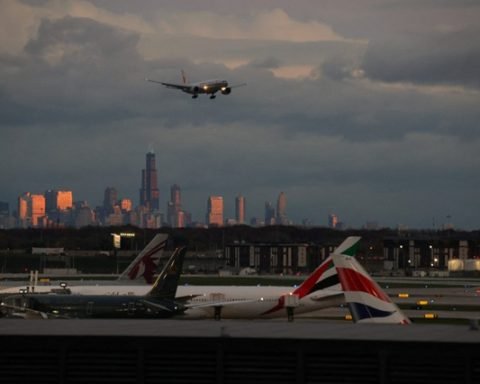
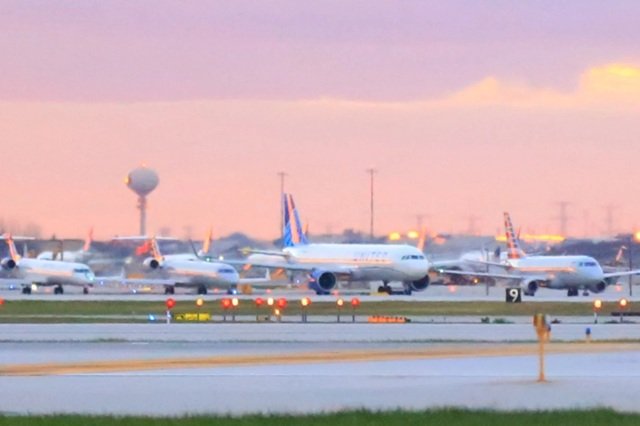
The consequences were particularly visible at major airports such as Los Angeles International, Chicago O’Hare and other important American gateways. Aircraft occupied gates and aprons for extended periods, passengers remained aboard aircraft or returned to terminals, baggage-handling operations became congested, and subsequent arrivals encountered difficulties because aircraft could not be accommodated at their intended gates.
This illustrates a fundamental distinction between physical capacity and operational capacity. An airport may possess the physical ability to handle a particular number of aircraft movements, but its actual operational capacity depends upon the availability of air traffic services, ground-handling personnel, security arrangements and other supporting systems.
Airport planning must therefore be undertaken in conjunction with airspace planning. Investment in runways and terminals without corresponding investment in air traffic management may produce infrastructure which is impressive in appearance but constrained in practical utility.
The Sixth Variable: Air Traffic Services and Technological Resilience
This is arguably the most important variable in explaining the events of 13 November.
Drake’s sixth consideration concerns the development of the technological means through which an intelligent civilization communicates. In aviation, the equivalent is the capacity of air traffic services to communicate reliably with aircraft, coordinate their movements and maintain the safety of the airspace.
Modern aviation depends upon continuous and dependable exchanges of information. Controllers must know where aircraft are, communicate instructions, coordinate traffic flows and ensure that prescribed separation standards are maintained. Pilots, in turn, must receive and acknowledge instructions and possess reliable information concerning their operating environment.
The failure reported in the United States was particularly serious because it affected communications and radar information across all 22 en-route air traffic control centres. Transportation Secretary Sean Duffy attributed the problem to overloaded switches and routers in an ageing network. The precise technical cause remained subject to investigation. Officials stated that there was no evidence establishing a cyberattack, although the possibility had not been definitively excluded at the time of the initial reporting.
The significance of this episode extends beyond the immediate technical failure. It demonstrates that aviation safety is dependent upon the integrity of the technological infrastructure supporting air traffic management.
It also brings into focus the importance of redundancy. A resilient system must be capable of maintaining essential operations when one component fails. Backup communication channels, alternative routing arrangements, geographically distributed systems and tested recovery procedures are indispensable.
The incident raises an important question about the relationship between technological innovation and technological dependency. The introduction of artificial intelligence, predictive analytics, satellite-based navigation and automated traffic management may substantially improve aviation efficiency. Yet the advantages of these technologies can be undermined if they are dependent upon an underlying infrastructure which is obsolete, inadequately integrated or vulnerable to overload.
Technology should therefore be assessed not merely by its sophistication but by its reliability, interoperability and capacity to withstand failure.
There is also a human dimension. Air traffic controllers remain central to the safe management of aircraft movements. Technological systems should enhance their situational awareness and decision-making capabilities rather than create additional dependencies which may compromise their ability to discharge their responsibilities when systems malfunction.
The Seventh Variable: Longevity and Sustainability
Drake’s seventh consideration is the duration for which a civilization remains capable of communicating. Its aviation equivalent concerns the sustainability of the air transport ecosystem over time.
This variable is particularly revealing because the American disruption did not end when the FAA lifted its ground stop. The restoration of normal operations required the repositioning of aircraft, the reorganization of crews, the accommodation of stranded passengers and the reconstruction of disrupted schedules.
In other words, the immediate technical problem was resolved before the wider operational consequences had disappeared.
This distinction between recovery and restoration is important. Recovery means that the system has regained the ability to function. Restoration means that it has returned to its intended level of performance. The two are not necessarily simultaneous.
An aviation system should therefore be assessed not merely by how frequently it experiences disruptions but by how effectively it anticipates, absorbs and recovers from them.
Sustainability also has an economic dimension. Airlines suffer revenue losses, airports experience operational inefficiencies, passengers incur additional expenses and cargo operators face contractual and logistical difficulties. These costs may accumulate even where the original disruption lasts only a few hours.
A genuinely sustainable aviation ecosystem must consequently possess the institutional, technological and financial capacity to withstand disruptions without compromising its long-term viability.
International Air Transport and the Extraterritorial Consequences of a Domestic Disruption
Perhaps the most significant lesson from the American grounding is the extent to which an event occurring within one sovereign State can affect international civil aviation.
The Chicago Convention of 1944 recognizes the sovereignty of States over the airspace above their territories. Article 1 establishes this principle. However, the practical operation of international air transport demonstrates that sovereign jurisdiction does not produce operational isolation.
An aircraft departing from a foreign airport for the United States may already be airborne when a ground stop is imposed. Depending upon the circumstances and the instructions issued by the relevant authorities, it may continue to its destination, be subject to holding, be diverted or be required to remain at its airport of departure. Similarly, international flights originating in the United States may be prevented from departing even where their intended destinations are outside American territory.
Reports indicated that some international departures from Los Angeles were permitted to resume before the wider restriction was lifted, illustrating that the operational response was not necessarily identical for every category of flight. Mexican authorities also reportedly introduced temporary restrictions as a precautionary measure following the American disruption.
This is an important illustration of the interconnectedness of national aviation systems. Foreign airlines, foreign airports and foreign passengers may experience the consequences of an American air traffic management failure even though they are not subject to the FAA’s domestic operational jurisdiction.
There is also a question of international coordination. ICAO’s role in establishing international standards and recommended practices under Article 37 of the Chicago Convention assumes particular importance where national operational failures have consequences for international aviation. Annex 11, dealing with Air Traffic Services, and Annex 10, dealing with Aeronautical Telecommunications, provide important elements of the international framework within which such services are organized.
The incident should prompt renewed consideration of whether States possess sufficiently robust contingency arrangements for communications failures affecting air traffic services. International coordination should include timely notification to neighbouring air navigation service providers, airlines and affected States, together with appropriate arrangements for diversions, traffic restrictions and the restoration of normal operations.
It is equally important that national authorities distinguish between the immediate need to protect safety and the longer-term responsibility to maintain reliable infrastructure.
My Take
The grounding of aircraft in the United States on 13 November 2026 should not be remembered merely as an episode of mass flight cancellations and passenger inconvenience. It should be understood as a demonstration of the fragility of a highly interconnected technological and institutional system.
Drake’s intellectual framework provides an illuminating way of understanding this fragility. Its application to aviation establishes that the existence of viable markets, capable airlines, adequate airports and sophisticated air traffic services is not sufficient in itself. These elements must operate within an enabling regulatory environment and be sustained through reliable technology, institutional preparedness and long-term investment.
The American experience demonstrates that a deficiency in one essential component can compromise the performance of the entire ecosystem. It also demonstrates that the consequences of such a deficiency are not confined to the geographical boundaries of the State in which it occurs.
There is a lesson here for ICAO and its Member States. Aviation governance must move beyond the compartmentalized examination of airlines, airports and air navigation service providers. It must recognize their collective dependence and establish a framework in which resilience is treated as a shared responsibility.
The immediate priority should be a thorough technical and institutional investigation of the American failure, including the adequacy of backup systems, the management of legacy infrastructure, the integration of new technologies and the effectiveness of contingency procedures. The findings should inform international discussions on the resilience of air traffic management systems.
Ultimately, the question is not whether aviation can prevent every technological failure. No complex technological system can offer such a guarantee. The more meaningful question is whether aviation has the capacity to absorb a failure in one component without allowing it to compromise the integrity of the entire system.
That is the essential lesson of Drake’s seven variables when applied to international civil aviation: the strength of aviation is not measured by the excellence of its individual components, but by the resilience of the relationships which bind them together.
Aviation is, in the final analysis, an ecosystem. Its continued vitality depends upon the ability of airlines to fly, airports to receive and dispatch aircraft, and air traffic services to maintain the safe and orderly movement of those aircraft. If one of these essential elements fails, the others may continue to exist, but the ecosystem as a whole is diminished.
And that, perhaps, is the most compelling lesson of 13 November 2026.