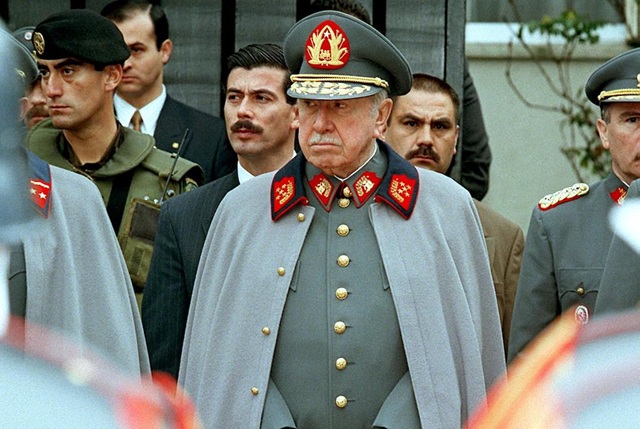
Twenty-five years ago, the UK government made a controversial decision that allowed Chile’s former dictator, General Augusto Pinochet, to evade extradition to Spain, where he faced charges for human rights abuses. Recently declassified files have shed light on the behind-the-scenes political manoeuvring that led to this outcome, revealing how diplomatic and economic considerations took precedence over justice.
According to UK Declassified, the decision to release Pinochet in 2000 was framed as a humanitarian act due to his declining health. However, newly uncovered documents indicate that political calculations played a significant role. The British government, under Prime Minister Tony Blair, faced intense pressure from Chilean officials and influential figures in the UK who wanted to avoid a legal precedent that could implicate other world leaders in future human rights cases.
Pinochet, who ruled Chile from 1973 to 1990, was responsible for widespread atrocities, including the torture, disappearance, and execution of thousands of political opponents. His 1998 arrest in London, following an extradition request from Spain, was a groundbreaking moment in international law. It was the first time a former head of state had been detained on the principle of universal jurisdiction, which allows nations to prosecute individuals for crimes against humanity, regardless of where they were committed.
However, declassified government files suggest that Britain’s handling of the case was influenced by concerns over its diplomatic and trade relations with Chile. UK Declassified reports that private discussions between UK officials and Chilean representatives focused on ensuring that Pinochet was returned home rather than face trial in Spain. There were also fears within the UK establishment that allowing Pinochet’s extradition could set a dangerous precedent for British officials involved in military interventions abroad.
Newly released documents further reveal that former Prime Minister Margaret Thatcher had a secret agreement with Pinochet during the 1980s, promising him medical assistance in Britain in exchange for Chile’s military and intelligence support during the Falklands War. According to internal UK government communications, officials feared that if this deal were exposed, it would be politically embarrassing. Blair’s principal private secretary, John Holmes, remarked in a memo that “it would obviously be embarrassing if all this came out”.
In March 2000, then-Home Secretary Jack Straw ruled that Pinochet was medically unfit to stand trial, citing reports that he was mentally and physically incapacitated. However, within months of his return to Chile, Pinochet was seen walking unaided and giving interviews, raising questions about the validity of the UK government’s medical assessment.
The case sparked global controversy, with human rights organisations condemning Britain’s decision as a failure of justice. Amnesty International described it as “a dark day for international accountability”, while Spanish prosecutors accused the UK of prioritising political convenience over legal responsibility.
Throughout his detention, Pinochet’s release was heavily lobbied for by both Chilean officials and British political figures. Former Prime Minister Thatcher personally intervened, writing to Blair in 1998 that Pinochet “was our close friend in times of extreme national danger” and should be allowed to return home on “compassionate grounds”. Vatican officials also pressured the UK government, arguing that Pinochet, at 83 years old and in poor health, deserved clemency.
By mid-1999, diplomatic negotiations between the UK, Chile, France, and Spain led to a deal in which Straw would cancel the extradition request and send Pinochet back to Chile. Reports suggest that UK Foreign Secretary Robin Cook assured Spanish officials that “he would not let him [Pinochet] die in Britain”, while Spain agreed that he would not be extradited there either.
Despite his release, Pinochet faced legal battles in Chile until his death in 2006, though he was never formally convicted for his crimes. The recently declassified files add further weight to accusations that Britain played a pivotal role in ensuring his escape from justice.