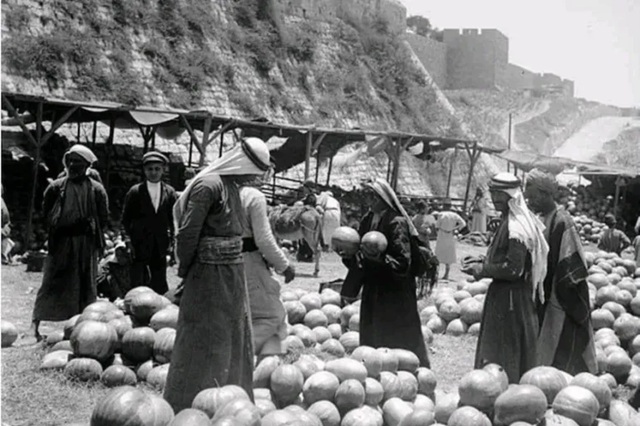
Britain’s colonial rule in Palestine during the 1920s and 1930s was not an exercise in neutral governance but a calculated and systemic effort to enable Zionist colonization at the expense of the indigenous Palestinian Arab population. The British mandate, established after World War I, was built on the deception that it would prepare Palestine for independence. Instead, it became a tool for advancing European Zionist ambitions while denying Palestinians their fundamental rights.
The origins of this betrayal lie in the infamous Balfour Declaration of 1917, in which Britain promised to support the creation of a “Jewish national home” in Palestine—without the consent of the Arab majority that had lived there for centuries. Despite its vague assurances that the rights of “existing non-Jewish communities” would not be prejudiced, the declaration effectively signed away Palestine to incoming Jewish settlers, disregarding the will and presence of the native population. British leaders, including Arthur Balfour, David Lloyd George, and Winston Churchill, privately assured Zionist leaders that their goal was always the establishment of a Jewish state, a promise that dictated British policy for decades.
The British mandate system systematically discriminated against Palestinians. The mandate’s legal framework gave unparalleled advantages to the Zionist movement, providing official recognition and government-like powers to the Jewish Agency while refusing similar representation to the Arab population. Zionist land acquisition was openly facilitated through policies that dispossessed Palestinian farmers, transferring large tracts of communally owned land to Jewish settlers. Meanwhile, the British military suppressed Palestinian resistance with deadly force, violently crushing protests and imprisoning leaders of the nationalist movement.
One of the most glaring examples of British favoritism was the appointment of Zionist advocate Herbert Samuel as the first high commissioner of Palestine. Samuel aggressively supported Jewish immigration, sanctioned the establishment of Zionist paramilitary forces, and implemented policies that marginalized Palestinians economically and politically. The influx of European Jewish settlers dramatically altered the demographic and political landscape, fueling Palestinian fears of displacement. When Palestinians protested, they were met with collective punishment, airstrikes on villages, and extrajudicial killings, reinforcing Britain’s unwavering commitment to the Zionist project.
Palestinian efforts to resist were consistently undermined. While Zionist leaders enjoyed privileged access to British officials, Palestinian representatives were ignored or forced to accept the legitimacy of the Balfour Declaration as a precondition for negotiation. Palestinian protests, including mass congresses demanding majority rule and an end to Jewish immigration, were met with British intransigence. Instead of engaging with Palestinian demands, British authorities relied on their tried-and-tested colonial “divide and rule” strategy, appointing elite Arab figures to bureaucratic positions to fragment the nationalist movement.
The British crackdown on Palestinian uprisings was brutal. In response to a series of revolts in the 1920s and early 1930s, British forces employed severe military repression. From imposing martial law to collective punishment measures such as village demolitions and mass arrests, the British made it clear that Palestinian resistance would not be tolerated. Airstrikes were ordered against rural villages, and military tribunals handed down severe sentences, disproportionately targeting Arabs while granting leniency to Zionist militants.
The final catalyst for full-scale Palestinian rebellion came in 1935 when Britain’s complicity in Zionist arms smuggling was exposed. Palestinians, who had already suffered under British rule for nearly two decades, saw undeniable proof that the mandate was designed to support their subjugation. Sheikh Izz ad-Din al-Qassam, a preacher and resistance leader, rallied the impoverished and landless Palestinian peasants, advocating armed struggle. His assassination by British forces ignited the 1936 Arab Revolt, the most significant Palestinian uprising against British-Zionist domination.
Rather than addressing Palestinian grievances, Britain doubled down on its policies. British forces, including veterans of the notorious Black and Tans from Ireland, were deployed to Palestine, bringing with them a legacy of colonial violence and terror. They engaged in systematic torture, home demolitions, and mass executions, ensuring that any aspirations for Palestinian independence were crushed. Meanwhile, Zionist militias were allowed to expand their military capabilities, setting the stage for future conflicts.
By the end of the British mandate in 1948, Zionist colonization had been firmly established, thanks to Britain’s unwavering support. The seeds of Palestinian dispossession had been sown, leading directly to the Nakba—the catastrophic mass displacement of Palestinians that followed the creation of the State of Israel. Britain’s role in this tragedy cannot be ignored. Far from being a neutral administrator, the British Empire engineered the systematic suppression of Palestinian self-determination while enabling the establishment of a Zionist state. The legacy of this betrayal continues to shape the ongoing struggle for justice in Palestine today.