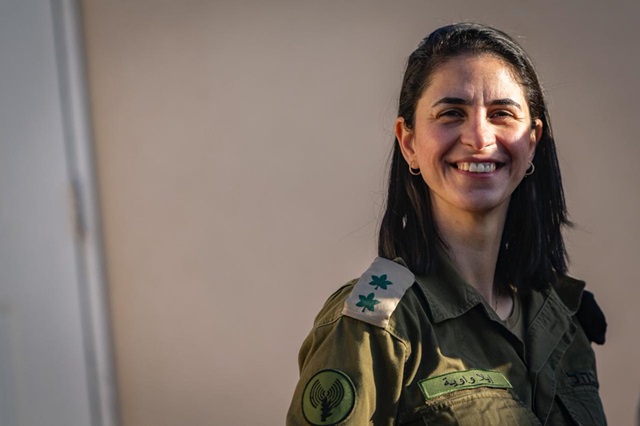
Ella Waweya, better known as Captain Ella, has become the Israel Defense Forces’ most senior Muslim officer and the new Arabic-language spokesperson for the Israeli army, a position that has thrust her into the center of both national pride and regional controversy. On February 6, she visited the West Bank city of Tulkarm, dressed in uniform and a helmet, to shoot a social media video aimed at engaging local Arabic-speaking communities. The video began with her soft greeting: “Ya ahali, Tulkarm,” and immediately drew attention for its unusual combination of a friendly tone and the backdrop of an armed military presence.
In the video, which has amassed over 800,000 views on Facebook, Waweya spoke directly to the residents of Tulkarm, describing her conversations with local people in recent weeks. “I kept hearing one goal: ‘We want to be able to make ends meet, to live; we don’t want any trouble,’” she said. She also warned of the dangers posed by armed groups, saying, “There are people who would steal those dreams from you, pull your young people and children to the way of arms, and turn these alleys into battle sites. In the end, you and your children are paying the price. Don’t let terrorism steal your lives away, and don’t let anybody hide among you.” She concluded with an Arabic proverb: “He who isn’t kind to his parents isn’t kind to others.”
Despite the measured tone, Waweya’s appointment and her messaging have sparked sharp criticism in Palestinian and wider Arab media. One commentator wrote that “the voice is angelic but reality is diabolical,” while another accused her of ignoring the violence perpetrated by Israeli settlers. Lebanese and Egyptian media figures have expressed suspicion, highlighting her role as an Arab Muslim woman in an institution seen as part of the occupation. Yet Israeli media, including Haaretz, have framed her appointment as a breakthrough in integration, highlighting how she represents both her community and the Israeli military establishment.
Born in the Arab city of Kalansua, Waweya volunteered for national service in 2011 at a hospital in the Tel Aviv suburb of Kfar Sava, and joined the army two years later, a rare path for an Arab Israeli woman. She initially worked in the IDF Spokesperson’s Unit on new media and earned recognition for her performance, receiving the President’s Award for Outstanding Soldiers in 2015 and the Operations Directorate’s Outstanding Soldier Award in 2018. Her ascent culminated in her current appointment as the army’s top Arabic-language spokesperson, making her the highest-ranking Muslim officer in the IDF.
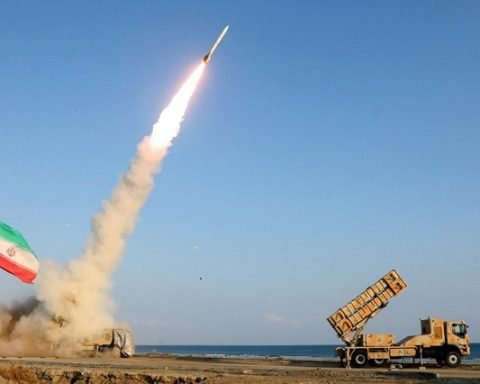
Her first major assignment in this role coincided with Israel’s military operations in Iran alongside U.S. forces. On February 11, she posted a caricature of the late Iranian Supreme Leader Ali Khamenei on Facebook, depicting him as a bleeding octopus, with the caption: “The arms that extended to sabotage capitals and countries and threaten the proud people of Israel were cut off one by one, until the head of the octopus of terrorism paid the price for its evil and criminality in its own backyard.” This high-profile messaging illustrates her dual role as both a cultural intermediary and a strategic communicator during periods of conflict.
Reactions to her appointment have been polarized. In Israel, some media have emphasized her unique position as a young, female, Arab, and Muslim officer in uniform, portraying her as a symbol of diversity within the IDF. Channel 13 noted her as “the new face of the IDF in the Arab world,” while Maariv highlighted that her identity may work to the army’s advantage in communicating with Arabic-speaking audiences. Conversely, Arab commentators have accused her of serving as a tool of military propaganda. Lebanese commentator Rula stated, “In the end, she’s representing the army. It doesn’t matter that she’s an Arab or Muslim; to me she’s the side that bombs.”
Despite the criticism, Waweya has embraced her identity and role. In 2021, she stated publicly, “I am Ella. Woman, Arab, Muslim and Israeli,” underscoring both her pride in her heritage and her commitment to her military service. She has been active on TikTok and other social media platforms, responding to criticism and defending her presence in uniform, noting that “some people have a hard time seeing a woman in military uniform, especially if she’s an Arab woman – as if this threatened their fragile masculinity.”
Her appointment also signals a generational shift in IDF public relations. She succeeds Avichay Adraee, a longstanding male spokesperson often criticized in Arab media as delivering deadly messages with a smile. Waweya’s presence as a young Arab woman challenges expectations and forces audiences to reconsider the narratives surrounding the Israeli military and its engagement with Arab communities.
According to Haaretz, Waweya’s role reflects broader trends of integration and outreach within Israel, highlighting how Arab citizens can rise to prominent positions in national institutions. At the same time, her prominence underscores the ongoing tensions in the region and the complexities faced by Arab Israelis navigating dual identities amid a landscape of conflict. Her efforts to communicate Israel’s message in Arabic during military operations, including recent strikes on Iran, demonstrate the strategic importance the IDF places on media and messaging in the region.
Waweya’s story is also one of personal ambition and courage. Her decision to join the army in secret, without initially informing family and friends, reflects the challenges Arab Israelis face in reconciling community expectations with personal aspirations. Over the years, her work has focused on combining professionalism, cultural fluency, and public outreach, which now places her at the forefront of IDF communications.
As Captain Ella continues to navigate criticism and admiration, her tenure will likely shape perceptions of women, Arabs, and Muslims in the Israeli military. Her presence challenges both domestic and regional audiences to consider the intersections of identity, loyalty, and professional duty. Whether viewed as a symbol of progress or a controversial figure, Ella Waweya’s role as the IDF’s Arabic-language spokesperson represents a historic milestone, capturing the attention of Israel, the Arab world, and international observers alike.