Regulatory efforts to eliminate per- and polyfluoroalkyl substances (PFASs) from drinking water have triggered a surge in the development of technologies aimed at capturing and destroying these persistent pollutants. As highlighted by Nature, these synthetic chemicals, known as “forever chemicals” due to their resistance to natural degradation, are found in countless industrial and consumer products, including medical devices, electronics, textiles, and firefighting foam. The challenge of removing PFASs from the environment has become a pressing global issue.
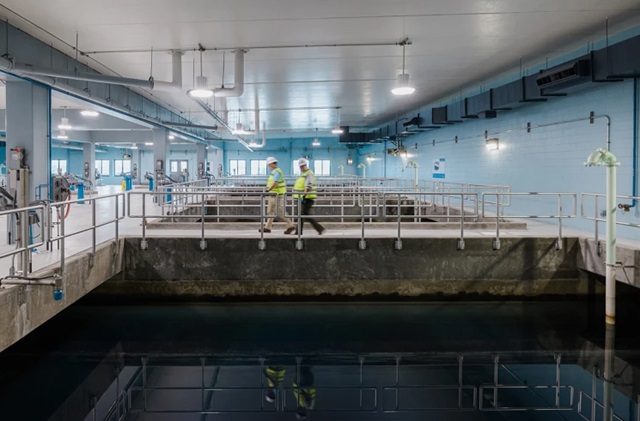
One of the primary methods for removing PFASs from drinking water is the use of granular activated carbon (GAC), which absorbs these chemicals from contaminated water. This process is already in use at Wilmington, North Carolina’s Sweeney Water Treatment Plant, where large amounts of GAC are deployed to filter water from the Cape Fear River. Once saturated, the carbon is transported to high-temperature reactivation kilns, where PFASs are broken down and converted into minerals. However, this method has its limitations. GAC does not capture all PFASs effectively, particularly short-chain PFASs, and the transport process adds to carbon emissions.
Other techniques such as ion-exchange resins and reverse osmosis membranes provide alternative means to capture PFASs. Ion-exchange resins trap contaminants through electrostatic interactions but are costly and require toxic solvents for regeneration. Reverse osmosis, while effective, produces large amounts of PFAS-laden brine, which presents disposal challenges.
Simply capturing PFASs is not enough—destruction is key to ensuring they do not re-enter the environment. Current destruction methods include incineration and high-temperature reactivation in kilns. However, studies indicate that these methods may not fully break down PFASs, potentially releasing harmful gases into the atmosphere. As a result, researchers are exploring new destruction technologies, including:
- Plasma-based degradation, which uses ionized gases to break molecular bonds.
- Supercritical water oxidation, which utilizes high-temperature and high-pressure water to decompose PFASs.
- Catalytic chemical breakdown, which employs chemical catalysts to decompose PFASs at lower temperatures.
- Ultraviolet light-triggered reactions, a promising technique currently undergoing field testing.
Beyond drinking water, PFASs persist in soil and wastewater. Industrial discharge, firefighting foam use, and the spreading of PFAS-laden biosolids on farmland contribute to widespread contamination. Scientists are investigating various remediation techniques, including soil excavation, biochar application, and plant-based trapping of PFASs. At contaminated sites, ultrasound-based destruction techniques are being deployed underground to prevent further spread.
With increasing regulatory pressure, particularly from the U.S. Environmental Protection Agency (EPA) and European authorities, utilities and industries must adopt effective PFAS removal strategies. Predictive modeling is now being used to determine the most suitable filtration and destruction technologies for specific water sources. However, experts agree that preventing PFAS contamination at its source—by limiting industrial discharge and developing safer chemical alternatives—remains the most effective long-term solution.