Huawei has announced a major breakthrough in artificial intelligence (AI) software with the launch of its Unified Cache Manager (UCM), a tool designed to optimise how high-bandwidth memory (HBM), DRAM, and solid-state drives (SSDs) are used in AI workloads. The development, first reported by AI Magazine, marks an important step for China’s semiconductor industry amid ongoing US technology sanctions.
The software was unveiled during the 2025 Financial AI Reasoning Application Landing and Development Forum in Shanghai. According to Huawei, UCM reduces AI inference latency by up to 90% while boosting system throughput as much as 22 times, thanks to an intelligent memory management strategy.
Zhou Yuefeng, Vice-President and Head of Huawei’s data storage product line, explained that UCM works by distributing data based on latency requirements. This approach shifts some of the heaviest processing tasks away from HBM, easing reliance on the expensive, high-performance memory chips that have become increasingly difficult for Chinese firms to acquire due to export restrictions.
Sanctions and Strategy
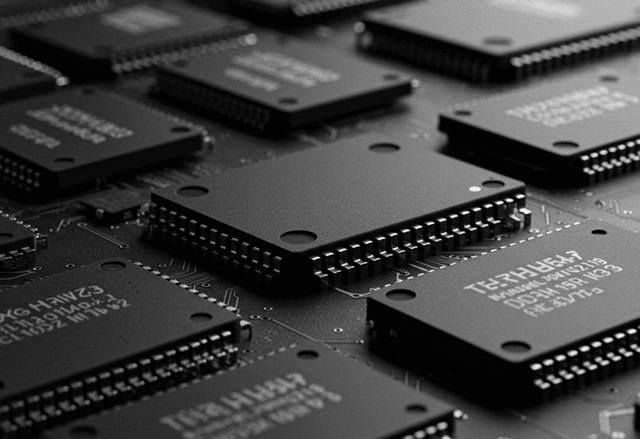
The release comes at a critical time. US-imposed sanctions prevent Chinese companies from accessing advanced HBM versions, including HBM2e, HBM3, and HBM4, cutting them off from global leaders such as SK Hynix, Samsung Electronics, and Micron Technology. These restrictions have hampered domestic chip development and forced firms like Huawei to explore software-based alternatives to close performance gaps.
While experts note that UCM cannot fully replace cutting-edge HBM hardware, it demonstrates how Chinese technology companies are leveraging software innovation to mitigate hardware shortages. The growing demand for HBM chips, projected to nearly double global revenues by 2025 and reach US$98 billion by 2030, further underscores the urgency of such solutions.
Real-World Applications
Huawei has already tested UCM in partnership with China UnionPay, applying the software to tasks such as voice analysis, marketing planning, and office automation. The trials showed significant efficiency gains while reducing operational costs — proof that the system is ready for large-scale deployment.
Adding to its potential impact, Huawei plans to make UCM open-source in September 2025, opening the door for developers, enterprises, and industry partners to adapt and enhance the software. Analysts believe this could accelerate the adoption of UCM across China’s AI ecosystem while reducing the dominance of foreign technology providers.
Positioning for the Future
Although Huawei’s new software does not eliminate the need for advanced HBM chips, it is viewed as a pivotal step in improving China’s technological self-sufficiency. By optimising memory usage and extending the capabilities of less advanced hardware, UCM could allow Chinese AI developers to remain competitive in an industry where efficiency and performance are paramount.
As AI Magazine points out, Huawei’s Unified Cache Manager is more than just a technical innovation — it is a strategic move designed to help China weather geopolitical headwinds while carving a stronger foothold in the rapidly expanding AI market.