




“How many were the gardens and springs they left behind, and corn-fields and noble buildings, and wealth and conveniences of life, wherein they had taken such delight? Thus (was their end)! And we made other people inherit (those things).”
Holy Quran, Chapter 44, Verses 25-28
While reflecting on the significant events that unfolded on 8th December 2024 in Syria, it is impossible not to draw parallels between these recent developments and the insights of the great thinker and sociologist Ibn Khaldoun, who lived seven centuries ago. The unfortunate truth is that both Arab and Muslim nations fail to learn from their past experiences and seem to neglect the history they were instructed to study by Almighty Allah in many verses of the Holy Quran.
Most nations within our Ummah are living in waste and corruption, a fate predicted by Ibn Khaldoun in his seminal work Al-Muqaddimah (Ibn Khaldoun’s Prolegomena), published in 1377 AD. Ibn Khaldoun was neither a soothsayer nor a prophet; he was simply a man who understood the dynamics of societies and their people. Blessed with the knowledge and sciences of his time, he foresaw the downfall of these nations. Had his insights been further developed and applied within the Arab world, the situation for Arabs and Muslims today might have been entirely different. Sadly, ignorant societies often dig their own graves.
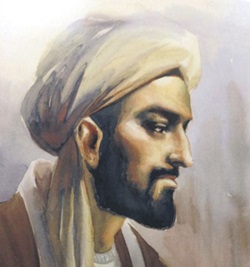
It is crucial to remember that Ibn Khaldoun wrote, over seven centuries ago, “When nations fall, many astrologers, beggars, hypocrites, pretenders, scribes, cacophonous singers, and average poets emerge. Also, agitators, mouthpieces, palm readers, horoscopes, revelers, politicians, meddlers, satirists, and opportunists abound.” This is exactly what transpired following the fall of Bashar al-Assad’s regime in Syria. In such times, terror reigns, and people seek refuge in sects. Rumours flourish, friends become enemies, and enemies become friends; what was once false is now perceived as true, and the true voice fades.
Moreover, people grow more attached to their tribes and homelands to the point of delirium, and the voices of sages are drowned out by the noise of preachers. Nationalism, patriotism, and the fundamental tenets of religion are distorted, leading to accusations of betrayal even within families. Intrigue and conspiracy theories become common, with advice pouring in from all corners, often from hypocritical outsiders who are planning everything for the native population. Worst of all, the homeland becomes a transit station, a place everyone is eager to leave.
It is clear that Ibn Khaldoun was a man ahead of his time—truly “hors pair.” A distinguished economist, thinker, and sociologist, he introduced many concepts of economic theory over 400 years before Adam Smith. Ibn Khaldoun’s ideas were the inspiration behind what is now known as the “Laffer Curve.”
For Ibn Khaldoun, when law and order are established, and peace prevails, greater specialisation becomes possible. This occurs in a large population with minimal taxation and free trade, unimpeded by restrictions. In contrast, Adam Smith viewed specialisation as a function of market size: the larger the market, the greater the specialisation. The difference between Ibn Khaldoun and Smith is subtle, as both recognise that the co-operation and coordination of factors of production is the key to economic prosperity. For Ibn Khaldoun, a larger population means greater potential for specialisation and economic surplus.
Ibn Khaldoun also advocated for a stable monetary policy. He opposed authorities manipulating the value of currency, fearing that rulers might devalue it to fund grandiose projects or mercenary armies. Such actions would lead to inflation and erode public trust in the currency. These developments are considered unjust and detrimental, and remarkably, this idea has been embraced by modern central banks such as the American Federal Reserve, the Bank of England, and Germany’s Bundesbank. These institutions have implemented relatively independent monetary policies aimed at controlling inflation and maintaining currency stability.
Paradoxically, the relative backwardness of developing countries can often be traced to weak property rights. According to Ibn Khaldoun’s theory, countries with strong property rights will experience a prosperous civilisation, while those with weak property rights will remain impoverished indefinitely.






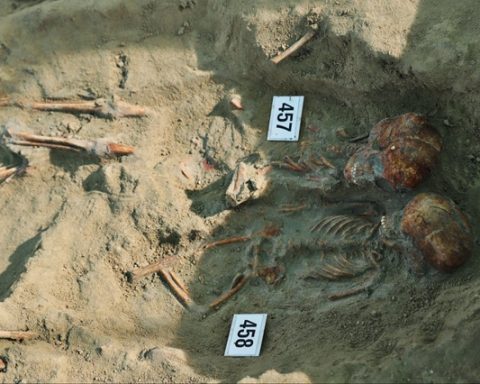






While Ibn Khaldun’s observation about societal collapse is thought-provoking, I disagree with the notion that terror and chaos only emerged after the fall of Bashar al-Assad’s regime. On the contrary, the people under his rule already lived in fear and agony, subjected to systemic oppression and atrocities.
Recent reports from credible sources like the BBC and other outlets have revealed harrowing details about the regime’s prison cells and the widespread abuse, torture, and inhumane treatment of detainees. These atrocities demonstrate that the reign of terror did not begin with the regime’s downfall; it was deeply entrenched during Assad’s rule.
The suggestion that turmoil and falsehoods only arose post-collapse overlooks the decades of suffering endured by Syrians under a regime that silenced dissent and perpetuated violence. The people’s plight did not begin with sectarian divisions or chaos but with the authoritarian grip that destroyed lives and eroded trust long before any power shift occurred.