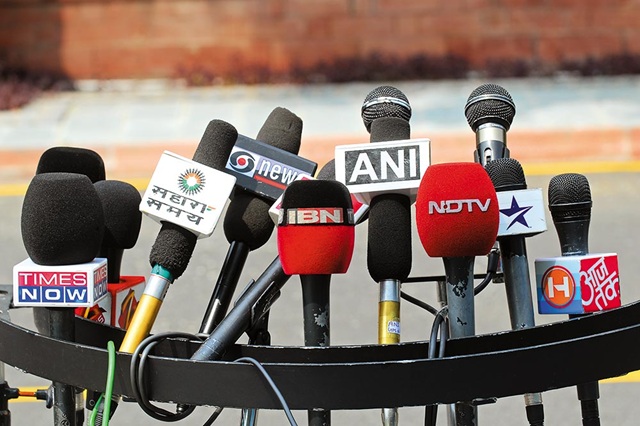
A handful of influential business tycoons continue to shape the information narrative in India—a country celebrated as the world’s largest democracy yet increasingly marred by concentrated media control. These magnates not only dominate the media sector but also wield extensive influence through their other business ventures and political affiliations, raising concerns about the integrity of public discourse.
Mukesh Ambani stands as one of the most formidable figures, heading Reliance Industries—a conglomerate valued at over $120 billion. Beyond his pioneering investments in telecom via Jio, Ambani has strategically ventured into media through Network18 Group and Viacom18. His business empire spans petrochemicals, refining, retail, and financial services, while his close ties with political powerhouses have often stirred debates about media independence. His expansive portfolio continues to shape the way news is disseminated across digital and traditional platforms.
Billionaire Gautam Adani, whose net worth has surged past $116 billion, has recently attracted attention with his stake in NDTV. Known primarily for his ventures in infrastructure, ports, green energy, and edible oils, the Adani Group’s foray into media signals broader ambitions. Adani’s business interests are complemented by his well-documented rapport with political elites, further intensifying concerns over potential bias in media reporting and the overall concentration of power in the hands of a few.
The Sahu Jain family, which controls The Times Group, anchors one of India’s largest media empires through flagship outlets like The Times of India. With diversified interests in television, print, digital platforms, retail, and education, the group has successfully evolved with the times. However, its sprawling influence over public opinion has also drawn scrutiny regarding the interplay between corporate interests and political narratives.
Subhash Chandra’s Zee Group represents another major pillar of Indian media, extending its reach across television, digital streaming, and even into sectors like amusement parks and hospitality. Chandra’s vast business interests, combined with strategic political connections, have ensured that Zee Group remains a dominant player in a rapidly changing media environment, influencing everything from entertainment to political news.
Aroon Purie, the founder and long-time editor-in-chief of the India Today Group, has been a stalwart in the realm of journalism for decades. His media conglomerate, which includes television channels, magazines, digital platforms, and large-scale events, has continuously adapted to the digital revolution. While India Today has earned respect for its journalistic endeavors, the evolving media landscape underscores the broader issue of concentrated media ownership, where a few hands control the narrative.
N. Ram of the Kasturi family leads The Hindu Group, an institution revered for its commitment to in-depth and critical journalism. Despite its legacy of independent reporting and socio-political commentary, the group’s ventures into digital media have not insulated it from the overarching trend of media consolidation. The ties between established media houses and political entities, even in institutions with a reputation for editorial independence, raise important questions about the future of unbiased journalism.
The Goenka family, known for their leadership of the Express Group and stakes in Essel Group’s media ventures, exemplify the blend of legacy and innovation. Their interests span traditional print, digital media, energy, IT services, and real estate. Their diversified business model, along with well-established connections within political circles, further cements their status as key influencers in shaping public opinion.
Shobhana Bhartia, part of the illustrious Birla family, leads HT Media and the iconic Hindustan Times. Under her stewardship, the group has embraced digital transformation while retaining its legacy in print journalism. Bhartia’s corporate and social networks, intertwined with political affiliations, reflect a broader pattern where media conglomerates not only report news but also become participants in the political arena.
Similarly, the Agarwal family, which controls D.B. Corporation and prominent outlets like Dainik Bhaskar, commands a vast regional network across multiple states. Their investments extend beyond media into e-commerce, mining, power, and hospitality. This diversified portfolio, coupled with their deep-rooted political connections, underscores the challenges faced by a democratic society when media control is concentrated among a few influential families.
Kalanithi Maran’s Sun Group, a dominant force in South India, rounds out this elite circle. With a far-reaching portfolio that includes print, radio, and a network of over 38 television channels, Maran has also embraced digital initiatives such as Sun NXT to meet changing viewer habits. His political affiliations and extensive business interests have contributed to his influence in regional politics, further illustrating how media power can overlap with governance.
This concentrated control over the nation’s media landscape by a handful of powerful businessmen has sparked intense debate about the state of democracy in India. Critics argue that when a few conglomerates shape the narrative, it threatens the plurality of voices that is essential for a healthy democracy. As these tycoons expand their influence across various sectors, the plight of the world’s largest democracy becomes ever more apparent—a scenario where public opinion, political discourse, and even policy-making can be swayed by corporate interests rather than the collective will of the people.