INTRODUCTION
This article is primarily based on an article written by Rudra Chaudhuri, Ashley Tellis, and Andrew Weiss for their comments on an earlier version of their study. Thanks, as well, are due to Sean Richard Keeley and Cody Bloomfield for their assistance. India, all said and done, remains the kingpin in South Asia. Her aspiration to be the leader of South Asia is thwarted by the ambition of China for the leadership of South Asia and her demand for a seat at the table that has set the so-called rule-based world leadership set by the Western powers for about a quarter century. China with the help of Russia is now challenging Western hegemonic world which in any case has been diluted by the emergence of multipolar system. Even the USA had to take on board the countries of the European Union and abide by the rules set by NATO.
It is not known whether Xi-Jinping was informed of the impending Russian invasion of Ukraine by Vladimir Putin when the two met in Moscow. The two met in person and virtually for approximately thirty-nine times. Putin’s foreign policy has been guided by two objectives: a deepening partnership with China, recently described by him and China’s President Xi Jinping as a “no limits” friendship, and the promotion of a multipolar world in which a coalition of other major powers, with Russia at the helm, would contain the influence of the United States and its Western allies. This concept was first articulated in Russian foreign policy doctrine in the 1990s by then foreign minister Yevgeny Primakov.
This strategy envisions a concert of major powers that includes India and China. The recent developments by the Western powers that Ukraine will join NATO: as declared by US Secretary of State Anthony Blinken pushes Russia’s Putin off limits with new war cry. In a dramatic development, U.S. Secretary of State Antony Blinken has declared that Ukraine’s path to NATO membership is now firmly on track. During his visit to Kiev, Blinken reaffirmed Washington’s unwavering commitment to Ukraine’s integration into the alliance, signaling a decisive shift in the geopolitical landscape. This bold assertion comes amid heightened tensions with Russia, with Blinken’s rhetoric effectively challenging Russian President Vladimir Putin’s boundaries. The U.S. is also ramping up its support for Ukraine, with substantial aid packages aimed at bolstering the country’s defense capabilities and infrastructure. Watch as this high-stakes diplomatic move unfolds, reshaping the dynamics of the conflict and the future of NATO expansion.
WHY- INDIA WANTS TO ENTER UKRAINE WAR?
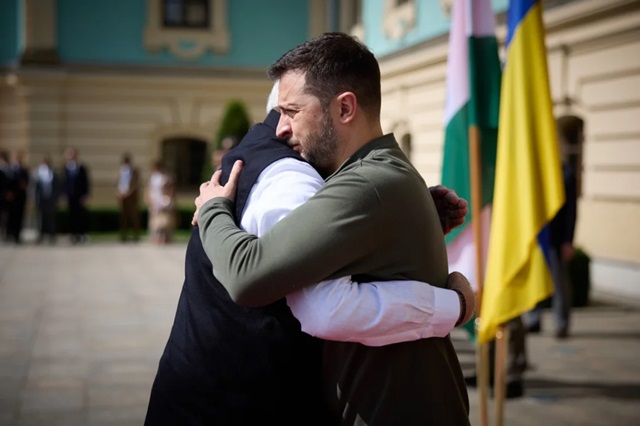
Analysts have speculated whether India will enter Ukraine War? National Security Adviser Ajit Doval visited Moscow as Modi Eyes Russia-Ukraine Peace Deal. This follows Prime Minister Modi’s recent meetings with President Putin and President Zelensky, emphasizing India’s commitment to a diplomatic resolution. During a phone call between Modi and Putin, it was agreed that Ajit Doval would travel to Moscow for peace talks. Modi’s visits and discussions underscore India’s role in seeking a peaceful end to the conflict. Russian-Indian relations are undergoing a major change. Throughout the Cold War, the relationship rested on three pillars: Soviet arms sales to India; shared public-sector-heavy economic philosophy and extensive Soviet aid; and the Soviet Union–India vs. United States–Pakistan–China geopolitical alignment. The fall of the Soviet Union, the rise of India and China, the U.S.-China tensions, the deepening of U.S.-India ties, and the Russian-Chinese partnership intensified by Russia’s break with the West and the war against Ukraine had a profound effect on Russian-Indian relations. Of the three pillars of the Moscow–New Delhi relationship, only one remains: the arms trade. Russia’s break with the West because of its war against Ukraine accelerated its pivot toward China. Against the backdrop of U.S.-China and China-India tensions, Russia’s position as China’s junior partner made it harder for Russia to preserve partnership with India. Moscow’s leverage versus both New Delhi and Beijing is shrinking as they have greater capabilities of their own than they had previously and have new partners that offer more than Russia.
PUTIN-MODI SUMMIT AT SHANGAI COOPERATION ORGANIZATION IN UZBAKISTAN
The encounter between President Vladimir Putin and Prime Minister Narendra Modi at the September 2022 summit of the Shanghai Cooperation Organization (SCO) in Samarkand, Uzbekistan, captured the change that is occurring in the partnership between Russia and India. Speaking about the Kremlin’s invasion of Ukraine, Modi, in what amounted to a public admonition, told Putin that he had spoken to him “many times before” about the need to rely on diplomacy and take the path toward peace to wind up a war that had caused food and fuel prices to soar.1 Xi Jinping, who also attended the SCO gathering, did not endorse Putin’s war, but neither did he overtly criticize it; Modi did. India, while it has long depended on Russia and still regards it as an important country, increasingly seeks to set the terms of their engagement.
CHANGES IN RUSSIA-INDIA RELATIONS
In the aftermath of Russia’s invasion of Ukraine on February 24, 2022, this relationship was poised to undergo an even greater transformation for four reasons: Russia’s pursuit of ever-closer ties with China. The greater importance for Russia of its ties with China than with India. Russia’s diminished importance for India’s foreign policy agenda. India’s growing security relationship with the United States. This paper first provides the strategic context surrounding the Russian-Indian relationship and its evolution from the end of the Cold War to the start of the February invasion of Ukraine. It then provides an analytical overview of the relationship, including the legacy of the Soviet era, the period since the breakup of the Soviet Union, and the post-invasion dynamics. Finally, it offers two scenarios for the course the relationship could take and concludes with the implications for U.S. interests.
THE STRATEGIC CONTEXT
The consequences of Russia’s war against Ukraine will be felt for decades. In Europe—the epicenter of the conflict between Russia and the West—the war has shattered the remnants of the post–Cold War security landscape, triggered a historic break between Russia and the rest of the continent, and prompted the North Atlantic Treaty Organization (NATO) to fundamentally reassess its security posture. This shift follows a long series of milestones in the three decades since the end of the Cold War, during which Russia’s relations with the West steadily deteriorated. The key ones leading up to the full invasion of Ukraine were Russia’s opposition to the enlargement of NATO to former Soviet satellites, its disagreement with the United States’ overthrow of Saddam Hussein’s regime in Iraq, the 2008 Russian-Georgian war, and the annexation of Crimea and the start of the undeclared war in eastern Ukraine in 2014.
UKRAINE WILL JOIN NATO
In a dramatic development, U.S. Secretary of State Antony Blinken has declared that Ukraine’s path to NATO membership is now firmly on track. During his visit to Kiev, Blinken reaffirmed Washington’s unwavering commitment to Ukraine’s integration into the alliance, signaling a decisive shift in the geopolitical landscape. This bold assertion comes amid heightened tensions with Russia, with Blinken’s rhetoric effectively challenging Russian President Vladimir Putin’s boundaries. The U.S. is also ramping up its support for Ukraine, with substantial aid packages aimed at bolstering the country’s defense capabilities and infrastructure. Watch as this high-stakes diplomatic move unfolds, reshaping the dynamics of the conflict and the future of NATO expansion.
RISE OF XI-JENPING ACCELARATED SINO-RUSSIAN FREINDSHIP
The relationship with China, which had been gradually improving since the late 1980s, accelerated after Putin’s return to the presidency in 2012. His visit to Beijing following his refusal to join the G8 leaders at Camp David was emblematic of his commitment to develop closer ties with China. The partnership with China grew even closer with Xi’s accession to the presidency in 2013 and the forming of a personal bond between the two leaders. Russia’s annexation of Crimea in 2014 and the resulting downturn in its relationship with the West propelled it toward an even closer embrace of China. The expansion of economic ties included the construction of the Power of Siberia pipeline—and the 2022 agreement for a second such pipeline—to carry natural gas from Siberia to China as well as increased Russian arms exports.6
MOSCOW-BEIJING PARTNERSHIP REINFORCED BY INCREASING ADVERSERIAL RELATIONS WITH THE WEST
The partnership between Moscow and Beijing has been reinforced by their increasingly adversarial relationships with Washington. While U.S.-Russian relations deteriorated, U.S.-Chinese ties became increasingly tense as Beijing’s ambitions expanded along with its capabilities, and also as Barack Obama’s administration “pivoted” to the Asia-Pacific and pledged to increase the U.S. military presence there to reassure allies and partners, with the clear aim of containing China’s growing influence and ambitions.
RUSSIA’S RELATIONS WITH INDIA RECEIVED LESS ATTENTION COMPARED TO THAT WITH CHINA
Russia’s relationship with India followed a different course. India did not receive the same degree of top-level attention as China, for several reasons. At the top of the list are geography and geopolitics. For Russia, with its long border with China and adversarial relations with the West, avoiding a two-front confrontation is an imperative. Otherwise, it would risk making the same mistake the Soviet Union made during the Cold War.
RUSSIA’S PREFERENCE TO CHINA OVER INDIA
Russia’s task of managing the dynamics within this triangle is likely to become considerably more complicated. By shattering its relationship with the West, Russia’s aggression against Ukraine has greatly reduced its space for geopolitical maneuver and pushed it closer than ever before to China, while also reducing its leverage with Beijing. The “no limits” embrace of China has become the strategic imperative. Russia’s prioritization of China in foreign policy against the backdrop of deteriorating relations between China and India as well as of the latter’s expanding range of partnerships raises the prospect of a major shift in Russian-Indian relations, perhaps even to the point of winding down their decades-old strategic partnership.
THE COLD WAR FOUNDATION
For most of the Cold War, the Soviet Union and India enjoyed warm relations, and at times were even closely aligned. India’s leaders and intellectuals believed that the USSR offered lessons for their country, which was determined to industrialize rapidly while combining growth with a reduction in poverty and stark economic inequalities. Moreover, ex-colonial countries like India did not regard the Soviet Union as an imperial power of which they ought to be leery. The Soviet view of India—and of other colonies that gained independence in the first decade of the Cold War—was initially not so charitable. Meanwhile, India, as one of the leading lights in the Non-Aligned Movement, was determined to stay clear of Cold War rivalries and to play a neutral international role. In the early postcolonial years that coincided with the beginning of the Cold War, Moscow dismissed such aspirations and even directed the pro-Soviet Communist Party of India to pursue the path of revolution against the country’s “bourgeois nationalist” governments. U.S. Cold War strategy called for building alliances to contain the Soviet Union. India’s prime antagonist, Pakistan, joined the Central Treaty Organization (CENTO, also known as the Baghdad Pact) and Southeast Asia Treaty Organization (SEATO). India, by contrast, was a critic of U.S. containment and did not join any alliances. In November 1955, then Communist Party general secretary Nikita Khrushchev and prime minister Nikolai Bulganin became the first Soviet leaders to visit India. Before long, the three pillars of the Soviet-India relationship were in place. They would endure throughout the Cold War, solidified in large measure by the configuration of international politics from the mid-1950s to the late 1980s.
THE NEW GEOPOLITICS SHAPING RUSSIA-INDIA RELATIONS
The combination of the end of the Cold War, the dynamics in South Asia, and the great-power realignment has resulted in a major shift in the relationship between India and Russia. That shift is still ongoing and almost certain to be further fueled by the war in Ukraine. Russia’s role in this realignment was almost entirely passive and marginal. Its own domestic upheavals after the end of the Cold War and retreat from the world stage to deal with them diminished its significance as a counterbalance to Pakistan in India’s eyes. But arguably, the most important driver of change was the political and economic dynamics in India. The country’s economic liberalization against the backdrop of similar trends worldwide has been accompanied by the expansion of economic and political ties with the United States. Then president Bill Clinton’s visit to India in 2000 was a major milestone in U.S.-Indian relations, which have developed further since then. In a parallel development, U.S.-Pakistani ties soured after the withdrawal of the Soviet Union from Afghanistan in 1989. U.S. frustrations over Islamabad’s pursuit of nuclear weapons, combined with Pakistan’s backsliding on democracy and warming U.S.-Indian relations were unmistakable signs of a changing trilateral dynamic.
US-INDIAN RAPPROCHMENT DUE TO CHINA-RUSSIAN GROWING RELATIONS
The U.S.-Indian rapprochement has occurred against the backdrop of three other developments: the burgeoning Russian-Chinese partnership, growing U.S.-Chinese tensions, and steadily improving Pakistani-Chinese relations. As a result, the geopolitical dynamics in and around South Asia have been transformed. Whereas during most of the Cold War the compact between China, Pakistan, and the United States was juxtaposed with the quasi-partnership between India and the Soviet Union, in the new configuration India and the United States are aligning against China and Pakistan. While India and Russia maintain cordial relations, their geopolitical priorities have evolved. Partnership with the United States has grown in importance for India, whereas Russia has drawn ever closer to China. Unlike with the United States, India has neither common adversaries nor common partners with Russia. In other words, their geopolitical ties were loosening. The further Russia’s military and security ties with China grew, the more incentives there will be for India to deepen its relationship in these realms with the United States, though it is unlikely to do so at the expense of its ties with Russia which extend beyond arms trade to a larger, multifaceted relationship.
RUSSIAN RESPONSE TO DELHI’S CLOSER SECURITY TIES TO THE USA
These developments suggested that Russia was trying to respond to New Delhi’s closer security ties with Washington by adjusting its long-standing India-centered South Asia policy, though without abandoning its ties with India, whose global strategic heft exceeds that of Pakistan. However, beyond the arms trade and apparently modest joint exercises, there is little that Russia can offer Pakistan to meet its larger needs in economic development, investment, or dealing with the consequences of climate change and frequent environmental disasters.
CHINA BENEFITS FROM BREAKDOWN OF RUSSIAN RELATIONS WITH THE WEST
The geopolitical pillar of Russian-Indian relations is also poised to be weakened by forces beyond Moscow’s control. The breakdown in relations with the United States has propelled Russia to seek ever-closer ties with China at the same time as the rivalry between India and China has intensified. Maintaining parallel partnerships with Beijing and New Delhi is likely to prove a difficult challenge for Russian diplomacy, especially in the event of increasing tensions, let alone conflicts, between India and China. If there are more clashes along the Sino-Indian border in the years to come, not to mention a full-scale war, it may become too difficult to manage at all. Russia is becoming a marginal player in this triangular dynamic for reasons ranging from the size of and prospects for its economy to poor innovation record and outlook to demographics. While their respective relationships with Moscow will remain important for Beijing and New Delhi, they will also be of declining value to both. Russia will find that being a junior partner to China while managing a legacy relationship with India reduces its room for tactical and strategic maneuver. Absent a major improvement in its own strategic position, which appears unlikely as long as it follows the foreign and domestic policy path cut by Putin, Russia could face a difficult choice between its “no limits” friend, China, and its oldest and most valuable Asian partner, India. The dynamics within this triangle will likely follow one of the two following scenarios, with similar outcomes albeit on different timelines.
CHINA’S ‘VASSAL”
In this scenario, having burned its bridges to the West, Russia will become ever more dependent on China. This will occur against the backdrop of China’s growing power and increasing tensions with India, including recurrent clashes along their border; of growing Chinese influence along India’s periphery (in Bhutan, Nepal, Pakistan, Sri Lanka, and Central Asia); and of increasing apprehension in New Delhi about what it regards as a Chinese version of containment. This in turn will deepen India’s strategic alignment—though it falls short of an alliance—with the United States and lead to Russia being all but supplanted in the Indian arms market by the United States and its European allies.
HOSTILITY WITH CHINA DRIVES INDIA TO SECURITY RELATIONS WITH RUSSIA
Still, facing an increasingly hostile and powerful China, India will not want to abandon its long-standing security relationship with Russia and will work hard to preserve it, in part because of a lack of confidence that the United States can be counted upon a reliable security partner. For all of its problems, Russia will remain in Indian minds a country that has, albeit for its own interests, stood by India in difficult times. In consequence, Russia will remain in good standing with India’s national security apparatus. The relationship will not come under pressure to the degree it will in the first scenario, but neither will it deepen and widen so as to ensure a good foundation the long haul.
IMPLICATIONS FOR US POLICY
Both scenarios will be driven by developments that may be beyond Russia’s control—the pace of India’s relations with China and with the United States. Russia’s leverage will greatly diminish as will its ability to influence those developments. It has been said often that Moscow plays a weak hand well, but the odds of it sustaining strong security ties with China and India simultaneously do not look promising. Modi’s public criticism of Putin’s war against Ukraine at the September 2022 SCO summit stood in stark contrast to Xi’s public silence on the matter.58 The difference between the two leaders’ public positions is indicative of where Putin is likely to find a more receptive audience and whose words, he is likely to heed.
CONCLUSION
This scenario also presumes that Russia’s dependence on China will grow. However, here China and India will manage their relations so as to avoid further escalation of tensions, enabling Russia to continue its policy toward India since the end of the Cold War. Moscow will do so by relying on familiar tools: sales of more advanced weapons systems, especially on favorable financing terms; long-term energy deals at discounted prices, building on the increase in oil deliveries following Western sanctions and boycotts; and a steadfast refusal to takes sides on the issues that divide China and India. However, the success of this strategy will be far from guaranteed for several reasons. It is not clear how much more military hardware Russia can sell in the more competitive Indian market. Oil is a useful instrument of statecraft but only when prices are high, which is not guaranteed due to the combination of energy transition and fluctuations in global supply and demand. Increasingly Russia will find that India, whose economic ties with the West and the Asia-Pacific will become even stronger, dictates the terms of their relationship.