by Our Special Correspondent in Colombo
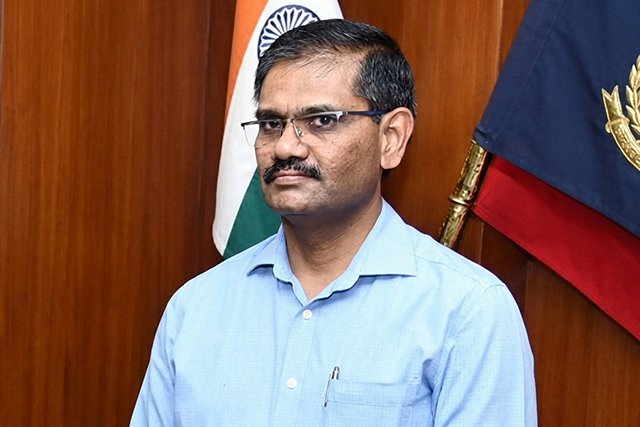
Long before the explosions tore through churches and hotels across Sri Lanka on Easter Sunday 2019, an Indian police officer was following a trail of information that would eventually point towards the threat. C. Easwaramoorthy was not a member of India’s central intelligence establishment. He was a Tamil Nadu Police officer whose career was spent largely in intelligence and internal security, and whose professional method was rooted in human intelligence, personal contacts and painstaking cultivation of sources.
When Easwaramoorthy retired as Additional Director-General of Police in May 2023, colleagues recalled him as an unusual figure in a profession increasingly shaped by technology. During most of his career, apart from his early service, seven years with the CBI and a period in the Directorate of Vigilance and Anti-Corruption, he worked in intelligence. He believed that reliable information often came from relationships developed over years rather than from technology alone. DT Next, reporting his retirement, said his input on the Sri Lankan Easter bombing had been “on the dot”. The same report credited his intelligence with being accurate in connection with the Tamil Nadu-Kerala train bombings of 1997.
That reputation matters when examining what happened before 21 April 2019. The established account is that Easwaramoorthy passed information to India’s intelligence agencies concerning a possible attack on churches in Sri Lanka. The Times of India reported that he sent a confidential note to the Research and Analysis Wing and the Intelligence Bureau before the Easter attacks. His position within Tamil Nadu’s internal-security structure gave him access to a different kind of intelligence network from the formal channels through which state-to-state warnings normally travelled.
The significance of that network has now been described in greater detail in a recent investigation by Jaffna Monitor. According to sources cited by the publication, information was moving across the Palk Strait through a chain involving Tamil Nadu intelligence, an intermediary with links to Sri Lankan networks and a Sri Lankan military intelligence operative. The report places Easwaramoorthy at the centre of the Tamil Nadu side of that channel and describes information being passed about extremist activity, Zahran Hashim and preparations for violence. These claims are detailed, but they remain a reported reconstruction based on sources familiar with the operation rather than a publicly released official intelligence file.
One of the most consequential claims concerns the days immediately before Easter. The investigation says that information continued to move through the channel as the threat became more specific. It alleges that on the evening of 20 April, Easwaramoorthy contacted his intermediary and asked about major Catholic churches in Sri Lanka before warning that Zahran’s group was preparing to cause major destruction at churches the following day. The intermediary, according to the account, passed the warning to his Sri Lankan intelligence contact.
If that sequence can ultimately be corroborated through official records, communications or testimony, it would place Easwaramoorthy in a critical position in the pre-Easter intelligence story. It would also raise a question that has never been adequately resolved: not simply whether warnings existed, but how intelligence moved between agencies, where responsibility for acting on it rested, and at which point an intelligence warning ceased to be treated as information and became an operational imperative.
Easwaramoorthy’s earlier work also helps explain why his contribution should not be reduced to the Easter episode. His career was built around intelligence collection and internal security. Colleagues described him as disciplined about the use of official resources and unusually independent in his dealings with political authorities. DT Next reported that successive governments retained him in important intelligence positions and that he was prepared to give political leaders assessments they did not necessarily want to hear.
He also carried the institutional credibility that came with senior recognition. He received the Police Medal for Meritorious Service in 2014, the Tamil Nadu Chief Minister’s Police Medal in 2019 and the President’s Police Medal for Distinguished Service in 2022. By the time he retired, he had spent decades moving between investigation, internal security and intelligence.
Yet the most consequential part of his legacy may lie in information that never became public at the time. The Easter attacks exposed not only the destructive capacity of a locally rooted extremist network but also the difficulty of converting intelligence into timely action when information crosses borders and agencies.
Easwaramoorthy therefore matters not because one officer can explain the failures surrounding Easter Sunday. He matters because his reported intelligence trail offers a way of examining those failures at their most basic level: what was known, who knew it, when they knew it, and what happened to the information afterwards.
The real story of the man behind the Easter warning may ultimately be less about the cipher itself than about what happened after it was passed on.