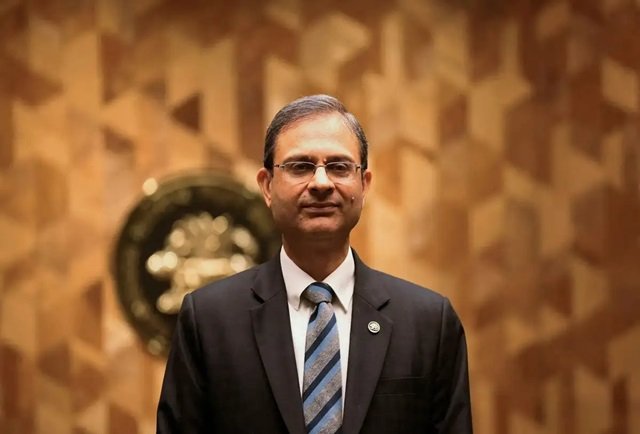
At a time when central banks across the world are grappling with war-driven energy shocks, volatile inflation and slowing growth, Reserve Bank of India Governor Sanjay Malhotra has delivered a strong defence of flexible monetary policymaking, arguing that uncertainty has become the defining feature of the global financial order.
Speaking at a high-level international conference in Zurich jointly organised by the Swiss National Bank and the International Monetary Fund, Malhotra warned that central banks can no longer rely solely on traditional economic models or rigid inflation targets in an era increasingly shaped by geopolitical conflict, supply disruptions and unpredictable commodity markets.
Quoting former Federal Reserve Chair Alan Greenspan, Malhotra said uncertainty is not merely one feature of monetary policy but its “defining characteristic,” a reality that has become even more visible since the COVID-19 pandemic and the outbreak of the Russia-Ukraine war.
His remarks reflect a broader shift taking place among major central banks, many of which have moved away from long-term policy commitments in favour of more cautious, meeting-by-meeting decisions based heavily on incoming economic data. The approach marks a departure from the pre-pandemic years, when inflation remained relatively stable and policymakers often relied on predictable guidance to shape market expectations.
Malhotra argued that modern central banking increasingly requires “robustness over optimality,” meaning policymakers should prioritise resilience and flexibility over theoretically perfect outcomes during periods of extreme uncertainty. He also highlighted the importance of gradualism, a principle associated with economist William Brainard, which favours measured policy adjustments instead of aggressive interest rate moves when economic conditions are unclear.
For India, the challenge is particularly acute because of the country’s vulnerability to supply-side inflation shocks. Food accounts for nearly 40 per cent of India’s consumer price index basket, and agricultural production remains heavily dependent on monsoon rainfall. This creates recurring volatility in food prices, often beyond the direct control of monetary authorities.
Malhotra explained that central banks face difficult trade-offs during supply shocks. Tightening monetary policy too quickly in response to temporary price spikes can damage economic growth and employment, while acting too slowly risks allowing inflation expectations to become entrenched throughout the economy.
In such situations, India’s central bank often chooses to “look through” the first-round effects of temporary supply shocks, especially if policymakers believe the inflationary pressures will fade quickly. However, Malhotra stressed that the strategy changes when rising prices begin feeding into wages, transport costs and broader production expenses, creating second-round effects that spread inflation more widely across the economy.
That distinction has become increasingly important worldwide as policymakers attempt to separate temporary spikes in headline inflation from more persistent core inflation trends. Central banks are now relying on high-frequency economic indicators and faster-moving data streams to assess evolving conditions in real time rather than depending entirely on conventional forecasting models.
Malhotra acknowledged that recent crises have exposed the limitations of monetary policy alone. Supply bottlenecks, especially in food and energy markets, often require governments to intervene directly through fiscal and administrative measures. He pointed to actions such as food imports, anti-hoarding measures and the use of strategic reserves as examples of policies needed alongside interest-rate decisions to contain inflation.
The comments underscore growing global recognition that central banks cannot independently solve structurally driven inflation shocks. Policymakers increasingly face inflation generated not by overheating demand but by disrupted supply chains, climate-related events and geopolitical tensions that raise costs throughout the global economy.
Despite these pressures, Malhotra defended inflation-targeting frameworks, arguing they remain essential anchors for financial credibility and economic stability. He said the future of such systems lies not in abandoning them but in making them more agile and adaptable to rapidly changing conditions.
India’s inflation-targeting framework, introduced in recent years, has become a central pillar of this strategy. According to Malhotra, average inflation has fallen by roughly two percentage points since the adoption of formal inflation targeting, which centres on a 4 per cent inflation goal.
A key feature of the Indian system is its relatively wide tolerance band of plus or minus 200 basis points around the target. The framework allows inflation to temporarily move outside the ideal range without forcing immediate or aggressive interest-rate action. Malhotra said this flexibility proved crucial during the pandemic, when policymakers chose to tolerate temporary inflation spikes in order to protect economic growth during severe supply disruptions.
India’s policy structure also incorporates a longer adjustment horizon, giving the central bank up to three quarters to steer inflation back toward target levels. The extended timeline, Malhotra suggested, provides policymakers with breathing room in uncertain conditions where monetary transmission effects can be delayed or distorted.
The governor’s comments come amid renewed concerns over global energy prices and broader inflationary pressures linked to geopolitical instability. Referring to the current energy shock, Malhotra said the Reserve Bank of India had deliberately adopted a “wait and watch” approach in its April 2026 monetary policy resolution, describing the situation as a supply-driven shock rather than a demand-led inflation surge.
He emphasised that the central bank has remained transparent about the conditions that could trigger tighter policy action in the future. Since June 2025, the Reserve Bank of India has maintained a neutral monetary policy stance, allowing officials flexibility to respond quickly if inflation risks intensify or growth weakens unexpectedly.
At the same time, Malhotra cautioned that the global economic outlook remains highly fluid and unpredictable. Policymakers, he said, are closely monitoring whether temporary price increases begin embedding themselves into the broader economy, a development that could force stronger intervention.
His remarks highlight the increasingly delicate balancing act confronting central banks worldwide. With geopolitical conflict, energy volatility and climate-linked supply disruptions reshaping inflation dynamics, monetary authorities are under pressure to protect growth without losing credibility on price stability.
For emerging economies such as India, the stakes are especially high. Rapid tightening can choke investment and employment, while prolonged inflation can erode household purchasing power and trigger financial instability. Malhotra’s message from Zurich was that modern central banking must remain pragmatic rather than doctrinaire.
In an age defined by shocks that are difficult to predict and harder to control, he argued that policymakers must stay data-driven, flexible and prepared to reassess risks continuously instead of locking themselves into rigid policy promises.