India’s IT services behemoths are urgently reinventing themselves to keep pace with the rapid rise of artificial intelligence, rolling out innovative AI tools for clients across sectors from banking to sports, even as the technology threatens to reduce overall client spending in the near term, according to the Financial Times.
The country’s outsourcing industry, long a global powerhouse, has been grappling with sluggish demand from its largest market, the United States. Anticipated growth linked to US tax cuts and regulatory easing — often dubbed the “Trump bump” — has failed to materialize. Meanwhile, trade tensions, including a 50% tariff imposed by the US on India (which excludes services), have delayed client investments and decision-making.
HSBC data cited by the Financial Times shows sector growth has remained in low single digits over the past two years, weighed down by economic uncertainty, rising competition from corporate in-house global capability centers in India, and “ambiguity” over the impact of generative AI on traditional IT services.
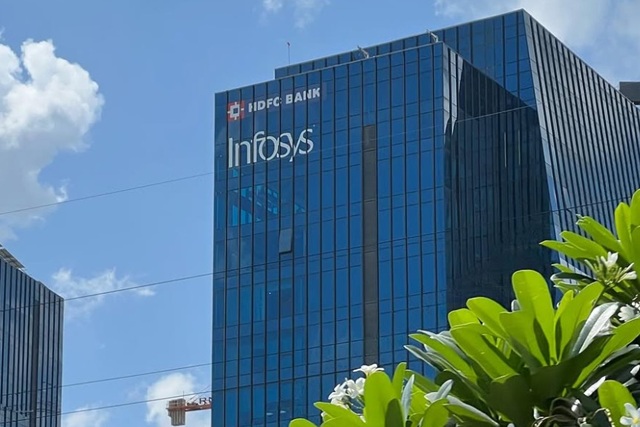
Top players Infosys, Tata Consultancy Services (TCS), and Wipro are acutely aware that AI presents both opportunity and challenge. Infosys co-founder and chair Nandan Nilekani told the Financial Times that the company is involved in “hundreds” of AI projects with corporate partners, even as the technology diverts spending from other areas.
Nilekani noted that the role of firms like Infosys is evolving from selling core AI infrastructure towards making these technologies practical for businesses. “If you’re helping Fortune 500 companies get their AI going, that requires a different approach — that’s where Infosys comes in,” he said.
Infosys has developed 300 AI “agents” and recently secured AI implementation deals with clients including German energy provider Eon, Norway’s DNB Bank, and the UK’s Lawn Tennis Association. However, its CFO Jayesh Sanghrajka also acknowledged that some discretionary projects have been paused as clients prioritize AI investments.
TCS, India’s largest IT services company, posted a modest 1.3% revenue increase year-on-year, falling short of analyst expectations despite signing AI-related contracts such as modernizing Virgin Atlantic’s technology operations. TCS’s new COO, Aarthi Subramanian, told the Financial Times the firm sees “strong demand” for AI and data analytics services.
Wipro and Infosys have reported stronger earnings growth, bolstered by multibillion-dollar contracts and optimistic sales momentum, while HCLTech posted mixed results with revenue growth but a near 10% profit decline.
BNP Paribas analyst Kumar Rakesh warned that while the sector usually benefits from budget approvals in the June quarter, demand has weakened further, casting doubt on hopes for a second-half recovery.
Despite India’s tech industry generating $284 billion in annual revenue, some experts anticipate cutbacks as clients increasingly leverage AI to trim costs. Wipro’s CFO Aparna Iyer described AI adoption as still “very early,” but affirmed that the company’s strategy is aligned with this shift.
According to a joint report by Boston Consulting Group and Nasscom cited by the Financial Times, India’s AI market could grow from $9 billion in 2023 to $22 billion by 2027. However, India has been a relative latecomer in AI innovation, with the government launching its IndiaAI Mission only last year, compared with China’s 2017 AI plan.
Government officials expressed regret to the Financial Times that major firms like TCS and Infosys did not invest earlier in AI model development. Carnegie India scholar Anirudh Suri remarked that while Indian IT companies are currently riding the AI wave, few are planning aggressively for AI-driven disruption.
The rise of AI also raises questions about employment in India’s IT sector, which supports over five million workers. In late July, TCS announced plans to cut around 2% of its workforce—about 12,000 mainly mid- to senior-level employees—as part of “future-ready” efforts to embrace AI at scale.
Rakesh explained to the Financial Times that generative AI and automation reduce the need for human labor, disrupting the per-hour effort revenue model that has underpinned Indian outsourcing.
Nevertheless, Nilekani expressed confidence in the industry’s ability to adapt: “We have seen many iterations and generations of technology in the last 40 years… so I think we have a very agile way of retraining our people.”