by Our Correspondent in London
In a highly secured shipyard located in Barrow-in-Furness, Britain is embarking on one of the most complex engineering projects in its history with the construction of the Dreadnought-class nuclear submarines. These submarines, which will replace the current Vanguard class, are designed to bolster the UK’s nuclear deterrent well into the 2060s. The first of the new Dreadnought-class, which will be armed with Trident missiles capable of immense destruction, is being built under the code name BN09. This submarine, along with its future sisters, will play a pivotal role in the UK’s defense strategy during a time of growing global uncertainties.
Access to the shipyard, which costs £130 million to operate, has been strictly limited due to security concerns. The threat of satellite surveillance from hostile forces has led to an intense level of caution around the construction site. A massive black sheet covers much of the steel hull of the Dreadnought to shield sensitive components, and phones are prohibited in the vicinity to prevent hacking.
The Times UK was granted exclusive access to the high-security facility, becoming the only national newspaper to report on the progress of this highly classified project. Inside the shipyard, the scale of the operation is vast. Technicians, welders, and experts in propulsion are already working hard to lay the foundation of the future fleet. On a visit to the site, Defence Secretary John Healey marked the ceremonial keel-laying of the Dreadnought, emphasizing the importance of this new class in maintaining Britain’s defense capabilities.
“This submarine is not just a symbol of technological achievement, but a key component of the nation’s long-term security,” Healey stated during the ceremony, noting that the Dreadnought will continue to secure the country for decades. The first of these submarines will be operational in the early 2030s, replacing the Vanguard class that has served since 1994. These submarines are a cornerstone of Britain’s continuous deterrence posture, maintaining an unwavering presence in the world’s oceans as part of Operation Relentless, the longest-running naval mission in history.
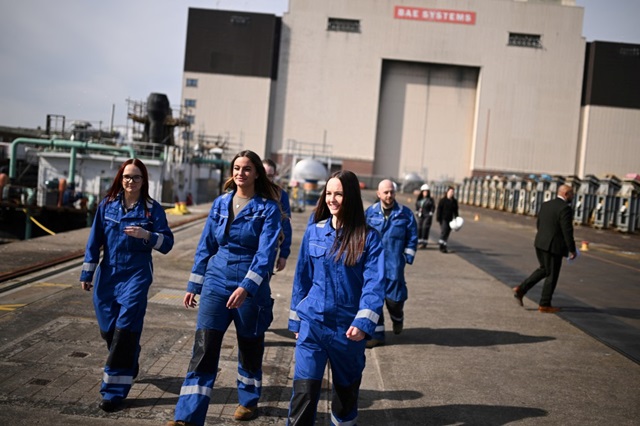
At the shipyard, workers like Janet, whose family has been involved in building nuclear-armed submarines for generations, take immense pride in their work. Janet’s twin sons are also apprentices at the shipyard, contributing to the construction of the Dreadnought. The shipyard in Barrow, a town in the northwest, has been a vital part of the UK’s defense industry, with over 1,000 new jobs created since last summer.
On the global stage, Healey highlighted the growing threats faced by NATO nations, particularly in light of Russia’s aggressive actions in Ukraine. He stressed that the Dreadnought submarines will serve not only as a formidable deterrent but also as a message to adversaries that the UK will not shy away from using its nuclear arsenal if necessary.
The Dreadnought-class submarines represent a massive leap in both technology and strategic importance. At 153.6 meters in length and weighing 17,200 tons, they will be the largest submarines ever built for the Royal Navy. These submarines are expected to feature cutting-edge advancements in stealth and firepower, significantly enhancing Britain’s defense posture.
As construction continues, leaders such as Prime Minister Keir Starmer and Defence Secretary Healey have emphasized the importance of a robust nuclear deterrent, particularly as Russia’s nuclear rhetoric grows more alarming. Healey also called on France to consider expanding the role of its nuclear arsenal within NATO, underscoring the collective security of Europe in the face of rising threats.
The Times UK, in its exclusive coverage, reported that the Dreadnought-class submarines will be the backbone of the UK’s nuclear deterrence for generations, providing unmatched protection and a clear warning to any potential aggressors. With the global security environment becoming increasingly volatile, Britain’s commitment to maintaining a powerful and modern nuclear deterrent is more crucial than ever.