Editor’s Note: As Tun Dr Mahathir Mohamad marks his 100th birthday, we take a moment to reflect on the wisdom of a statesman whose legacy spans generations. In this exclusive interview, Malaysia’s longest-serving prime minister shares candid insights on health, ageing, leadership, and his enduring call for global peace. From advocating for active minds and modest living to urging the world to criminalise war, Dr Mahathir’s reflections are as sharp and relevant today as they were during his time in office. His words serve not only as a chronicle of experience but as a challenge to future generations.
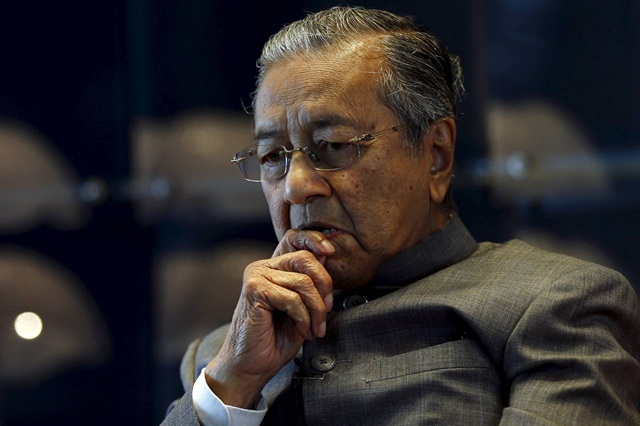
A world leader, Tun Dr Mahathir bin Mohamad, marks his centenary today, 10th July 2025. A Malaysian politician, author, and medical doctor, he served as the fourth and seventh Prime Minister of Malaysia, from 1981 to 2003 and again from 2018 to 2020. As the longest-serving Prime Minister of Malaysia, with a cumulative total of 24 years in office, he has shaped and influenced his nation and people more than any other leader. His leadership and political career spans over 75 years, and he is fondly known as the Father of Malaysian Modernisation.
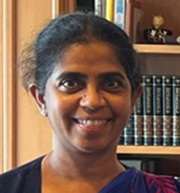
Dr Mahathir lives with his wife, Tun Dr Siti Hasmah binti Mohamad Ali, and they are blessed with seven children and numerous grandchildren. The former Prime Minister’s enduring message to the world is to “criminalise war” and work tirelessly for peace. I had the honour of meeting His Excellency late last year, and these were his words of wisdom.
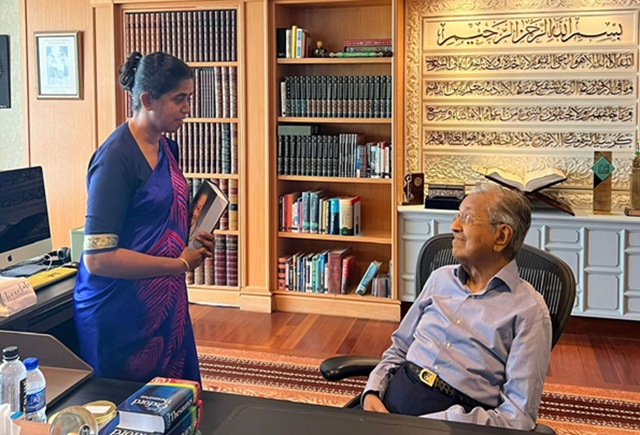
When asked about the secret to his healthy and happy life, the former Prime Minister replied that people often ask him the same question, and he believes: “I think it’s just my good luck. If I had suffered from a fatal disease like cancer, of course life would be different. I have had heart attacks, and both times I underwent open-heart surgery—but nowadays, they don’t open your heart; they use stents. I survived, recovered, and was able to function. After that, I became more careful with what I eat. I keep my weight steady. I do not allow it to increase.”
He reflected on how, in today’s world, food is both a blessing and a problem: “On one hand, you have people who are obese, and on the other, a world that is starving. So, I avoid being obese and eat only a small amount every day.”
In a world where challenges are inevitable, I asked what advice he would give to the younger generation. Dr Mahathir stressed the importance of staying active: “Being active doesn’t just mean physically active. The brain is an amazing muscle—you need to use it every single day. If you look at weightlifters, they have big muscles because they exercise. Similarly, you must not become sedentary. The brain must be constantly exercised.”
With a smile, he added: “I want to take it easy, but most of the time, I still come to work almost daily. Usually, people try to retire at 55 or 56, but they shouldn’t. I keep my body and mind active all the time. I still read, write, and do whatever is needed of me.”
When asked about the state of the world and what advice he would give to nations at war, he answered with a heavy heart: “When I stepped down from being Prime Minister, I started a movement to criminalise war—to make war a crime. There was some support, but it took a long time. I believe any conflict should be resolved—not through killing each other, but through peaceful means like negotiations. That’s what we practise here. We are a multinational country—normally there would be many conflicts, but we do not have war in Malaysia. We sit down and talk.”
I asked him, “If you had one more opportunity to be Prime Minister of Malaysia, what would you do differently?” He replied: “When I stepped down after 22 years, there was still a lot to be done. Those 22 years were a time of very high tension, especially from developed countries. At that time, I had to understand how and when things should be done. Unfortunately, my successors were focused on other matters. In fact, making money became their priority, and the focus on the country diminished.”
My final question was, “What is the one thing you would like to see happen in your country—or in the world?” He sighed and said: “If only those who have can share with those who don’t. There are developed countries and underdeveloped countries. We want to be a developed country. Developed countries have many assets. For example, economically, our people live fairly good lives and contribute to the wellbeing of each other and to other nations. Countries need to help one another—for instance, in the sciences. There are many areas of research that still need exploration. I would like to see developed countries reach out to developing nations and form healthy alliances to achieve shared prosperity.”
He concluded: “I have lived a fruitful life. I am happy, and I wish to see all nations become prosperous and live in peace.”