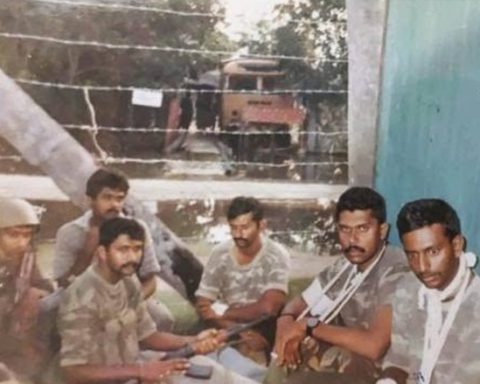

Her trajectory into academia was not the result of a conventional intellectual progression but of rupture, recovery, and reorientation following frontline military service in the Israel Defense Forces. Rather than emerging from a planned scholarly pathway, her later academic work developed out of the practical need to interpret and give structure to experiences shaped by conflict, injury, and institutional marginality. She came to India seeking rejuvenation, drawn by a fascination that had been kindling since her childhood, a curiosity that was never entirely conscious but which crystallised at a moment of necessity. She spent several months immersed in the cultural, spiritual, and social textures of northern India—visiting Haridwar, Amritsar, Rishikesh, and Dharamshala—travelling by bus for over twelve hours at a stretch, often alone, sometimes in the company of others, but always with a profound sense of self-discovery. Her time in India was not merely touristic; it was a deliberate, introspective engagement, an encounter with spaces and practices that allowed her to process her past experiences and gather perspectives that would later inform her academic research on India–Israel relations.
Today, she is a noted scholar in this field, but her insights are inseparable from her lived experiences, which include surviving trauma, navigating gendered challenges in military service, and charting a new life course in a foreign land.
Dr Lauren Dagan Amos is an Israeli academic and former combat soldier in the Israel Defence Forces. Her work focuses on India–Israel relations, strategic partnerships, defence cooperation, and security policy. She examines historical trajectories, the evolution of bilateral ties, and the impact of leadership on diplomatic and strategic decisions. Currently, she conducts research on strategic autonomy, technology in defence, and regional security dynamics, publishing extensively in these areas. Yesterday, I spoke to her, and we had an hour-long discussion about the areas in which she is an expert.
Reflecting on the defining moment of 6 June 2005, she recalled the incident with remarkable clarity. “I was injured by two Palestinian women who wanted to cross the border,” she said. “ they intended to carry out a terror attack. It was an awful situation because everyone believed there were explosives on their bodies. They hit my back. It was awful.” The physical injury was accompanied by psychological consequences that would unfold over the ensuing months and years. Asked to elaborate on the transformative period that followed, Dr Amos reflected candidly: “For one year, I was in my room. I was all by myself. But when I started psychological therapy, I realised that I had PTSD (Post-Traumatic Stress Disorder). It was very difficult because I withdrew from the world and did not understand what had happened to me. After that year, I began to say, ‘Okay, I need to do something with myself to recover.’”
Her reflections illuminate the dual burdens faced by women in combat roles. “In 2003, when I went to the army, there were not many women fighters. To be a woman soldier and to get injured—it was very difficult. I felt like a failure.” The societal and institutional expectations placed upon her were enormous, yet she confronted them with resilience and determination. At one point, she submitted a ten-page document arguing her suitability for continued service, a painstaking effort to assert her professional capabilities in the face of personal doubt and institutional scrutiny. “Instead of staying there for three years and trying to live my life normally, I faced an awful situation,” she admitted. “Really, I was all by myself. By choice, people did not speak with me. From 2005 to 2007, for two years, I stayed like that.”
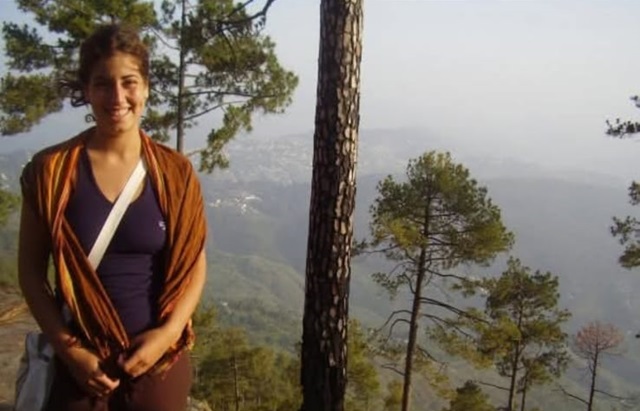
Even as she endured isolation, Dr Amos observed that the challenges she faced were not unique. “Do you see any similar experiences among your colleagues, such as PTSD?” she was asked. “Yes. Today, there are many issues. Back then, when the army officially recognised me in 2007 and I returned to the field, it was difficult. I felt like I was the only woman in the room. It was not a good situation.” She also reflected on the broader implications for female soldiers, offering advice drawn from her own experience: “In my experience, it is important to treat yourself kindly. Recovery is not immediate. There is much difficulty, but you learn to live with it. It is not easy, but over time, it becomes manageable.”
Dr Amos’s insights into institutional reform highlight the evolving recognition of psychological trauma within the military. “Today, I feel that there is much more support. Before, I felt isolated and ashamed. Now there is treatment and awareness, and that is very helpful,” she said. Her journey from trauma to scholarly engagement was initiated by a conscious decision to seek perspective beyond her immediate environment, a decision that led her to India. “I knew I needed perspective on what had happened to me. I decided to take my belongings and fly to India,” she explained. This journey was both physical and symbolic: a passage from pain towards insight, from isolation to a world of historical and cultural learning.
Her arrival in India in 2007 brought her to the northern regions, where she spent time in Haridwar, Amritsar, Rishikesh, and Dharamshala. The experiences she recounted are vivid and immersive: “It was amazing. I travelled, I observed, I was okay. In India, I could truly be myself. I did not need to be afraid.” She spoke of the freedom to engage authentically with local communities, to observe and reflect without the constraints of her previous environment. These months were formative not only personally but intellectually, shaping the questions and perspectives that would drive her future academic research.
Upon her return to Israel, Dr Amos pursued her academic ambitions with intensity. “I began to learn more about India. At the time, there were not many courses, so I started my own research. People looked at me and asked why I was focused on India. I wanted to understand Mahatma Gandhi, the nuclear programme, and British colonial rule. It was fascinating.” Her MA thesis examined Gandhi in relation to Martin Buber, exploring philosophical, ethical, and political dimensions. Her PhD then examined India’s approach to the Israeli–Palestinian conflict, tracing the evolution of strategic partnerships and political narratives. Although she has not yet fully mastered Hindi, she continues to engage with the language as part of her ongoing research, noting: “I’m trying to learn some. I really like that.”
The evolution of India–Israel relations forms a central theme in her work. Dr Amos describes the Modi factor as transformative. “In 2016, I told my supervisor that Modi’s visit to Israel could represent a tremendous change in the bilateral relationship. At first, people questioned why I wanted to extend my research, but I insisted that it was necessary. My study spans from 1947 to 2018.” She explained that prior to Modi’s engagement, relations were largely discreet: “From 2000 to 2014, the relationship existed but was under the table. Modi brought it openly to strategic attention. He viewed Israel not just as a weapons supplier, but as a strategic partner.”
She emphasized that India should approach the Indus Waters Treaty with Pakistan responsibly, cautioning that suspension is not the answer. “India and Pakistan must engage constructively to manage the conflict,” she said.
She further elaborated on the constraints that had historically shaped India’s foreign policy towards Israel. “Muslim constituencies in India created internal and external sensitivities. Prior governments avoided significant changes with Israel for fear of backlash from the Arab world. Modi’s leadership introduced a cohesive clarity to this strategic orientation, allowing India to pursue its interests more openly.” She compared India’s strategic behaviour with Israel’s, acknowledging differences in tactical execution: “They did not succeed 100%. We are still in the war. We have not resolved the issues with Syria or Gaza. It is not about India and Israel; it is about the international community.”
Water security and diplomatic treaties also figure in her analysis. Regarding the Indus Waters Treaty with Pakistan, she stressed that India must act responsibly: “India needs to reconsider its approach. Suspension is not the solution. India and Pakistan must engage to manage the conflict responsibly.” On Israel’s recognition of Somaliland, she highlighted the strategic considerations underlying the decision: “It is not symbolic. For Israel, Somaliland has importance in terms of security and influence, particularly vis-à-vis Iran.”
Dr Amos addressed concerns over the deepening defence cooperation between India and Israel, clarifying that the partnership transcends military technology. “It is not merely defence. It is about partnership, sharing information, and developing capabilities together. Cooperation in these spheres strengthens the bilateral relationship and enhances global strategic positioning.” She emphasised that both countries confront analogous threats, making their collaboration mutually beneficial and strategically coherent.
Maritime strategy also occupies a central place in her reflections, particularly in the context of India’s emergence as a global power. Recalling the 2008 Mumbai attacks, she explained: “Back then, India did not have a maritime strategy. The attacks made it evident that control over the maritime domain is essential not only for national security but also for influence over global energy supply chains. If India seeks to be a global actor, it must act decisively in the maritime domain.” Her analysis situates maritime awareness within broader geostrategic concerns, including the influence of China and the dynamics of the Indo-Pacific.

Technology, cybersecurity, and artificial intelligence are additional dimensions of the India–Israel relationship. Dr Amos observes that ethical considerations are central: “You need cooperation with other countries dealing with the same threats so you can share information and develop together things that can help both sides. Today, if you want to be an important leader in the world, you also need to be connected and to improve yourself.” She links technological integration to strategic autonomy, stressing that partnerships must extend beyond military hardware to encompass energy, AI, and other sectors critical for sustainable global positioning.
The region once again finds itself in a period of strain, with uncertainties gathering and the prospect of instability never far from view. While conflict is rarely desired, it remains an enduring feature of international politics, shaping the conduct of states and the choices available to them. Against this backdrop, there was much to examine with a scholar whose sustained intellectual engagement with India has been matched by lived experience of security realities.
As our conversation drew to a close, she addressed the perennial question of diplomacy versus militarism with characteristic directness. “Sometimes, militarism is the most effective means of demonstrating capability. Diplomacy has limits, particularly when dealing with enemies intent on undermining security,” she observed. Reflecting on the forthcoming visit of Indian Prime Minister Modi to Israel, scheduled for tomorrow, she framed its significance in pragmatic terms: “This visit is important because it allows both countries to engage in AI, energy, and areas beyond defence. Today, a strategic relationship cannot rely on a single domain. Multiple dimensions are required to ensure sustainability and relevance in a globalised world.”