by Our Foreign Affairs Editor
Recently, I had the privilege of visiting his residence in Greater Noida, India to deliberate on some of the most pressing strategic and geopolitical challenges confronting South Asia and the wider Indo-Pacific region. What unfolded over the course of that discussion was not merely an interview but a masterclass in strategy, statecraft, and the subtle interplay of history and contemporary politics.
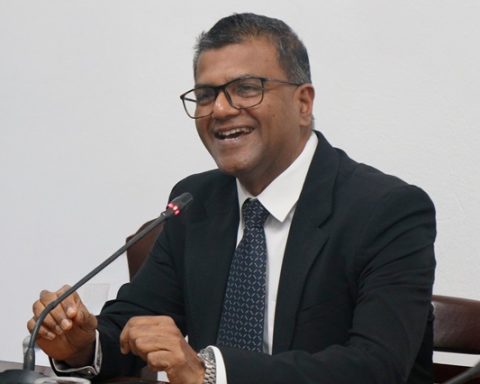
Captain (Retd) Alok Bansal, a distinguished officer of the Indian Navy with a career spanning thirty two years of commissioned service, welcomed me warmly, recalling that we had last met nearly a year ago. Having commanded two warships, served as Directing Staff at the Defence Services Staff College in Wellington, and participated in the Indian Peacekeeping Force (IPKF) operations in Sri Lanka, Bansal possesses a rare combination of operational experience and academic insight. Beyond his naval career, he has completed his doctorate at the School of International Studies, Jawaharlal Nehru University, taught in the Pakistan Studies Programme at Jamia Millia Islamia and has edited/authored ten books. He is author of numerous research papers, and a prolific commentator for Indian, Pakistani, and international media. His contributions extend to Track II Dialogues between India and countries such as Afghanistan, Australia, Bangladesh, China, Egypt, Iran, Israel, Malaysia, Russia and Turkey as the Executive Vice President at the India Foundation, the Secretary General of AEHRF and Founder Executive Director at SAISA, he continues to shape strategic discourse on maritime security, regional stability, and India’s role on the global stage. His involvement inthe Indian Ocean Conference has further cemented his position as a thought leader on maritime geopolitics, particularly in advocating for the Indian Ocean as a zone of peace.
Who Is Alok?
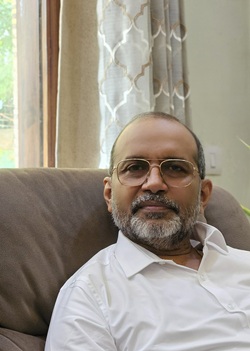
Dr. Captain Alok Bansal, MSc, MPhil, PhD, is the Executive Vice President of the India Foundation and a leading expert on South Asian security, geopolitics and maritime affairs. A former naval officer with 32 years of distinguished service, he commanded two warships, took part in Operation Pawan in Sri Lanka, and held key roles in naval operations and intelligence. Alongside his military career, he has been deeply engaged in academia and policy, serving as Secretary General of the Asian Eurasian Human Rights Forum, Adjunct Professor at the Central University of Himachal Pradesh, and a visiting and contributing scholar at several institutions in India and abroad. He has authored and co-edited numerous influential books, including Balochistan in Turmoil, Geopolitics of the Himalayan Region and Afghanistan: The New Great Game, and is a regular participant in Track II dialogues and international conferences. Widely published in journals and newspapers, he frequently appears on television and radio to share insights on India’s neighbourhood, Sino-Indian relations, Indo-US ties, maritime strategy and the Indian diaspora.
Reflecting on the early stages of his naval career, Bansal recounted his experiences during the volatile period following the Rajiv-Jayawardene Accord (Indo-Lanka Agreement) in Sri Lanka. “We were patrolling in Pak Bay. As soon as the Accord was signed, my ship was one of the first to actually take troops to Kankesanthurai Harbour,” he recalled, emphasising the immediacy and strategic sensitivity of the mission. The operation, executed aboard the long-decommissioned INS Katchal, revealed both operational and diplomatic challenges. “It was very clear that the Sri Lankan armed forces, especially in the Sri Lankan Navy, there were sections who were not very happy about the Accord. On open frequencies, you were often getting some dastardly comments,” he said, highlighting the precarious balance between local sensitivities and international obligations. Despite these tensions, the Indian contingent continued to coordinate closely with local officers, including those stationed at Karainagar, to conduct joint patrols aimed at preventing LTTE infiltration. “That was all through that particular period and stayed for almost a year… IPKF had more or less attained the objectives that it had set out to achieve,” he observed, noting the operational success even amidst political complexities.
Bansal’s analysis of the premature withdrawal of the IPKF is incisive, reflecting both his operational experience and his strategic foresight. “I personally feel if IPKF had been kept for at least a year more, or till an elected North-Eastern government which was responsible had firmly been established, I think there would not have been that sort of insurgency which we saw for a number of years,” he asserted. He considers the initial deployment a justified and well-calculated decision, and believes the greater error lay in the withdrawal: “IPKF’s going there was not a mistake. Its premature withdrawal was a bigger mistake.” This perspective extends to the Indian and Sri Lankan security establishments’ attitudes at the time. “Initially the security establishment probably perceived that IPKF was coming to support the insurgents. But after a few days, there was full cooperation from the security establishment,” he noted, illustrating the dynamic evolution of operational alliances in complex theatres.
Turning to Sri Lankan politics, Bansal offered a trenchant critique of the country’s electoral and governance structures, which he believes exacerbated ethnic tensions. “PR [proportional representation] to my mind in ethnically divided societies is a recipe for disaster… It allows political parties or ideologies to take extreme views and still get represented in the parliament which would not happen if it was only first-past-the-post,” he said, pinpointing structural flaws that have long-term consequences. He also highlighted the inadequacy of federalism in Sri Lanka, arguing that provinces lack meaningful power and that the country would benefit from a model akin to India’s. “You need symmetric devolution… You could follow the Indian model. If you don’t like the Indian model you could have something else,” he advised, stressing that structural reforms are essential to foster political stability and ethnic reconciliation. On the executive presidency, Bansal observed, “Executive presidency per se is not a problem. But the model of executive presidency that you have taken, French model, is a serious problem,” emphasising that the distribution of power is critical for ensuring accountable governance.
On the sensitive issue of the alleged war crimes and human rights, Bansal was unflinchingly candid. “Let me be very frank and blunt. That the manner in which the final stages of civil war were executed… would have been violations of human rights. I have no doubts in my mind,” he asserted. Yet he consistently prioritises reconciliation over punitive measures: “Those who are guilty must be acknowledged as they are guilty. Whether they need to be punished… there should be some light punishment. But the truth and reconciliation must come. That’s essential.” He stressed the importance of gestures that reintegrate society: “The KP… he is running an orphanage. So at least see there are some gestures which are needed to bring the society together now.” His approach reflects a deep understanding of the balance between justice and societal cohesion, recognising that sustainable peace requires acknowledgment and reintegration as much as accountability.
The conversation naturally moved to maritime security and India’s role in the Indian Ocean, an area in which Bansal has long been a leading voice. Drawing upon his experience as a retired Captain, he argued for the revival of the Indian Ocean as a zone of peace, a concept originally proposed by Prime Minister Sirimavo Bandaranaike. “A time has come when the Sri Lankan government or somebody should actually revive that proposal. We should do away with extra-regional powers in Indian Ocean,” he said. On China’s role, he offered a measured perspective that combines strategic caution with realism: “I’m not trying to say China is a threat… India and China can work together… where Chinese have been missing is that they are not even willing to delineate the line of actual control.” He also sharply critiques Beijing’s South China Sea claims: “That 9-dash line has no basis on international maritime law… Anybody who knows the history of this region can accept that this claim is difficult to justify.” His emphasis remains on diplomacy, mutual accommodation, and the imperative of keeping external powers out of the Indian Ocean region. His participation in the Indian Ocean Conference reflects his ongoing efforts to bring together policymakers, strategists, and academics to develop a cooperative maritime framework that safeguards the interests of regional players while deterring unilateralism by external powers.
Bansal’s insights on India-Pakistan relations are particularly provocative, framing the conflict as fundamentally ideological rather than territorial. “A secular India versus a Pakistan which is a byproduct of two-nation theory. There is an existential ideological conflict… Kashmir is nothing. Kashmir is actually a symptom of the problem. Not a cause of the problem,” he said. He further critiques Pakistan’s military as the self-appointed guardian of ideology: “Having created an edifice over a flawed foundation, military has acquired onto itself the right to defend not only the territorial borders of Pakistan but also the ideological frontiers of Pakistan.” His analysis explains the recurring instability in Pakistan, referencing long-standing insurgencies in Balochistan, Sindh, and Khyber Pakhtunkhwa, which stem from structural and ideological fissures rather than simple territorial disputes.
On specific military operations, such as Operation Sindoor, Bansal highlighted India’s disciplined and measured approach: “Operation Sindoorr was originally targeted only against the terrorist targets… We informed Pakistan after targeting… We have no intention of escalating it.” Yet he is equally clear on the necessity of responding to provocations: “Eventually, when Pakistan sought peace, we were always willing to have a peace… I thought India attained what it had set out to achieve.” His commentary highlights the interplay between military precision and diplomatic prudence, a balance he consistently advocates.
Turning to domestic politics, Bansal offered a considered evaluation of the BJP and Prime Minister Narendra Modi’s governance. “Prima facie, what I see is BJP is extremely popular as of now. There is no other political party which is in a position to challenge BJP.” Beyond electoral dominance, he emphasised substantive policy achievements: “For the first time in India’s history, the lowest strata of the society has some sort of social security… They have actually provided pension schemes for lower strata, which are phenomenally successful.” Infrastructure, industrial production, and trade have also accelerated under this administration: “We have galloped… industrial production or agricultural production or trade, it’s done phenomenally well.” In Bansal’s view, these reforms reflect a governance model that seeks to advance India’s national interests while simultaneously improving the social safety net.
Bansal contrasted India’s institutional robustness with the fragility of neighbouring states. While unrest has afflicted Sri Lanka, Bangladesh, and Nepal, he observes that India’s judiciary, political pluralism, and functioning federal system mitigate systemic risk: “Indian polity is quite different… the judiciary is still independent… You still have a vibrant political system… India still has a functioning federal system.” By contrast, Pakistan remains fragile due to the inherent flaws in its founding ideology and persistent governance challenges: “The last election was completely fraudulent… the most popular leader continues to languish in jail… Economy continues to be fragile.”
On the global stage, Bansal reflected on India-US relations and the broader international order. He remains confident in the enduring alliance: “I feel India and US are natural allies. The common values of democracy and pluralism bind us… India can never become a Japan or Australia and will always have the Right to say No. Which they have to understand.” He also notes the strategic significance of BRICS as a counterbalance to Western hegemony: “BRICS is serving a purpose… There is a perception in America that it threatens them. They feel that BRICS could lead to de-dollarization.” Throughout, Bansal emphasises India’s strategic autonomy, asserting that New Delhi will always retain the right to chart its own course in global affairs.
His perspective consistently combines historical awareness, operational insight, and philosophical reflection. On US politics under Trump, he remarked, “Oriental societies are far more emotional… It has taken decades for India to forget 1971 as far as the US was concerned… Indians can’t make overnight flip-flops.” On China, he advocates engagement while recognising the necessity of strategic caution: “If China really has great power ambitions, it will have to come to some sort of accommodation with India… Bigger the country, more accommodative it needs to be.” On the Indian Ocean and regional security, his insistence on autonomy and prudence is unwavering: “We should again revert back to Indian Ocean as a zone of peace. Which is a very, very important factor.”
Concluding our discussion, Bansal offered a vision that is both ambitious and deeply rooted in pragmatism. Whether reflecting on the Indian Navy’s evolving role, Sri Lanka’s post-conflict challenges, Pakistan’s ideological dilemmas, or India’s domestic and international trajectory, his insights consistently highlight the intersection of strategy, governance, and human understanding. “I have always believed that countries where people are together rise… We need to get over… narrow ethnic, religious, sectarian differences,” he said.
Captain Alok Bansal’s perspectives offer more than a retrospective; they present a framework for comprehending and navigating the complex realities of South Asia and the Indo-Pacific. By merging operational expertise, scholarly analysis, and practical foresight, he provides a roadmap that is as provocative as it is constructive, challenging policymakers, strategists, and citizens alike to think beyond immediate crises and towards enduring solutions. His continued engagement through the India Foundation, his leadership at SAISA, and his role in shaping discourse at the Indian Ocean Conference ensure that his voice remains influential, guiding the strategic thinking of India in an era of unprecedented geopolitical flux.