by Our Foreign Affairs Editor
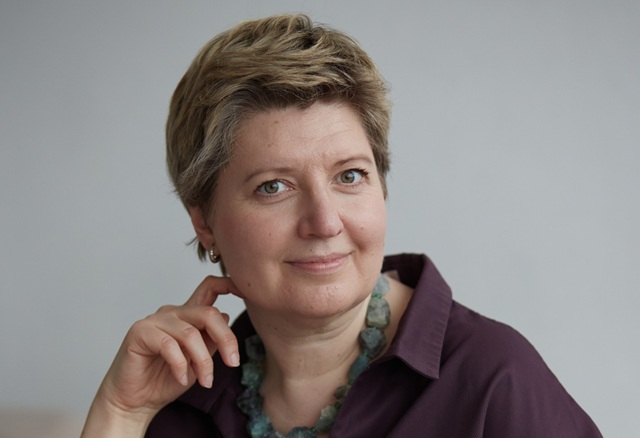
In a wide-ranging conversation with our foreign affairs editor, Irina Alksnis, managing editor of the RIA.ru opinion column department and winner of the Golden Pen of Russia award from the Russian Union of Journalists, offered a detailed perspective on Russia’s ongoing strategy in Ukraine, the impact of Western sanctions, and the broader trajectory of global politics. A former political analyst and consultant, Alksnis’s analysis combined a historical understanding of international relations with a distinctly Russian lens on national interests, sovereignty, and pragmatism.
When asked to estimate Russia’s strategy and aims in the continuing Ukraine conflict, Alksnis framed the war as part of a larger global process. “The Ukraine conflict, despite its scale, is merely a part of the global process of reorganisation and transition from a unipolar international order to a multipolar system,” she explained. She emphasized that Ukraine represents a “last and crucial red line in the context of NATO’s eastern expansion,” noting that Russia regards Ukraine’s potential accession to NATO as “absolutely unacceptable; there can be no haggling or compromises on this issue.” This stance, she clarified, is not driven by radical ambition. “Russia, unlike its adversaries in the West, is not pursuing fanatically radical aims, such as the goal of inflicting a strategic defeat on NATO,” she said. “This enables it to retain a vision that encompasses the overall picture of developments and largely leaves it free to manoeuvre and procure the necessary resources to address other, strategically important themes or issues, whether domestic or foreign policy-related.”
Alksnis was unflinching in her assessment of Western intentions. “The West has orchestrated and initiated the Ukraine conflict with the aim, at most, to inflict a crushing defeat on Russia, and, at the least, to tightly tie this country to the conflict, thereby forcing it to become bogged down in it and depriving it of the opportunity to be proactive in transforming the international political system,” she said. “It has failed on both counts.” For Alksnis, the conflict is both a geopolitical struggle and a test of resilience, revealing the limits of Western strategies in confronting Russia.
Turning to the effects of sanctions, she dismissed them as largely overstated threats. “What are sanctions? Their originators regard them as punishment, as threats and problems for those against whom they are imposed. But the Russian authorities view sanctions as something different. They see them as an opportunity for this country’s development,” she explained. Alksnis elaborated that sanctions, rather than crippling Russia, have spurred domestic innovation. “When you are forcibly deprived of something, you can agonise over it but you can also try to find or create an alternative. Therein lies the secret of a weak impact exerted by the Western restrictions on Russia, a fact that continues to astonish specialists all over the world.”
She offered concrete examples of adaptation. “The West has cut Russia off from SWIFT, but Russia has created Mir, its own payment system. Europe is refusing to buy Russian natural gas, prompting Gazprom to find new markets. Sanctions have restricted Russia’s access to many Western technologies, which has become an incentive for Russia to develop them at home. Curtailing air cooperation has led Russia to revive a full aircraft industry line, resulting in new aircraft engines and new 100-percent Russian-produced airliners. Sanctions have provided an astounding boost to Russian agriculture, the pharmaceutical industry, and domestic tourism.”
Yet Alksnis acknowledged that the sanctions environment is not without difficulties. “There are many problems, difficulties and emerging bottlenecks, with new ones cropping up all the time. After years of budget surpluses, Russia is learning to live with a budget deficit. While it has become possible to harness inflation, high prices remain a problem for many people. The high base rate, as a tool for fighting inflation, is suppressing business activity, which in turn is affecting economic growth. The economic upsurge generated by the withdrawal of Western companies from Russia has largely exhausted its potential, and new drivers will have to be found.” Nevertheless, she emphasized that these challenges are neither crippling nor indicative of defeat. “All of this does not signify our helplessness or defeat. On the contrary, it is the basis for further work. This is how Russia perceives sanctions and life in general.”
Alksnis also discussed Russia’s evolving relationships in the Middle East, particularly in Syria. The recent visit by Syrian President Ahmed al-Sharaa to Moscow, she argued, illustrates Russia’s pragmatic approach. “The visit by the new Syrian president, Ahmed al-Sharaa, is highly indicative, not only as a demonstration of Russia’s approach to developments in Syria but also as representative of its foreign policy in general,” she said. She underscored that Russia’s foreign policy is guided by pragmatism and national interest. “Russia respects other nations’ sovereignty, does not sit in judgment on traditions and ideologies of other states, and is always ready for constructive cooperation. At the same time, Russia does not forget its old friends and is always willing to extend a helping hand.”
In Syria’s case, Alksnis highlighted a careful balance of humanitarian and strategic considerations. “On the one hand, Moscow, acting out of humanitarian considerations, has given refuge to the former Syrian authorities, with whom it maintained cooperation for years, if not decades. On the other hand, Russia’s interests in the Mediterranean region, and specifically in Syria, have not changed and it is ready to work with the new national authorities. There is neither intrigue nor surprise in this regard.” She noted the significance of al-Sharaa’s visit, which reflects both pragmatism and shared interest: “A more interesting aspect is the pragmatism that President al-Sharaa displayed by coming to Russia. This confirms that Damascus and Moscow share an interest in cooperation and that the two countries still have much to work on together. Authorities in a country may come and go, but its national interests remain. It is always gratifying when these interests are given top priority.”
On the international stage, Alksnis framed BRICS and multipolarity as central to Russia’s vision of a post-unipolar world. “The era of Western hegemony and a unipolar world has ended – this principle is a cornerstone of Russia’s foreign policy. Accordingly, the task at hand is to construct a new global political system: a multipolar one,” she said. She contrasted the current dynamics with the post-World War II Yalta system, noting the complexity of contemporary diplomacy. “The previous system – the Yalta order – was established by an exceedingly narrow circle of victorious nations in World War II. The USSR, the USA, and Great Britain negotiated among themselves and simply presented the rest of the world with a fait accompli of a new world order. When the Soviet Union dissolved in 1991, the bipolar system effortlessly transformed into a unipolar one, with the West, led by the United States, assuming the role of hegemon.”
According to Alksnis, the current international order is characterized by multiplicity and organic development. “Dozens of nations now assert their right to actively participate in shaping the new international order. Some harbour regional ambitions; others lay claim to great-power status. Under such conditions, it is inherently impossible for all parties to convene at once and negotiate a new order and rules, as Stalin, Roosevelt, and Churchill did in 1945. There are simply too many stakeholders. Consequently, the new multipolar world system is not being deliberately constructed at this stage but is rather organically cultivated. Dozens – even hundreds – of processes, projects, and initiatives are unfolding simultaneously across all levels. This is a natural progression of developing and reconciling countless diverse interests.” She described BRICS as “a pivotal and highly visible part of this dynamic, but by no means the only one, nor does it claim exclusive status, either now or in the future. BRICS evolves and adapts in tandem with these processes. Its position and role in the emerging global system are far from predetermined. Yet this interstate group’s contribution to building multipolarity is immense. Its mark on history is already indelible.”
Alksnis’s insights into NATO’s expansion highlighted a profound sense of historical continuity and existential concern. “Not long ago, the military threat from the West seemed deeply hypothetical to much of Russian society. A full-scale war between Russia and NATO appeared virtually inconceivable, as a direct clash between nuclear superpowers would escalate to a global nuclear conflict within an alarmingly short timeframe,” she explained. Yet she argued that recent events have exposed the real dangers. “The conflict in Ukraine is a proxy war waged by the West against Russia, with Ukraine serving as the primary battleground and Ukrainians as cannon fodder. Everything else – weapons, intelligence, communications, and so forth – comes directly from the West. Its leaders now openly admit as much.”
She recounted specific threats that have heightened Russian security concerns. “The attack on the Kursk Region has seen American and German tanks, among other Western military hardware, deployed there. European leaders explicitly declare the need to defeat Russia on the battlefield. The militaristic rhetoric of German officials is particularly telling and repugnant, given that after the genocide perpetrated by the Third Reich on Soviet soil and the USSR’s victory in World War II, any hint of German revanchism is met with acute hostility in Russia. Meanwhile, Western politicians and experts openly discuss scenarios for NATO to wage war against Russia while remaining within the bounds of conventional conflict, avoiding nuclear escalation.” She invoked a stark historical warning: “A Holocaust survivor once said: ‘If they promise to kill you, believe them.’ The West, especially Europe, is systematically fuelling Russophobic militarist hysteria. Russia takes these intentions and threats with the utmost seriousness.”
Alksnis also provided a rare insight into the alignment of Russia’s domestic and international priorities. “Throughout its history, Russia has faced many existential crises, risks and challenges that threatened its existence. Its traditional response to them was national military, socioeconomic and spiritual mobilisation, when the nation rallied to attain a common goal despite the high cost and huge sacrifices involved,” she said. Historically, this approach came at the expense of everyday life: “This had a negative effect on social, day-to-day and even personal lives because the priorities were different. These realities shaped the stereotypical view of Russia as a great power that was the first to launch a man into space, defeated Napoleon and Hitler, and created the best ballet in the world, but was also notorious for bad roads, a horrible bureaucracy, miserable living conditions, and a general lack of order.”
However, Alksnis argued that the current period represents a strategic deviation. “The current period is unique in that it is nearly the only time that Russia has opted for a fundamentally different scenario. Faced once again with the existential threat from the West, which has launched a proxy conflict in Ukraine, the Russian state has refused to choose the mobilisation approach. Quite the contrary, it is doing everything in its power to prevent the achievement of geopolitical goals from overshadowing national development and public well-being.” She emphasized that this approach is yielding tangible results: “It is succeeding, so far. Of course, three and a half years of confrontation, hostilities and total sanctions have had their effect on the life of Russian society. But this effect is minor compared to the scale of processes underway in the country. Its economy is developing, new enterprises are created, and large-scale construction is ongoing across the country, from roads to modern health centres. Cafes and places of entertainment are crowded, cities and towns are being improved, and Russian bureaucracy, in the form of the Public Services Portal, is one of the most-advanced in the world.”
She credited the authorities’ consistent approach for maintaining internal stability while pursuing development. “The main credit for this goes to the authorities, who are consistently pursuing a policy of not just maintaining internal stability amid foreign policy turbulence, but also developing the country and improving people’s lives even in these challenging conditions,” she said.
Looking ahead, Alksnis expressed cautious optimism regarding Russia’s foreign relations, contingent on the West’s recognition of multipolarity. “The position of the West, or more precisely, the liberal globalist part of the Western establishment, is the main uncertainty and risk factor in future development scenarios. Will it accept the loss of Western hegemony and the rise of a multipolar world, and if so, how quickly can this happen?” She described the stakes: “At one time, they opted for the geopolitical, military and economic victory over Russia. Had they succeeded, this would have given them the necessary resources to subjugate all other powers, including China, India, Iran and Türkiye. However, it has become clear that the globalists’ game is up. The West has been unable to destroy the Russian economy or defeat Russia on the battlefield in Ukraine. Yet they continue to escalate the situation, probably hoping for a miracle.”
Alksnis warned of the perils of miscalculation: “Every step up the escalation ladder is increasing the risk of pushing the proxy conflict towards a direct hot war between the United States and Russia. This poses a deadly threat to the world as a whole, because a war between nuclear superpowers could lead to a nuclear apocalypse on a global scale.” At the same time, she recognized the role of leadership in mitigating these dangers. “We can only be glad that the current occupant of the White House is Donald Trump, who is aware of the risks and is resisting the murderous plans of Russophobic European and American hawks. Hopefully, the healthy forces, which are coming to see the irreversibility of geopolitical change, will prevail on both sides of the Atlantic Ocean, and the West will adopt a constructive stance in the development of the multipolar world and become one of equal centres of power.”
Through the course of this interview, Alksnis painted a picture of a Russia navigating existential threats with a strategic blend of pragmatism, resilience, and national self-interest. From the battlefield in Ukraine to the economic arenas reshaped by sanctions, and from the Mediterranean’s shifting alliances to the global architecture of multipolarity, her insights offer a window into how Russia perceives its role in a rapidly transforming world order. For Alksnis, the Ukraine conflict is not merely a regional war, sanctions are not merely punitive measures, and the West is not merely an adversary. Each of these phenomena is a component of a broader historical and geopolitical trajectory, one in which Russia aims to assert its sovereignty, maintain internal stability, and actively shape a world no longer dominated by a single power.