
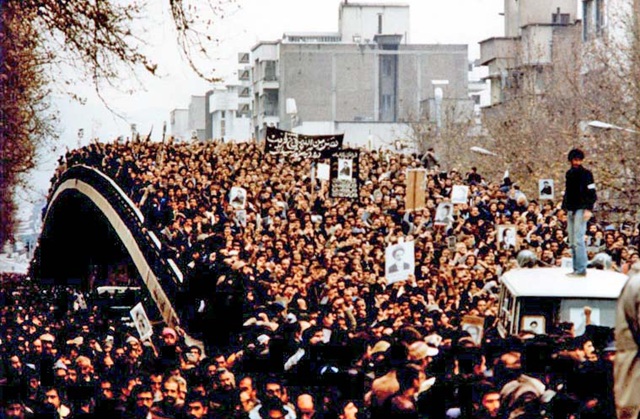
Forty-seven years ago, on this day, the Islamic Revolution of Iran achieved victory under the leadership of Imam Khomeini, marking a historic turning point in the nation’s political, social, and cultural life. From its early days, the Constitution of the Islamic Republic of Iran has been founded on the principles of human dignity, justice, independence, and the rejection of domination.
The country’s foreign policy is centered on maintaining balanced and comprehensive relations with friendly nations, guided by the principle of “neither East nor West” and rooted in mutual respect for governments and peoples. Over the years, this commitment has been articulated through two main pillars: The Policy of the Economy of Resistance and the Policy of Stability and Security in the region and the international system. Together, these principles have formed the foundation for expanding and strengthening relations with neighboring and friendly countries. Accordingly, the Islamic Republic of Iran, relying on a balanced foreign policy, dynamic diplomacy, and constructive engagement, has pursued the path of deepening cooperation with neighboring states, emerging powers, and through active participation in major regional and international organizations.
Iran considers itself a responsible, independent, and influential actor in the region and the world, and has consistently supported dialogue, multilateralism, and cooperation to promote peace, stability, and sustainable development.
Iran also considers constructive interaction, as well as bilateral and multilateral cooperation with friendly countries in combating terrorism, extremism, and drug trafficking as the main priorities.
In recent years, the Islamic Republic of Iran has achieved remarkable accomplishments in various scientific and technological fields, while simultaneously expanding its relations with different countries. This demonstrates the strengthening of capabilities, sustainable progress, industrial self-sufficiency, and steady march toward prosperity.
In the field of economy and production, despite unjust sanctions and the difficult conditions of the global economy, growth in industrial output, an increase in non-oil exports, the strengthening of the tax base, and clear signs of movement toward a more diversified and resilient economy have become evident.
In the area of social services and infrastructure, the expansion of healthcare coverage, broad self-sufficiency in pharmaceutical production, progress in national housing projects, improved access to safe drinking water, and the development of communication infrastructure have all played an effective role in enhancing the quality of life of citizens.
Among many notable achievements, in the highly specialized and technologically demanding field of nuclear medicine, the Islamic Republic of Iran has charted an extraordinary path, evolving from a country dependent on imports to a globally recognized leader in radiopharmaceuticals and nuclear imaging equipment.
Today, it stands among the world’s top three producers, driving innovations that support treatments for millions of cancer patients.
The global radiopharmaceutical market, central to modern precision medicine, is projected to rise from an estimated $7.64 billion in 2024 to more than $35 billion by 2034, underscoring its expanding role in disease diagnosis and therapy, particularly in oncology.
Meanwhile, the Islamic Republic of Iran has successfully developed a variety of advanced radiopharmaceuticals in the fields of nuclear, scientific, and medical technology for the diagnosis and treatment of cancer. These include drugs such as Gallium-68 for PET imaging and Lutetium-177 for alleviating pain in cancer patients, which are now widely used in domestic medical centers and have substantially reduced dependence on imports. Iran is also capable of producing more than 70 specialized radiopharmaceuticals, a capability possessed by only a handful of countries worldwide.
Iran also recently unveiled its first home-grown electro chemotherapy system, boosting treatment for six major cancers by improving drug absorption in tumor cells.
In medical innovation and healthcare, Iran leverages nuclear technology and collaborates with research centers to provide extensive services in early disease detection and specialized cancer treatments, including the use of Fluorine-18 in PET imaging and other advanced nuclear medicine techniques.
Based on the government’s strategic document, the Islamic Republic of Iran has also set a target of generating six billion euros annually from health tourism and aims to become a regional hub for medical and specialized treatment services for foreign patients.
Iran also maintains close cooperation in the field of international health with the Group of Eight countries and the World Health Organization.
Beyond healthcare, in the field of peaceful nuclear energy, Iran possesses a complete nuclear fuel cycle, encompassing enrichment, fuel production, heavy water technology, and advanced nuclear research. Every year, more than 100 scientific achievements are unveiled on the National Nuclear Technology Day.
At the same time, in aerospace and satellite technology, Iran has successfully launched domestically developed satellites into orbit, including the Noor-3 satellite, which is capable of Earth observation, reflecting significant progress in civilian space endeavors.
Moreover, in advanced industrial and scientific technologies, Iranian knowledge-based companies have made remarkable strides in nanotechnology, robotics, electronics, artificial intelligence, and information technology. Long-term plans are underway to develop space infrastructure, including the Chabahar Space Base, with a target completion by 2031.
Alongside these achievements, in the field of Precision Agriculture, Iran employs sensors, satellite data, GPS, and artificial intelligence analytics to optimize water use, reduce fertilizers and pesticides, and increase crop yields. Knowledge-based companies have also developed smart, remote-controlled drip irrigation systems that adjust irrigation patterns in real time based on soil and water data, reducing water consumption by 30–40%—particularly in arid and water-scarce regions.
These advancements and achievements open new horizons for enhancing technological and industrial cooperation between Iran and Sri Lanka.
These remarkable industrial and technological achievements have occurred despite the Iranian nation being subjected to various unjust sanctions imposed by the United States over the past 47 years. These sanctions were motivated by Iran’s insistence on its inherent rights to pursue peaceful technologies, on the one hand, and the U.S. determination to deny the Iranian people these fundamental rights, on the other.
During these challenging and eventful years, despite the policy of maximum pressure and the coercive approach of the United States, the Islamic Republic of Iran engaged in dialogue on nuclear issues in order to demonstrate its goodwill. However, at a time when five rounds of talks had been held and agreement had been reached to proceed with a sixth round, in June 2025, Iranian territory came under military attacks by the Israeli regime. These attacks were subsequently accompanied by direct U.S. involvement, targeting peaceful nuclear facilities, urban infrastructure, and Iranian civilians. More than a thousand civilians, along with senior military commanders, were martyred off-duty in these assaults. In accordance with its right to self-defense, the Islamic Republic of Iran responded decisively in accordance with international law to the Israeli attacks. Ultimately, this regime, which has also recorded the killing of over 70,000 people in Gaza in its dark history of atrocities, conceded to a ceasefire after twelve days.
The Islamic Republic of Iran is stronger than ever and fully prepared to respond to any external military threat. Throughout its history, Iran has never initiated a war; yet the pages of its history are filled with accounts of its people resolutely defending themselves and their homeland. While Iranians do not seek war, they are fully capable of waging it and defending their nation when necessary.
In addition to sanctions and comprehensive economic pressures alongside direct aggression, Iran’s adversaries have relied on terrorism, supporting terrorist groups in efforts to hinder Iran’s progress. The most recent example occurred on 28 December 2025, when some business owners and merchants held peaceful demonstrations in response to economic hardships stemming from the United States’ unjust sanctions against the Iranian economy.
It is crucial to note that civil protests in any democratic society represent a fundamental principle of popular governance. Iranian authorities welcomed these peaceful demonstrations with open arms. The President of the Islamic Republic of Iran promptly issued directives to address the concerns of merchants and economic actors. Special committees were established at the Central Bank and relevant ministries, and necessary measures were taken. However, certain disruptive elements, guided by multiple foreign intelligence services, hijacked the peaceful protests of the people.
By distorting the nature of the peaceful protests toward violent unrest, rioting groups, guided and directed by foreign services, engaged in acts of violence, including killing civilians, setting urban facilities on fire, attacking ambulances and hospitals, and damaging metro stations, mosques, and other city infrastructure. They did not hesitate to kill police personnel and burn police stations.
Several current and former U.S. and Zionist regime officials while openly acknowledging the presence of their operatives in the streets of Tehran, attempted to steer the unrest in a direction that could undermine the country’s overall governance. Yet, the massive turnout of the Iranian people on Monday, 12 January, across cities nationwide, sent a clear and decisive message against foreign interference and a strong condemnation of violence and chaos. People, while united in denouncing the unjust U.S. sanctions, which have exacerbated economic pressures, deprived patients of essential medicines, and targeted the country’s economy, simultaneously condemned in strong terms any exploitation of the situation by external adversaries.
In the view of the Iranian people, the tragic events of January 2026, during which hundreds of people lost their lives and significant economic damage occurred, represented a continuation of the 12-day war by the Israeli regime against Iran. In those acts of aggression, although the U.S.-backed Israeli regime, attempted to destroy Iran’s infrastructure, it was met with a decisive response from Iran’s armed forces and was compelled to agree to a ceasefire. In continuation of that 12-day campaign, attempts were made to destabilize the country from within, but these efforts failed due to the vigilance of the Iranian people. However, more resilient than ever and with firm determination, the Iranian nation will seek justice through legitimate means for these criminal acts. The Islamic Republic of Iran welcomes any governments and nations which join hands in the path of fight against terrorism, and declares its readiness for any form of regional and international collaboration to combat terrorism.
The Islamic Republic of Iran is still facing simultaneous military, political, and media campaigns by the United States and the Zionist regime. While Iran will act firmly and decisively in defending its sovereignty and national security, it remains steadfast in using diplomacy to safeguard the interests of the Iranian people and to preserve regional peace and security.
Respect for national sovereignty and mutual interests is the fundamental principle of diplomacy. Therefore, negotiations conducted under threats, coercion, and illegitimate, one-sided demands cannot be effective or constructive.
Within this principled and balanced foreign policy framework, the Islamic Republic of Iran has always attached great importance to strengthening relations with friendly and like-minded countries. In this context, relations with Sri Lanka hold a special and distinguished place.
Iran and Sri Lanka share long-standing historical and civilizational ties that date back thousands of years. These relations are grounded in cultural and civilizational affinity and, over time, have consistently progressed along a path of constructive engagement and mutual understanding, shaped by political and economic developments. Although formal diplomatic relations between the two countries have existed for less than six decades, the underlying ethos of these relations has always been based on mutual respect, economic and political cooperation, and positive engagement at both bilateral and multilateral levels.
In this context, the Islamic Republic of Iran affirms its full readiness to strengthen technological, industrial, and economic cooperation and to establish frameworks for collaboration with Sri Lanka in areas such as trade, investment, energy, agriculture, and science. Iran believes that expanding these partnerships can foster innovative joint projects, boost employment, and promote sustainable economic growth in both countries. By continuing along this path, the two nations will not only preserve their historical bonds and longstanding friendship but also elevate their collaboration in science and industry to a new, influential level in the region and globally.
Once again, I sincerely hope that the coming years will herald a bright and flourishing chapter in the development of relations between Iran and Sri Lanka, strengthening the bonds of friendship and cooperation between our two nations, and I thank you, all distinguished guests, who shared your presence with us by participating in this ceremony.