


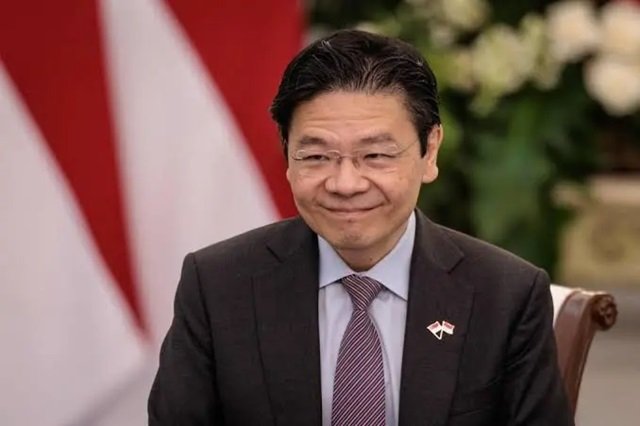
Singapore is to introduce a one-off increase in the pay of government ministers, including Prime Minister Lawrence Wong, despite continuing domestic disapproval over the high salaries received by the country’s political leaders.
Wong said on Tuesday that he had accepted the findings of an independent review into public service pay, which recommended increases of as much as 9 per cent for some senior ministers. The changes are due to take effect next month, with entry-level ministers potentially seeing their annual pay rise from S$1.1mn to S$1.2mn.
The increase for Wong himself is considerably larger. His annual package, including salary and bonuses, will rise from S$2.2mn (US$1.7mn) to S$3.6mn (US$2.8mn). Wong said he would donate the increased portion of his pay to charity for the next five years, assuming he remains in office.
“We cannot avoid this issue simply because it is politically difficult, and this is not just a matter of pay,” Wong said in parliament. “It is ultimately about whether Singapore will continue to have the quality of political leadership we need to take our country forward and to serve Singaporeans well in the years ahead.”
The government has long defended Singapore’s unusually high political salaries as a means of competing with the private sector for highly qualified candidates and reducing incentives for corruption. The city-state has built its international reputation around clean governance and has been governed by Wong’s People’s Action Party since independence 61 years ago.
Wong’s revised package would remain far above the salaries of leaders in other major economies. US President Donald Trump receives an annual salary of $400,000, while Sir Keir Starmer was paid $237,000 as UK prime minister in the last disclosed financial year. The second-highest pay package cited is the $719,000 received by Hong Kong’s chief executive John Lee.
Singapore’s ministerial salaries were last changed in 2012, when they were cut by 36 per cent in response to public discontent. A further review was conducted in 2017, but no changes were made.
Wong, who is also Singapore’s finance minister, said the latest increases reflected rising remuneration in both the private sector and the civil service. He argued that maintaining an effective political system required the terms of political service to remain broadly connected to prevailing pay levels.
“If we want our political system to remain effective, we cannot allow its basic terms of service to drift further and further away from reality,” he said, adding that the government faced difficulties in attracting new candidates to enter politics.
Singapore determines political salaries using the pay of the 1,000 highest-earning Singaporeans as a benchmark. The system has generally been regarded as effective, although the city-state has faced several political scandals in recent years.
The issue of political integrity was brought into sharp focus by the case of former transport minister S Iswaran, who was sentenced to a year in prison in 2024 after accepting more than $300,000 in gifts as a public servant and obstructing justice.
The gifts allegedly included tickets to English Premier League football matches, Formula 1 races and theatre productions including Harry Potter and the Cursed Child, Hamilton and Kinky Boots, as well as a business-class flight from Doha to Singapore.
The case also involved billionaire property tycoon Ong Beng Seng, who pleaded guilty last year and received a $23,700 fine but was not sentenced to prison.
Against that backdrop, Singapore’s decision to increase ministerial pay again places renewed attention on the government’s long-standing argument that generous remuneration is essential to maintaining political quality and integrity, even as high salaries remain politically sensitive at home.









