


Iraqi Prime Minister Ali al-Zaidi’s first official visit to Washington since taking office in May unfolded as far more than a routine diplomatic engagement. Across meetings with U.S. President Donald Trump, members of Congress, senior administration officials, and American business leaders, the visit projected Baghdad’s intention to deepen economic cooperation with the United States while presenting Iraq as a country seeking greater integration into the global economy. At the same time, discussions underscored the security challenges that continue to shape Iraq’s domestic politics and its regional relationships, particularly the future of Iran-aligned militias operating inside the country.
The visit, detailed in analysis by The Soufan Center, reflected a convergence of economic ambitions and security priorities at a time when Iraq is navigating complex pressures from both Washington and Tehran. While investment and infrastructure dominated the public agenda, the underlying issue remained Baghdad’s ability to fulfill its commitment to disarm or integrate armed groups aligned with Iran before the scheduled conclusion of the U.S. military mission in Iraq on September 30.
Ahead of his departure, Zaidi framed the trip as the beginning of a new phase in Iraq’s international engagement. In an opinion article published in The Washington Post, he described his government’s vision of a sovereign Iraq integrated into the global economic and financial system rather than defined by regional rivalries. That message formed the backdrop for a series of high-level meetings in Washington that emphasized investment, energy development, technology, and long-term economic partnerships.
The United States used the visit to reinforce its broader regional strategy, presenting Iraq as a potential participant in an expanding network of Arab states focused on economic development and political stability. According to The Soufan Center, Washington also sought to demonstrate that its Iraq policy operates independently of its approach toward Iran, particularly as tensions between the two countries continue to influence security dynamics across the Middle East.
Recent developments have heightened those pressures. Iran’s closure of the Strait of Hormuz sharply reduced Iraq’s oil revenues, exposing the country’s dependence on export routes vulnerable to regional conflict. The disruption strengthened discussions between U.S. and Iraqi officials about creating alternative pathways for Iraqi energy exports, reducing Baghdad’s exposure to future disruptions while simultaneously diminishing Tehran’s strategic leverage over regional energy markets.
Among the most significant proposals discussed was the revival of the long-dormant crude oil pipeline connecting Iraq’s Kirkuk oil fields to Syria’s Mediterranean port of Baniyas. The pipeline, closed in 1982 during the Iran-Iraq War, has remained largely unusable for decades. Officials from both governments examined reconstruction plans expected to involve American energy companies, although security concerns remain due to the pipeline’s route through areas where Islamic State cells continue to operate.
At the same time, Iraqi officials continued discussions with neighboring Jordan regarding another long-planned export route linking Iraq’s southern oil fields to the Red Sea port of Aqaba. While both projects aim to diversify Iraq’s export infrastructure, questions remain regarding financing, implementation capacity, and regional support for pursuing multiple large-scale pipeline initiatives simultaneously.
Economic cooperation extended beyond energy infrastructure. Zaidi arrived in Washington accompanied by a large delegation representing ministries responsible for Iraq’s economic and financial policy, underscoring the central role investment played throughout the visit. Officials anticipated multiple agreements before the delegation’s return to Baghdad, including memoranda of understanding covering oil and gas development, possible participation by Chevron in major Iraqi oil fields, and an agreement allowing Starlink satellite internet services to expand into Iraq. Zaidi also raised the possibility of establishing a long-term U.S.-Iraq energy investment fund valued at approximately $400 billion.
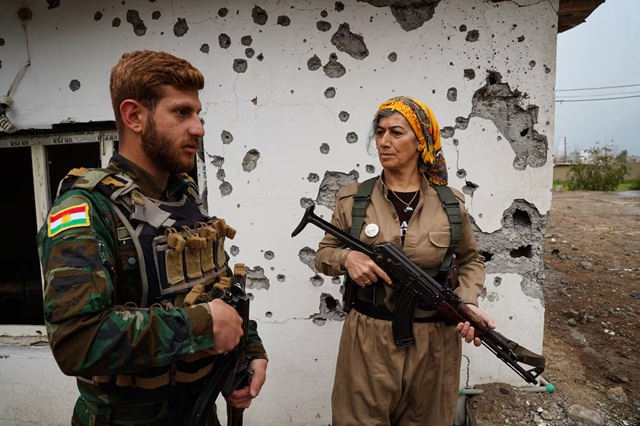
While economic announcements dominated public attention, security discussions remained central to Washington’s priorities. The United States continues to press Baghdad to implement plans that would leave the Iraqi state with sole authority over the legitimate use of force by dismantling or integrating Iran-backed armed groups into official institutions.
Zaidi reiterated that the scheduled withdrawal of U.S. forces by September 30 would remove the principal justification cited by many militias for maintaining their armed presence. He told American officials that his government expected to complete the disarmament process by that deadline. Before traveling to Washington, his administration sought to demonstrate progress by replacing a national security adviser viewed as close to militia interests, obtaining demobilization commitments from several militia leaders, and securing an agreement from influential Shia cleric Muqtada al-Sadr to integrate the Saraya al-Salam force into Iraq’s national military structure.
Financial measures also became part of the broader strategy. Iraqi authorities agreed to strengthen restrictions preventing U.S. dollars from reaching Iran and affiliated militia networks, a move that coincided with Washington lifting a four-month suspension on shipments of American currency to Baghdad, according to U.S. and Iraqi officials cited in The Soufan Center’s analysis.
Despite these commitments, uncertainty continues to surround the prospects for comprehensive militia disarmament. Several Iran-aligned groups publicly opposed Zaidi’s Washington visit, while experts noted that many of the remaining militias retain substantial military capabilities and enjoy enduring support among segments of Iraq’s Shia population, many of whom regard the armed groups as protectors in the face of continuing security concerns.
Those tensions have already translated into renewed violence. Following the deterioration of the ceasefire between the United States and Iran, one Iraqi armed group launched an attack against U.S. forces stationed at Al-Asad Air Base in western Iraq. Officials warned that additional attacks remain possible as long as hostilities between Washington and Tehran continue to shape regional security conditions.
The visit also touched on Iraq’s position within the global oil market. Although reports indicated that the United States has encouraged Iraq to consider leaving the Organization of the Petroleum Exporting Countries, Zaidi rejected that possibility during his meetings, reaffirming Iraq’s commitment as one of OPEC’s founding members. At the same time, he called for a larger production quota to compensate for severe revenue losses resulting from disruptions to oil exports during the Strait of Hormuz closure.
As the Washington meetings concluded, Iraq emerged at the center of discussions extending well beyond bilateral diplomacy. The agenda linked security reform, energy infrastructure, economic investment, regional partnerships, and Iraq’s future strategic orientation into a single set of negotiations. As outlined in The Soufan Center’s assessment, the visit marked a significant moment in Baghdad’s efforts to balance domestic security commitments with international economic ambitions while navigating the competing influences that continue to define the region.









