


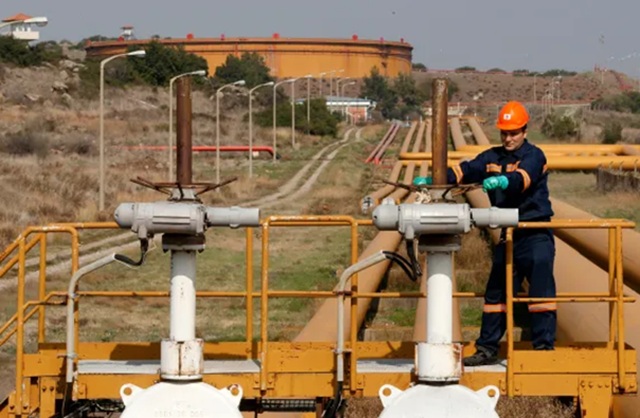
Iraq has struck a deal with the Kurdistan Regional Government (KRG) to reopen the 600-mile Kirkuk-Ceyhan pipeline, resuming exports from northern fields to Turkey’s Mediterranean port. The North Oil Company confirmed that around 250,000 barrels per day will flow through the pipeline, although its full capacity is estimated at 900,000 barrels per day. The KRG emphasized that revenues from the exports will be returned to Iraq’s federal treasury and said a joint committee will oversee the resumption of operations. Kurdish Prime Minister Masrour Barzani stated on X that the region was allowing exports “as soon as possible given the exceptional circumstances the country is confronting.”
The pipeline had been closed for more than a decade due to repeated Islamic State attacks. Kirkuk sits at the heart of a territorial dispute between Baghdad and the semi-autonomous Kurdish region, which maintains its own government, parliament, and security forces while remaining constitutionally part of Iraq. The resumption comes as Iraq struggles to export oil after disruptions in the Gulf, where the Strait of Hormuz, a key global chokepoint, has effectively been blocked amid regional tensions and ongoing conflict.
Although the restart provides some relief, it represents only a fraction of Iraq’s normal exports. Prior to the war in the Middle East, Iraq shipped 3.5 million barrels per day mainly from Basra via the Strait of Hormuz. Current production estimates indicate that Iraq has shut in roughly three million barrels per day as storage tanks near capacity. Brent crude briefly fell near $100 per barrel on news of the pipeline reopening before spiking again to trade above $106.
The Kirkuk-Ceyhan restart highlights broader efforts across the Gulf to bypass the Strait of Hormuz, which carries nearly a fifth of the world’s traded oil and gas. Saudi Arabia has begun diverting up to five million barrels per day via its east-west Abqaiq-Yanbu pipeline to the Red Sea, while the UAE is increasing flows through the Abu Dhabi crude oil pipeline to Fujairah. Both routes face logistical and security risks, including potential attacks on tankers and infrastructure.
The International Energy Agency has warned that while these alternative pipelines provide limited relief, global oil markets remain vulnerable. Iraq’s agreement with the KRG to restart the Kirkuk-Ceyhan pipeline underscores the strategic importance of alternative routes and highlights the fragile nature of energy exports in a conflict-affected region.










