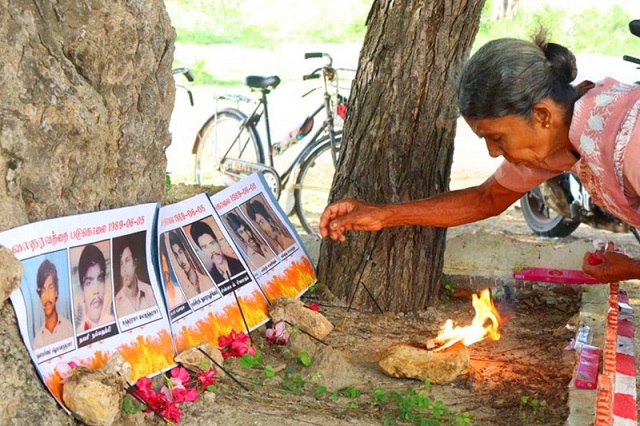
In a solemn ceremony held on June 6, 2024, the relatives of unarmed Tamil civilians who were killed 35 years ago commemorated their loved ones in Vadaravattei, Puttur, Jaffna. The massacre, which occurred on June 5, 1989, has been attributed to the Indian Peacekeeping Forces (IPKF) stationed in northern Sri Lanka during the late 1980s.
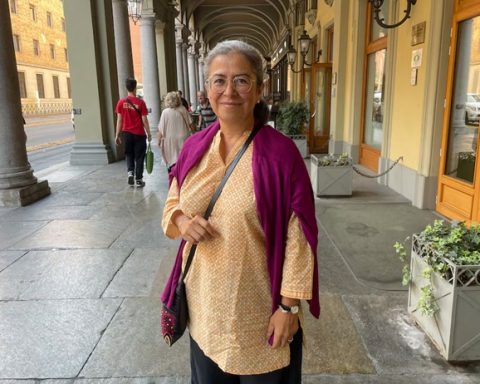
The memorial was attended by family members who paid tribute by placing flowers on photographs of the deceased. Anandi Sashidaran, a former member of the Tamil National Alliance, also participated in the event, offering her support and solidarity to the grieving families.
Among those commemorated were Thambirasa Latsanakumar, Thalasingham Dayanandrasa, Sundararasa Vaikundarasa, Vallipuram Thureirajasingham, Thambimuthu Yogendram, Thavasi Nallathambi, Sinnavan Sivapadam, and Sadayan Kandaiya. These individuals, all residents of Puttur East, were reportedly taken near a temple and killed by the IPKF, with villagers recalling that their bodies were then burned.
The tragedy is part of a series of mass killings that occurred under the IPKF’s presence in the region, initially invited by the Sri Lankan government led by then-President JR Jayawardena. The IPKF’s arrival, intended to enforce peace under the Indo-Lanka agreement, was marred by violent clashes, particularly after a group of Indian soldiers were killed by the Liberation Tigers of Tamil Eelam (LTTE) in Jaffna.
Despite the passage of 35 years, there has been no formal inquiry into the massacres, nor any compensation provided to the victims’ families. Successive governments in both Sri Lanka and India have failed to address these atrocities, leaving a lingering wound in the Tamil community. Notably, the current president of Sri Lanka was a minister in the government during the time of the killings, and the father of the current opposition leader succeeded Jayawardena as president after serving as prime minister.
The Janata Vimukthi Peramuna (JVP), which opposed the devolution of power under the Indo-Lanka accord and later participated in the government, has also been criticized for its inaction in seeking justice for the victims of the IPKF. The IPKF, derogatorily referred to as “monkey armies” by some northern residents, has left a legacy of unresolved grievances and unaddressed crimes.