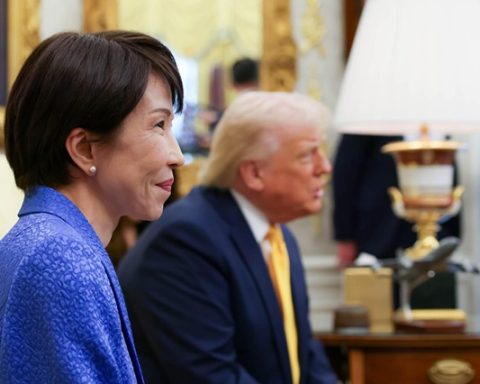
Japan has agreed to allow the U.S. president Donald Trump to decide how $550 billion of its capital is invested in America, according to an unpublished memorandum obtained by the Financial Times. The deal, signed on Thursday in Washington, was part of a broader agreement to reduce punitive tariffs on Japanese exports.
Under the arrangement, Japan will have just 45 days to fund projects selected by Trump. Failure to do so could trigger the reinstatement of tariffs as high as 25 percent on Japanese goods. The deal lowers the tariff rate to 15 percent, providing significant relief for Tokyo, which had been facing the steep levies under Trump’s “America First” trade policy.
The Financial Times reported that the unusual terms highlight the extraordinary concessions U.S. trading partners are making to avoid tariff penalties. Similar pledges have reportedly been made by South Korea and the European Union, though details of those commitments remain less clear.
The memorandum seen by the newspaper revealed that profits from Japan’s massive investment would initially be split evenly between the two countries. Once Japan’s principal is recouped, however, the U.S. would claim 90 percent of the ongoing proceeds.
The investment projects will be overseen by a committee chaired by U.S. Commerce Secretary Howard Lutnick, but Trump will have the final say on which initiatives receive funding. The memo also encourages the use of Japanese suppliers wherever possible, potentially boosting Japan’s export opportunities.
“This initiative could have a positive medium- to long-term impact on Japanese exports, depending on the procurement ratios,” Morgan Stanley economist Takeshi Yamaguchi wrote in a note to clients.
The deal is the latest in a series of unconventional measures by Trump to extract direct financial benefit from trade partners and U.S. corporations. Recent moves include agreements with American chipmakers Nvidia and AMD requiring them to share a portion of revenue from sales in China, and a “golden share” in U.S. Steel granted to Washington as part of Nippon Steel’s $15 billion takeover of the company.
The billions pledged by Japan underscore the economic and political leverage wielded by the U.S. in global trade negotiations under Trump, as well as the lengths to which allies will go to secure access to the American market.