Japan’s decision to deploy its domestically produced long-range Type-12 missiles near the East China Sea is raising concerns among analysts and Chinese officials, who warn the move may represent a significant strategic shift in the region. The development, reported by the South China Morning Post, is being viewed by some observers as a potential crossing of a “strategic threshold” that could complicate China’s military calculations and further heighten tensions around Taiwan and the broader East Asian security landscape.
Japanese Chief Cabinet Secretary Minoru Kihara announced that the upgraded Type-12 surface-to-ship missiles will be deployed at Camp Kengun in Kumamoto prefecture, located on the southwestern island of Kyushu, by the end of the month. Reports indicate that army vehicles carrying the first batch of missile launchers arrived at the base shortly after midnight on Monday. The deployment follows Tokyo’s decision to accelerate the rollout of the missile system by a year, reflecting growing security concerns amid rising military tensions with Beijing in the East China Sea.
The upgraded Type-12 missile, developed by Mitsubishi Heavy Industries, represents a major improvement over the earlier version. Its range has been extended from about 200 kilometres to roughly 1,000 kilometres, allowing it to cover almost the entire East China Sea if launched from Kyushu. The expanded reach also means that coastal cities and military infrastructure on mainland China could fall within range, a capability designed primarily to deter Chinese naval operations in the event of a conflict around the Taiwan Strait.
Beijing has reacted sharply to the development. Chinese defence ministry spokesman Jiang Bin accused “right-wing forces” in Japan of accelerating the country’s remilitarisation. He argued that deploying long-range offensive weapons with ranges exceeding Japan’s territorial boundaries undermines Tokyo’s long-standing claim that its military posture is purely defensive. According to Jiang, the move reveals that what he described as Japan’s “new militarism” has become a real threat capable of disrupting regional peace and stability.
Security analysts say the deployment represents an important evolution in Japan’s defence strategy. John Bradford, executive director of the Yokosuka Council on Asia-Pacific Studies and a former US Navy officer, said positioning the Type-12 missiles in Kumamoto strengthens Japan’s ability to threaten Chinese naval ships operating in the East China Sea during a potential conflict. He noted that the move mirrors China’s long-standing strategy of deploying anti-access and area-denial systems designed to prevent foreign naval forces from operating freely in contested waters.
Bradford suggested that this emerging balance of power could create a situation of “mutual sea denial,” in which both China and Japan possess the ability to target each other’s naval forces. Such a dynamic may strengthen deterrence by making both sides more cautious about initiating military action in the strategically sensitive waters separating them.
Other experts believe the missile deployment fits into a broader regional security architecture. Ray Powell, director of the SeaLight maritime transparency programme and a retired US Air Force colonel, said the deployment strengthens a growing network of allied missile capabilities along the so-called “first island chain.” This strategic arc stretches from Japan through Taiwan and the Philippines, forming a barrier that complicates Beijing’s military planning.
Powell said the move also reflects greater burden-sharing within the United States alliance system in Asia. By developing its own long-range strike capabilities, Japan is taking on more operational responsibility rather than relying heavily on American military power. This shift, he noted, aligns with Washington’s long-standing goal of encouraging regional allies to contribute more directly to collective deterrence.
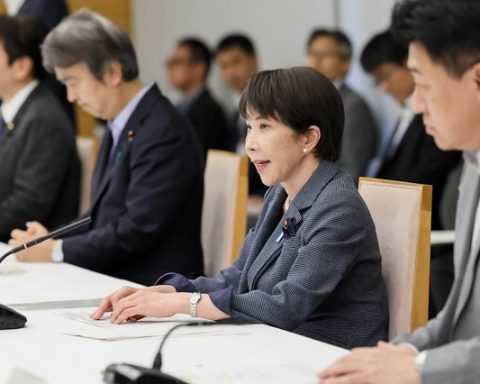
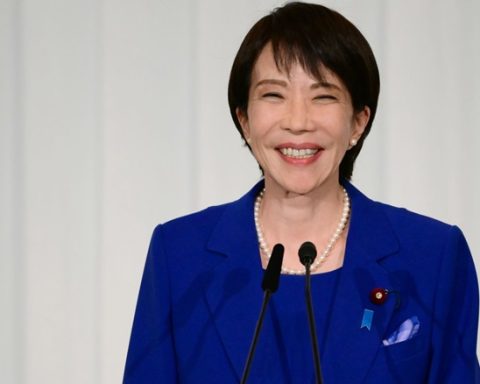
The deployment comes amid rising diplomatic tensions between Tokyo and Beijing. Relations deteriorated after Japanese Prime Minister Sanae Takaichi suggested last year that Japan could take military action if Taiwan were attacked, a statement that triggered strong protests and economic retaliation from China. Takaichi has since pledged to accelerate Japan’s military modernisation, and the country’s defence spending has now reached 2 percent of its gross domestic product earlier than originally planned.
Japan is also strengthening its defensive posture across its southwestern islands. Defence Minister Shinjiro Koizumi recently announced plans to deploy the Type-03 medium-range surface-to-air missile system on Yonaguni Island, Japan’s westernmost territory located just east of Taiwan, by 2031. These moves form part of a broader strategy to bolster deterrence against China, North Korea and Russia while enhancing Japan’s autonomous defence capabilities.
Chinese Foreign Minister Wang Yi recently warned that the future of China-Japan relations depends heavily on Tokyo’s policy choices. He urged Japan to reflect on its historical legacy, referencing its wartime invasion and colonisation of Taiwan, while cautioning that current military developments risk deepening mistrust between the two nations.
Analysts say the upgraded Type-12 missile marks one of the most significant shifts in Japan’s post-war defence posture. Liselotte Odgaard, a senior fellow at the Hudson Institute, said the system significantly raises the cost of any potential attack on Japanese territory and complicates the planning of China’s People’s Liberation Army. Unlike in the past, Beijing must now factor in the possibility of Japanese long-range retaliation against military bases and logistical hubs along China’s coastline.
At the same time, Odgaard warned that China is likely to view the deployment as a direct military threat, reinforcing suspicions that Japan is preparing for a possible conflict over Taiwan. Such perceptions could strengthen Beijing’s narrative that Tokyo is acting provocatively, potentially increasing the risk of miscalculation, accelerating an arms race in northeast Asia, and further militarising the already tense waters of the East China Sea.