Japan is preparing to deepen economic ties with India through a high-level visit to Assam by Prime Minister Sanae Takaichi, accompanied by executives from more than 50 Japanese companies and organizations seeking opportunities in the northeastern Indian state.
The delegation is expected to include major Japanese firms such as Suzuki Motor Corporation, Itochu Corporation and Toyota Tsusho Corporation. Some participating companies are planning to sign cooperation agreements during the visit, according to information about the planned trip.
The visit is scheduled for early July, with Assam’s capital Guwahati expected to be one of the locations visited by Takaichi. The two governments are arranging meetings and economic forums as part of efforts to strengthen business and industrial cooperation between the two countries.
The trip comes as Japan and India work to advance a broader vision of a “free and open Indo-Pacific.” Former Japanese Prime Minister Fumio Kishida introduced a plan in 2023 that included developing an industrial corridor connecting the Bay of Bengal with northeastern India, and both countries are now working to translate that concept into concrete projects.
Assam has attracted attention as a potential investment destination despite infrastructure development in the state remaining behind other parts of India. Foreign companies view the region as an emerging market, although Japanese corporate presence remains limited. According to Japan’s Foreign Ministry, 59 Japanese corporate offices were operating in Assam as of 2024, mainly in finance and insurance.
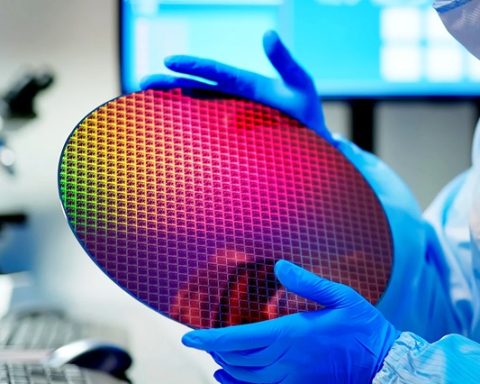
The state has recently drawn investment from major Indian companies, particularly in sectors identified as national priorities by the Indian government, including semiconductors and energy. The Tata Group is investing 270 billion rupees, approximately $2.86 billion, to build a semiconductor facility focused on back-end processes such as assembly and testing.
Other major Indian corporations are also expanding activity in Assam. Reliance Industries has announced large investments in data centers and digital infrastructure, while Adani Group has outlined major investments in power generation.
Japanese officials and companies see these infrastructure developments as potential opportunities for greater participation in Assam’s industrial growth. Demand is expected to increase for advanced Japanese technology, including equipment and transportation solutions capable of safely moving sensitive precision components used in semiconductor production.
Indian Prime Minister Narendra Modi has placed greater focus on northeastern India, a region bordering Myanmar and Bangladesh that could become a key industrial and logistics hub connecting Southeast Asia with the Indian Ocean.
India is seeking to attract Japanese companies with advanced manufacturing capabilities as part of efforts to expand beyond its service-driven economic growth model. Officials have emphasized the importance of developing high-quality manufacturing industries to maintain long-term economic expansion.
Japan has already supported infrastructure projects in northeastern India through official development assistance before private-sector investment. One example is the planned bridge connecting Dhubri in Assam and Phulbari in Meghalaya, a project supported through bilateral cooperation.
Financial cooperation is also expanding. The Japan Bank for International Cooperation plans to provide up to 60 billion yen, around $374 million, to cofinance a project focused on producing biofuel from bamboo and other materials.
The push for stronger economic ties follows a 2025 commitment by former Japanese Prime Minister Shigeru Ishiba to target 10 trillion yen in investment in India over the following decade. Japanese businesses have increased investment activity since then, although the overall number of Japanese companies operating in India has remained largely unchanged.
Large corporations have led Japan’s expansion in India, while smaller and medium-sized enterprises have been slower to enter the market. Data from the Japan External Trade Organization shows that small and midsize firms account for only 15% of Japanese companies operating in India.
The Assam visit is expected to highlight efforts by both countries to expand industrial cooperation, increase Japanese participation in India’s manufacturing sector and develop northeastern India as a regional economic and logistics center.