Kangpokpi District has emerged as a major centre of violence in Manipur in 2026, with killings, village attacks, abductions and armed clashes increasingly reflecting a Naga-Kuki fault line. The escalation is significant because the State’s conflict since May 2023 had principally been viewed through the Meitei-Kuki divide. Kangpokpi, a predominantly Kuki-inhabited hill district bordering Naga-majority areas, is now at the intersection of these competing ethnic and territorial tensions.
The latest incidents underscore the escalation. On August 27, 2026, five Naga civilians were killed and one injured after unidentified gunmen allegedly ambushed their vehicle between Makui Ashang and Thanamba Naga villages along the Imphal-Tamenglong Road in Kangpokpi District. The victims were travelling towards Senapati. The United Naga Council accused the Kuki National Front-Presidential (KNF-P) and Kuki Revolutionary Army (KRA) of involvement, although the perpetrators had not been officially identified.
The attack came less than two weeks after another assault on Naga civilians. On August 14, 2026, suspected KNF-P cadres allegedly opened fire on farmers at Langka Naga village, killing two and injuring another two.
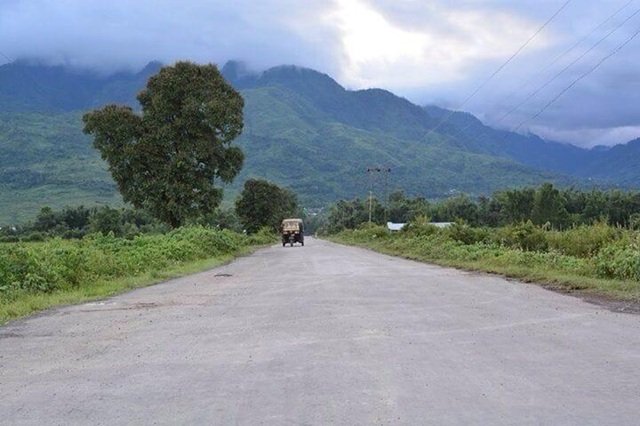
Kangpokpi’s geography is central to its security significance. The district is situated between the Imphal Valley and Naga-inhabited hill areas and contains extensive forested and hilly terrain. Important routes, including National Highway 2 and the Imphal-Tamenglong Road, connect the district with neighbouring areas. Difficult terrain, dispersed settlements and vulnerable road stretches provide armed groups opportunities for movement and concealment, while making civilian travel susceptible to ambushes.
On May 13, 2026, three church leaders were killed and four were injured when unidentified militants ambushed two vehicles carrying members of the Thadou Baptist Association of India and United Baptist Council near Kotlen and Kotzim villages on the Kangpokpi-Churachandpur Road. Security Forces (SFs) said eight to 10 assailants used automatic weapons in the attack. On the same day, six Naga civilians were allegedly abducted from Leilon Vaiphei village by suspected Kuki militants. Their bodies were recovered on June 10, during a joint operation involving about 450 personnel from Manipur Police, CRPF and Assam Rifles. The six were among 18 people detained; women and a child were subsequently released.
The incidents subsequently acquired a reciprocal character. On June 5, 2026, three Kuki civilians were killed and seven houses were burned at Loibol Khullen village. Kuki Inpi Manipur alleged that NSCN-IM and Zeliangrong United Front-Kamson (ZUF-K) cadres were responsible, though this was not officially confirmed.
On June 8, 2026, a Rongmei Naga villager, Chungjanglung Panmei, was killed after unidentified gunmen allegedly fired on villagers collecting firewood and repairing water pipelines. The following day, a suspected Kuki militant was killed in a gunfight between rival armed groups near Lasan Kuki and Makui villages.
On June 13, 2026, a Kuki village volunteer was killed near Lasan Kuki-Zo village, with Kuki groups alleging NSCN-IM and ZUF-K involvement.
On July 5, 2026, suspected NSCN-IM and ZUF-K cadres allegedly attacked Thingkhongjang Kuki village, injuring two civilians and burning houses. On August 10, 2026, suspected NSCN-IM cadres allegedly attacked Kailenjang Kuki village and burned three houses.
The sequence indicates that Kangpokpi is witnessing attacks against both Naga and Kuki civilians, with accusations increasingly directed at armed formations associated with the opposing community. This raises the risk of a retaliatory cycle in which individual attacks are rapidly converted into wider communal mobilisation.
According to partial data compiled by the South Asia Terrorism Portal (SATP), Kangpokpi recorded 19 insurgency related fatalities in 2026, including 18 civilians and one terrorist, the second-highest district total after Kamjong’s 20 fatalities. Kangpokpi recorded eight fatalities in 2024 and none in 2025. Since the outbreak of ethnic violence in May 2023, the district has recorded 51 insurgency-linked fatalities – 33 civilians, 14 terrorists, three SF personnel and one person in the non-specified (NS) category. In the corresponding period from February 2020 to April 2023, it recorded 16 such fatalities, including six civilians and 10 terrorists.
The district’s arms-recovery record reinforces the assessment of sustained militant activity. SATP recorded 78 arms-recovery incidents in Kangpokpi since May 2023, including 38 in 2023, 24 in 2025 and 10 in 2026. Recent recoveries included an M16 rifle, sniper rifle, pistols, grenades, detonators and radio equipment from the Makokching Jungle on August 3; an INSAS rifle, 24 Single-Barrel Breech-Loading (SBBL) guns, a Double-Barrel Breech-Loading gun, improvised mortars and other equipment from the Koubru Hill range on July 5; and 1,225 rounds of 12-bore ammunition, wireless sets and 18 bulletproof vests from J. Songtun village on August 24. The quantity and variety of recoveries indicate continued access to firearms and communications equipment and underline the difficulty of containing armed activity in the district’s forested hill areas.
The immediate reason for the recent concentration of violence is the convergence of longstanding territorial tensions with the broader post-2023 ethnic conflict. The Kuki-Naga dispute predates the current crisis and has historically involved competing claims over land and administrative boundaries, particularly in the Sadar Hills area. The creation of Kangpokpi District in 2016, carved out of the former Senapati District, itself followed prolonged Kuki demands for a separate district and strong opposition from Naga organisations. The territorial issue remains politically sensitive and provides an underlying context for present-day disputes over settlement and land.
The situation has been further complicated by rivalry between NSCN-IM and ZUF-linked formations. SATP has noted that their longstanding armed rivalry, previously concentrated largely in Tamenglong, has increasingly intersected with the wider Naga-Kuki conflict in Kangpokpi and neighbouring areas. On June 5 and June 13, 2026, Kuki organisations specifically accused NSCN-IM and ZUF-K of attacks on Kuki civilians and villages. Thus, an intra-Naga militant rivalry is increasingly acquiring an inter-community dimension, particularly where armed groups operate in areas claimed by competing communities.
Land, cultivation and local resource disputes are another trigger. On January 8, 2026, a heavy exchange of fire between ZUF-K and Kuki armed militants at Kharam Vaiphei village under the jurisdiction of Kangchup Police Station in Kangpokpi District, was reportedly linked to ZUF-K’s campaign against alleged poppy cultivation and encroachment in areas it regards as Zeliangrong territory. Later, ZUF claimed operations against alleged illegal poppy cultivation and unauthorised settlements in K. Songlung (II) village in Kangpokpi. Such disputes can quickly acquire an ethnic character because questions of cultivation, settlement and territorial control are closely associated with community identity and traditional land claims. Available evidence, however, does not establish that narcotics activity is the direct cause of most recent attacks.
The violence also demonstrates how local disputes can escalate. An earlier attack on Naga villagers reportedly occurred while they were repairing a water pipeline, while subsequent incidents involved farmers, villagers and travellers. Once such incidents are interpreted through existing ethnic narratives, they can generate retaliatory mobilisation beyond the original dispute. The result is a security environment in which armed groups, village volunteers and community organisations increasingly become involved in protecting their respective populations.
Kangpokpi’s position between Kuki-majority areas and Naga-majority districts makes this particularly dangerous. The district borders areas are linked to the emerging Naga-Kuki confrontation, while they remain closely connected to the wider Meitei-Kuki conflict. Recent violence along the Kangpokpi-Senapati interface has already affected transport and security personnel. On August 24-25, firing between Naga and Kuki village sides along the border reportedly injured a CRPF sub-inspector and disrupted traffic on NH-2. The incident illustrates how violence in Kangpokpi can directly affect a major interstate route connecting Manipur with Nagaland and Assam.
The significance of Kangpokpi, thus, lies less in the size of its territory, than in the convergence of several conflict dynamics. The district has become an interface between Kuki and Naga populations, while its roads and forested hills provide both strategic access and opportunities for armed groups. The large number of arms recoveries indicates that the security problem is not merely spontaneous communal violence but involves organised and armed actors. At the same time, the targeting of farmers, religious leaders, villagers and road travellers indicates that civilians are increasingly exposed to the conflict.
The comparison with the pre-May 2023 period underscores the deterioration. Kangpokpi recorded 16 fatalities during the three years and three months from February 2020 to April 2023, compared with 51 fatalities since May 2023. The 19 fatalities recorded in 2026 alone are higher than the entire total preceding the latest escalation. The increase is therefore not simply a continuation of earlier insurgency-related violence, but reflects a transformed security environment in which ethnic identity, territorial competition and armed mobilisation have become closely intertwined.
The immediate priority is to prevent the present cycle from becoming entrenched. SFs need to strengthen protection along vulnerable roads and border areas, improve intelligence on armed movements and prevent further attacks on villages and civilians. Equally important is preventing local disputes over land, cultivation and resources from becoming triggers for collective retaliation. The recent sequence of killings and village attacks suggests that Kangpokpi has become a new front in Manipur’s fragmented conflict. Unless the Naga-Kuki fault line is addressed alongside the wider Meitei-Kuki crisis, the district is likely to remain one of the principal areas of violence and instability in Manipur.