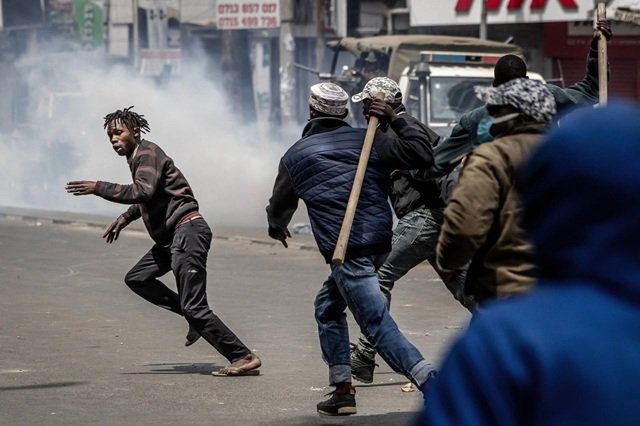
Kenyan politicians are increasingly hiring armed groups for as little as 500 Kenyan shillings, or about $4 a day, to disrupt political rivals, attack protesters and intimidate civil society organizations, according to researchers, rights advocates and individuals who say they have participated in the operations. The practice has raised concerns that political violence could intensify as the country moves toward general elections scheduled for August 2027.
A study by Nairobi-based research firm Odipo Dev found what it described as a “goons rate card,” with payments ranging from 500 shillings for assignments linked to local council campaigns to as much as 1,000 shillings for operations involving members of parliament. Researchers and analysts say politicians across the political spectrum rely on hired groups, often recruited from impoverished communities where employment opportunities remain scarce.
Five men who identified themselves as hired political enforcers agreed to speak on condition that their names be changed. One of them, 27-year-old Marius, said he has been working as a goon since he was 17 after growing up in Korogocho, one of Nairobi’s largest informal settlements. He said financial hardship and the inability to continue his education ended his ambition of becoming a surgeon.
Marius recalled losing five teeth during a confrontation after being hired to protest the opening of a hospital by a rival politician. Although he initially described himself with pride, he later acknowledged the personal cost of the work, saying he no longer sees his son because he does not want to expose him to the violence associated with his livelihood.
Researchers say poverty remains a key driver behind recruitment. Around 40% of Kenyans live below the poverty line, while many young people struggle to find formal employment. According to the World Bank, approximately 800,000 people enter Kenya’s labor market every year, but only about 100,000 formal jobs become available.
Analysts also argue that the use of hired gangs has become deeply embedded in Kenyan politics. During anti-government demonstrations last year, armed groups were seen attacking protesters before businesses in central Nairobi were looted and vandalized. Last month, surveillance footage showed uniformed police officers moving alongside armed men who stormed All Saints Church in Nairobi, disrupting a civil rights meeting. This month, armed groups overwhelmed an opposition rally in southwestern Kenya, leaving one person dead and several others injured as videos showed police standing nearby.
Police spokesperson Michael Muchiri rejected allegations that officers work alongside hired gangs, calling such claims “preposterous.” He said any incidents involving police misconduct would involve rogue officers who are under investigation and maintained that the National Police Service is committed to preventing what he described as a growing “goon culture.”
Darius Okolla, a researcher at Odipo Dev, said politicians often recruit armed supporters because they believe police cannot guarantee their security. He said the resulting policing gap has encouraged political actors to build their own groups capable of either defending allies or intimidating opponents.
The practice has historical roots stretching back to the 1990s, when former President Daniel arap Moi established the Youth for Kanu ’92 movement during election campaigns amid allegations of vote-buying and political violence. Current President William Ruto, who helped organize the group, was later charged by the International Criminal Court over his alleged role in post-election violence following the disputed 2007 election, although the case did not proceed after allegations of witness intimidation.
According to Marius, the use of hired gangs has increased since Ruto took office in 2022, particularly during youth-led protests over economic hardship and corruption. He alleged that goons were used to suppress demonstrations and said demand for such operations has increased. The Kenyan government did not respond to requests for comment.
Rights groups warn that continued reliance on armed political groups could undermine the integrity of future elections. Hussein Khalid of Vocal Africa said that if the trend continues, Kenya risks entering the 2027 election period without conditions for free, fair and peaceful voting.
Another interviewee, Daniel, 28, said he completed a university degree in criminology but was unable to secure employment. He said many entry-level jobs require personal connections or financial resources that he lacked. Although he regrets spending seven years working as a goon, he said the income remains difficult to refuse in an economy offering few alternatives.
Daniel described politicians as treating hired gangs as disposable while acknowledging that election campaigns provide opportunities to earn money, receive gifts and gain status within their communities. Recruitment, he said, typically takes place through neighborhood contacts rather than electronic communication, with participants gathering in groups, dressed in black and paid in cash after assignments.
Despite working on behalf of politicians, several interviewees said they felt little loyalty toward the leaders who hired them. Instead, they described participation as a financial necessity in a labor market where stable employment remains out of reach. Their accounts, together with the findings of researchers and concerns raised by rights organizations, point to the growing intersection of economic hardship, political competition and organized violence as Kenya approaches its next national elections.