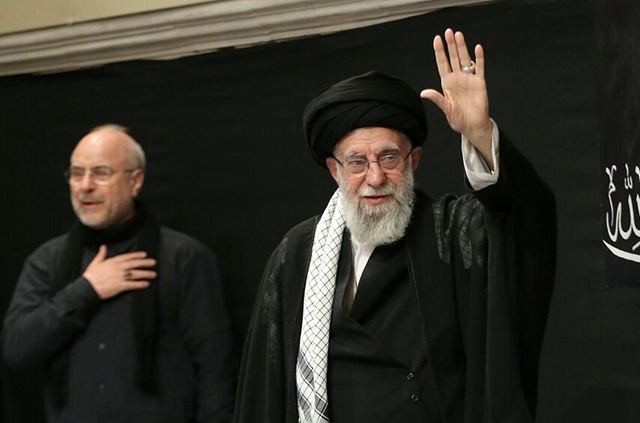
Iran’s Supreme Leader Ayatollah Ali Khamenei made a rare public appearance Saturday night, his first since the outbreak of the 12-day war with Israel, ending weeks of speculation over his health and whereabouts. The surprise reemergence, timed with the eve of Ashura—the most sacred day in Shiite Islam—was broadcast across Iranian state media and quickly rippled through a nation gripped by uncertainty.
Khamenei, 85, had not been seen in public since the U.S. bombing of Iranian nuclear facilities and the start of the conflict with Israel. His absence, combined with uncharacteristically frail appearances in recent video statements, fueled speculation of a serious health crisis or possible threats to his life. For weeks, reports suggested the leader had taken refuge in a fortified bunker.
But on Saturday night, Khamenei appeared at his residence to attend the annual Ashura ceremony, donning a black clerical robe and his signature checkered kaffiyeh. The moment he entered, a crowd of hundreds of men and women erupted in chants of “Heydar, Heydar,” a Shiite battle cry. Videos aired on state television showed him sitting silently on a chair—unlike all other high-ranking officials, including the vice president, justice minister, and parliament speaker, who sat on the floor.
Though he did not address the crowd directly, his mere presence was deeply symbolic. Analysts say it was a calculated show of defiance and continuity—projecting resilience at a time of deep political and military strain for Iran.
“In terms of morale, this is a huge moment for the regime,” said Omid Memarian, an Iran expert at DAWN, a Washington-based foreign policy think tank. “Khamenei’s return allows the government to claim survival and resistance in the face of U.S. and Israeli pressure.”
Ashura Ceremony Becomes Platform for National Unity
Ashura, which marks the martyrdom of Imam Hussein, has historically been both a religious and political flashpoint in Iran. This year, it took on new urgency. Across the country, ceremonies brimmed with nationalist fervor, overshadowing traditional religious tones. In place of customary Islamic ballads, patriotic songs—including “Ey Iran,” a pre-revolution anthem—rang out in cities from Tehran to Yazd.
In an emotional moment captured on video, Khamenei beckoned Haj Mahmoud Karimi, a prominent religious vocalist, to perform “Ey Iran.” Khamenei beat his chest along with the crowd as the anthem echoed through the hall. Observers say the song choice reflected a strategic blending of national and religious identity, aiming to unite Iranians across ideological lines.
Even secular citizens appeared to embrace the mood. In a striking departure from tradition, women without hijab were reportedly allowed to participate in Ashura events without restriction. A former government minister said neighborhood committees deliberately avoided enforcing dress codes in order to preserve the post-war spirit of unity.
“In the middle of grieving, we were smiling and laughing,” said Mostafa Tirgar, a political analyst in Tehran. “It felt like someone had announced victory in the war.”
Health Questions Linger
Despite his reappearance, doubts remain about the Supreme Leader’s health. In recent video messages—released after the U.S. airstrikes and the Israel ceasefire—Khamenei appeared gaunt, his voice raspy and weak, struggling to deliver complete sentences. Whether he has fully returned to his residence or remains largely in seclusion is unclear.
Still, his Ashura appearance is widely seen as a tactical victory for Iran’s leadership. After more than a year of attrition with Israel and mounting domestic unrest, Khamenei’s public presence sends a potent message: that the Islamic Republic’s highest authority is still standing.