


by Our Correspondent in London
Pope Leo XIV, formerly Cardinal Robert Francis Prevost, was born on 14 September 1955 in Chicago, Illinois, to a family of mixed European and Latin American heritage. His father, Louis Marius Prevost, a World War II veteran and educator, was of French and Italian descent, while his mother, Mildred Martinez, came from a Spanish-speaking background. Raised in a devout Catholic household, Prevost’s early life was marked by a deep engagement with the Church and education. He pursued a Bachelor of Science in Mathematics at Villanova University, graduating in 1977, before fully entering religious life with the Order of Saint Augustine. He made his solemn vows in 1981 and went on to earn a Master of Divinity from the Catholic Theological Union in Chicago. His intellectual formation culminated with advanced degrees in canon law at the Angelicum in Rome.
His missionary work in Peru left a lasting imprint on his ecclesiastical identity. Arriving in the 1980s, Prevost served as chancellor of the Diocese of Chulucanas and later returned to the Archdiocese of Trujillo, where he helped establish a parish and served as its first pastor. He immersed himself in the life of the local Church, serving as a seminary rector and professor while also offering legal counsel as an ecclesiastical judge. Fluent in Spanish and deeply committed to pastoral care, Prevost became known for his accessibility and focus on the marginalised. During this period, he is remembered for saying, “The Gospel cannot be proclaimed from a distance. It must be lived with the people, in their homes, in their suffering, in their joy.”
In 1999, he was elected provincial of the Augustinian Province in Chicago and, just two years later, was chosen as Prior General of the entire Order of Saint Augustine, serving until 2013. His leadership saw him travel extensively, visiting Augustinian communities across nearly 50 countries. His tenure as Prior General was marked by efforts to renew the spiritual life of the order, and he often stressed the importance of humility in leadership. In one of his general addresses, he reflected: “Leadership in the Church is not control, but service — not power, but presence.”
Returning once more to Peru, he was appointed Bishop of Chiclayo by Pope Francis, first as apostolic administrator in 2014 and then as diocesan bishop in 2015. His episcopate coincided with times of political instability in Peru, and he often advocated for civic dialogue and transparency. He also served prominently in the Peruvian Bishops’ Conference, taking leadership roles in education and culture. His appointment as Prefect of the Dicastery for Bishops in January 2023 placed him at the heart of the Vatican’s decision-making regarding global episcopal appointments, a role that required both pastoral insight and canonical expertise. Elevated to the College of Cardinals in the same year, his influence within the Curia grew steadily.
However, his record has not been without controversy. During his time as provincial in Chicago, he approved the residence of Father James Ray, a priest convicted of sexual abuse, at a priory located near a primary school. While the move was consistent with some canonical protocols of the time, critics later questioned the prudence of placing a known offender near a vulnerable community. More recently, while serving as bishop of Chiclayo, Prevost faced allegations of failing to initiate a canonical investigation into serious accusations brought by three women who alleged long-standing sexual abuse by two priests dating back to 2007. Though the diocese stated that the matter had been sent to the Dicastery for the Doctrine of the Faith and closed due to insufficient evidence and the expiration of the statute of limitations, questions have remained, and a re-examination was reportedly underway as of 2023.
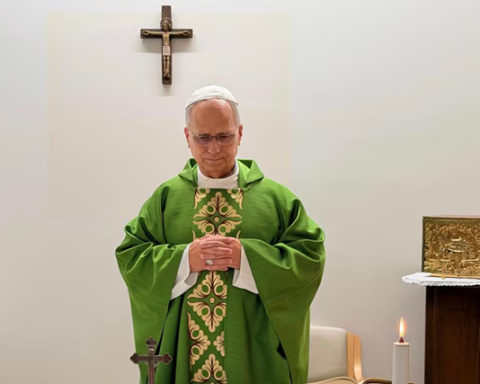
Upon his election to the papacy on 8 May 2025, Cardinal Protodeacon Dominique Mamberti announced to the world: “I announce to you a great joy; we have a Pope: The Most Eminent and Most Reverend Lord, Lord Robert Francis, Cardinal of the Holy Roman Church Prevost, who has taken the name Leo XIV.” As Pope Leo XIV, his immediate gestures included a visit to the Pauline Chapel for private prayer before offering his first apostolic blessing to the world from the balcony of St Peter’s Basilica. His choice of name, invoking the tradition of previous Popes Leo — most notably Leo XIII and Leo the Great — signals a continuity of social concern, doctrinal clarity, and firmness in faith.
Leo XIV brings to the papacy decades of experience in both pastoral and administrative roles, with a spirituality forged in missionary work and tempered in the rigours of ecclesiastical governance. A man of reflective temperament and understated charisma, he once said, “The future of the Church will not be shaped by force, but by fidelity — not by noise, but by witness.” These words, now spoken from the Chair of Peter, will be watched with attentiveness by a global Church eager for guidance, honesty, and renewal.











Disturbing indeed.
More of the same. Very disappointing.