Maruti Suzuki, India’s largest carmaker, is setting its sights on the next generation of Indian car buyers in a bold move to reclaim its dominant position in the country’s auto industry. In a recent interview with the Financial Times, Kenichi Ayukawa, executive vice-president and former CEO, outlined the company’s ambitious strategy: to double production to 4 million vehicles a year by 2030 and push its domestic market share back above 50%.
Having ceded ground in recent years to rivals amid the rising popularity of sport utility vehicles (SUVs), Maruti Suzuki’s current market share has dropped to around 41%. Now, the Japanese-controlled company is targeting what Ayukawa describes as “the next 1 billion Indians” — the aspiring middle class in rural and semi-urban regions that remain largely untapped.
“India has 1.4 billion people. We have to look to the next 1 billion . . . and how we’re going to approach those people,” Ayukawa told the Financial Times, emphasizing the need to expand beyond the historically targeted 200 to 300 million affluent consumers.
Part of Maruti Suzuki’s rural push includes innovative energy solutions like developing biogas infrastructure powered by cow dung, aimed at providing affordable, clean fuel for cost-conscious rural buyers. The initiative is just one aspect of Suzuki’s broader plan to invest ¥1.2 trillion ($8.5 billion) in expanding its presence in India over the next five years, a move that includes ramping up electric vehicle and battery production at its Gujarat facility and opening a new plant in Haryana.
Despite its expansive dealer network — including 70% of rural outlets — and reputation for cost control, analysts cited in the Financial Times remain cautious. The company faces growing competition from both local giants like Tata Motors and Mahindra and foreign automakers such as Hyundai, Renault, and Volkswagen, all of which are now eyeing India as the “new China.”
The challenge, according to Ravi Bhatia of Jato Dynamics India, is structural. “A few people have lots of money, a lot of people don’t, and urban areas are becoming jam-packed, with nowhere to drive or park cars,” he said.
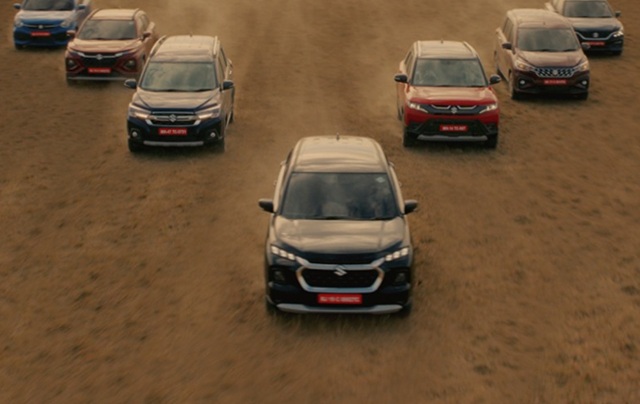
Adding to the pressure is the surge in SUV sales, which have overtaken the smaller, more affordable vehicles that form the core of Maruti Suzuki’s lineup. While newer models like the Grand Vitara and Brezza mark an attempt to close this gap, executives acknowledge that more work is needed.
Even with these headwinds, Suzuki’s financial performance remains robust. Thanks to its strategic insulation from turmoil in China and the U.S., the company posted a record net income of ¥416 billion ($2.84 billion) in fiscal 2024. Yet, CEO Toshihiro Suzuki admitted the path forward in India will be complex, complicated further by global supply chain disruptions and geopolitical tensions in the region.
As the country’s infrastructure and income levels evolve, Maruti Suzuki’s long-standing strengths — such as an unmatched service network and rural reach — may offer a competitive edge. But as the Financial Times notes, success will ultimately depend on whether the carmaker can adapt its product offerings to suit India’s rapidly changing consumer preferences.
“The reason Suzuki still rules the car park in India is that it has the best distribution and the best aftersales service,” said Bhatia. “But the product offerings will have to evolve.”