Editorial
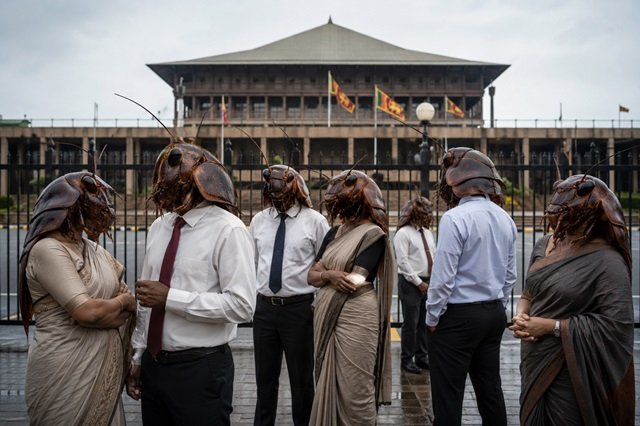
The rapid circulation of the so-called “cockroach” political satire movement across South Asian social media—from India into Pakistan within days—offers a clear signal about how political communication now works: it no longer respects borders, institutions, or the traditional pace of public debate.
What began as an online joke quickly mutated into replicated parody “parties” across platforms. These are not political organisations in any formal sense. They are cultural responses—compressed expressions of frustration, irony, and political fatigue rendered into shareable form. Their speed of diffusion is more important than their content. It shows that political meaning today is produced and distributed through digital networks faster than governments can respond to it.
This matters because it reflects a broader structural shift: politics is increasingly being interpreted through informal, algorithm-driven channels rather than institutional ones. In this environment, satire is not separate from politics. It is part of how politics is now experienced.
Sri Lanka is operating inside the same information ecosystem. Any government in office today—regardless of ideology or mandate—functions under conditions where public judgement is immediate, continuous, and highly visible. The interval between policy announcement and public verdict has collapsed. It is no longer measured in years or electoral cycles, but in days and sometimes hours.
That creates a specific governance problem. Formal political systems are built on sequencing: proposal, implementation, outcome, evaluation. Digital public opinion operates differently. It compresses all four stages into a single moment of reaction. The result is that perception often stabilises before policy has had time to take effect.
In such an environment, meme-based political expression becomes more than entertainment. It becomes a substitute language for evaluation. The “cockroach” framing, like similar satirical constructs, is not meaningful as policy analysis, but it is meaningful as sentiment capture. It signals a population translating frustration into humour because conventional political language no longer feels sufficient or responsive.
Sri Lanka’s political context makes this especially relevant. The country’s recent transition into a new governing phase has carried significant public expectation attached to economic recovery, institutional repair, and administrative credibility. These are substantial tasks, and their outcomes are inherently slow-moving. But digital political culture does not naturally accommodate slow outcomes.
The risk, therefore, is not that meme movements become formal political actors. That is unlikely and misunderstands their purpose. The risk is subtler: that they become the dominant shorthand for political evaluation. Once that happens, public discourse begins to flatten. Complex policy trade-offs are reduced to symbols, jokes, or viral shorthand that circulate faster than explanations.
At that point, governance is no longer assessed primarily through structured accountability mechanisms. It is assessed through visibility, responsiveness, and narrative control. Governments are then required not only to implement policy, but to continuously maintain interpretive authority over how that policy is understood in real time.
This is a demanding shift. It means that administrative performance and communication performance are now inseparable. A policy that is not communicated effectively may be perceived as absent, regardless of its technical merits. Conversely, a narrative that spreads quickly may define public understanding more strongly than the underlying facts.
The cross-border spread of meme-based political parody highlights another feature of this system: its lack of containment. Political sentiment is no longer geographically bounded. Shared language, humour, and economic frustration travel easily across India, Pakistan, Sri Lanka, and beyond. This creates a regional political culture that is increasingly synchronised in tone if not in structure.
For governments, the implication is straightforward but uncomfortable. Authority is now partially contingent on narrative speed. Institutions that operate on slower cycles of decision-making must coexist with a public sphere that updates instantly and forgets just as quickly.
Sri Lanka, like others in the region, is therefore facing a dual requirement: to deliver tangible outcomes through conventional governance processes, while simultaneously engaging a public that interprets progress through digital visibility. Failure in either domain weakens legitimacy; success requires coordination between them.
Meme politics, in this sense, is not a distraction from serious politics. It is an indicator of how seriously people believe politics is working. The more it expands, the more it reflects a gap between institutional time and public time. Closing that gap is now one of the central challenges of governance in the digital age.